Contemporary artist Sungho Bae, who is based in Chicago and Seoul, approaches the body through sculpture and mixed media, reworking anatomical references to question how bodies are classified, standardized and made legible. Bae’s sculptures immediately stood out to me for their resemblance to biological and anatomical structures. This tension between familiarity and uncertainty prompted a deeper interest in his work and led to this interview.
Grounded in sculpture but extending across multiple media, Bae’s practice involves collecting images and objects, dismantling recurring structures and reconstructing them through analytic frameworks informed by biology, forensics and speculative construction. Through this process, he develops a sculptural language that resists anatomical certainty and challenges the authority of normative bodily classifications.
In this interview, Bae discusses what first led him to pursue art, his continued return to anatomical forms and his interest in the shifting boundary between the artificial and the natural.
The following are excerpts from an email interview with Bae from January 18 to February 2.
1.Could you briefly introduce yourself?
I’m based in Chicago and also work in Seoul. My practice is grounded in sculpture and extends across a range of media. I collect images and objects, identify and dismantle recurring forms and structures, and move between analytic lenses informed by forensics and biology and speculative construction to build new taxonomies and articulate a sculptural language.
2.What first led you to pursue art?
I’ve long been drawn not only to making, but to how a body or form, even when it exists only as an idea, can be experienced. The condition of living in a single body has never felt like a complete, stable totality to me; it feels more like a shell that barely holds an unstable pressure, and the sensation of moving “my” body can read as an illusion of control. The “new body” I am after exceeds what is culturally legible as bodily transformation; it is closer to an appetite for physical conditions that are difficult to reach while remaining alive. I came to believe that this discomfort could be sustained and examined through a continuous commitment to material and structural inquiry, leading me to a process of constant dismantling and reconstruction.
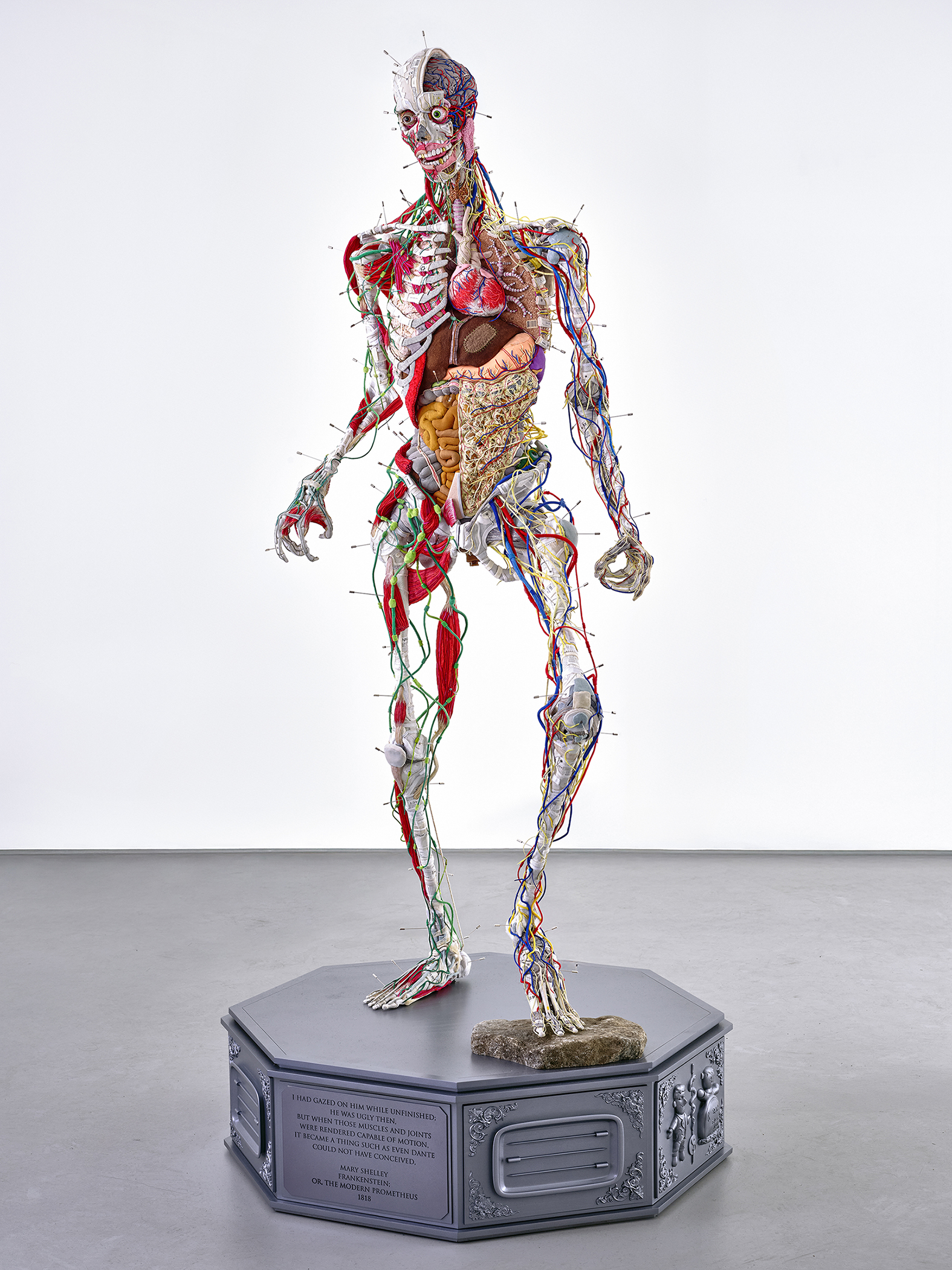
3.Your work often references anatomical forms. What draws you to the human body as a subject, and what does it allow you to express as an artist?
I return to anatomical forms because the body is not only a biological fact, but also something made legible through knowledge systems, norms, and classificatory language. Anatomy is a way of reading the body, yet it is also a historical apparatus that has repeatedly defined some bodies as standard and others as deviation. In my work, anatomical form is not a neutral reference. It functions as a framework for questioning how classification takes hold, how it is maintained, and how certain bodies have been rendered anonymous, marginal, or instrumental within the history of anatomical knowledge. To address these questions, I work with materials already engineered for circulation. Plush is a commodity shaped by appeal and standardization, leaving consistent traces in seams, stuffing, proportion, and surface. I reconstruct bodies from dismantled fragments to build structures that can initially register as human but refuse anatomical certainty. Accumulated layers and misalignments interrupt the authority of the normative body. I treat plush deformation patterns, such as stitching, compression, and wear, as a field guide for building a new corporeal syntax. In this process, anatomical form becomes a coordinate system that shows how a body can be re-authored.
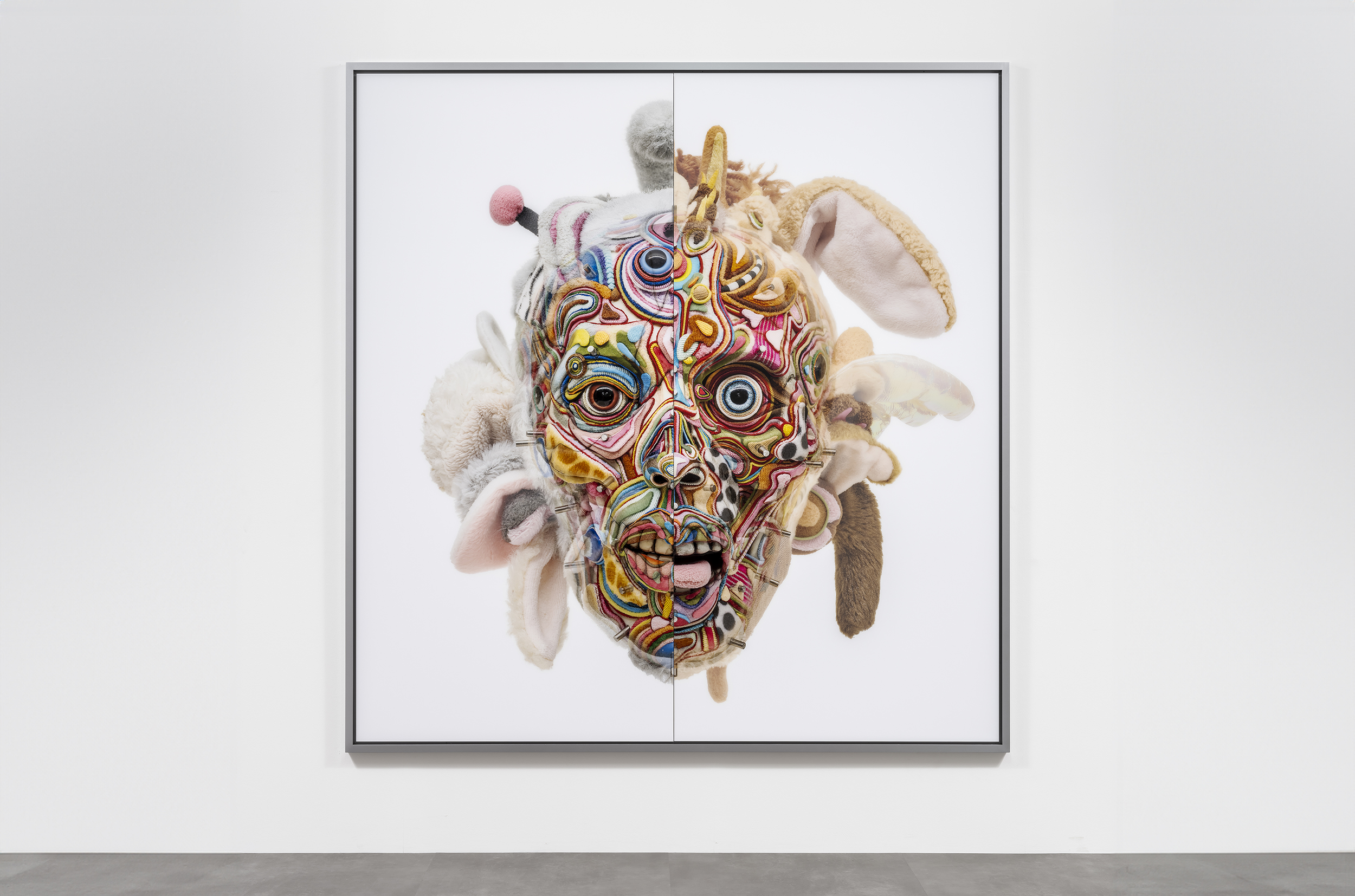
4.Beyond anatomy, what other themes or ideas are you interested in exploring through your art?
Beyond anatomy, I’m interested in the boundary between the artificial and the natural, and in how that boundary shifts and gets rewritten over time. Some artificial objects arrive already equipped with cues of harmlessness, familiarity, and stability, and through repeated consumption those cues harden until they feel like the object’s nature. I pay attention to the conditions and habits that produce that hardening, and I want to make visible the mechanisms that allow something to be received as natural in the first place.
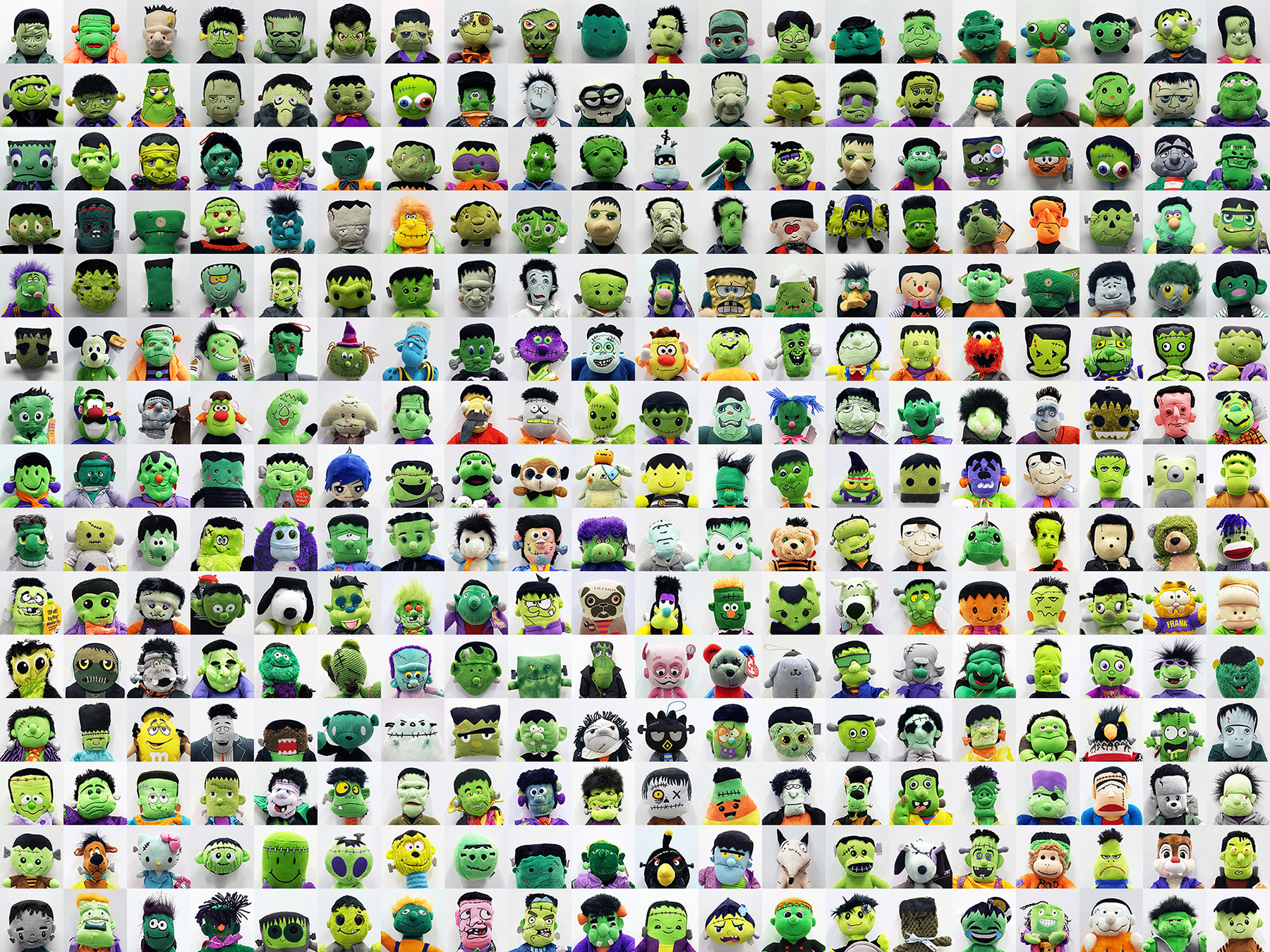
5.What are you currently working on, and what directions are you interested in exploring next?
I’m working on a body of work that binds together discarded stuffed-animal fragments and composite skeletal forms. These toys once simulated life as pets, but after disposal, they seem to perform death, registering as accidental remains. I stay with the sensory dissonance produced by that reversal, treating residues of use through a ritual-like logic so the boundary between the living and the inert remains unresolved. I’m trying to push that dissonance as far as it will go and let the work determine what comes next.
As Bae continues to develop new works that blur distinctions between the living and the inert, the natural and the artificial, his practice reflects broader questions shaping contemporary art today.
How about this article?
- Like1
- Support0
- Amazing1
- Sad0
- Curious0
- Insightful0