In animation, storytelling unfolds not only though characters and dialogue, but also through the worlds that surround them. From atmospheric lighting to carefully textured spaces, background and visual development artists play a central role in shaping how audiences emotionally experience a story.
Minji Kim is a visual development and background artist whose work spans internationally. Through her artistic practice, she contributes to the visual language of animated projects, creating environments that support narrative and emotion.
In this interview Kim reflects on her creative journey, explains the often-overlooked role of background and visual development artists and shares insights from working within the global animation industry.
The following are excerpts from an email interview with Kim from January 14 to February 1.
1.Can you tell us about your journey into visual development and background art?
I originally studied fine art. I always loved drawing, but after graduating, I went through a period of uncertainty while trying to figure out a realistic path forward. Around that time, I happened to see an exhibition of Disney background art, and it became a major turning point for me. When watching animation, we often focus on the characters, but that experience made me realize for the first time how powerful backgrounds can be in shaping a story. That realization led me to study animation concept art at Vancouver Film School, where I learned how backgrounds visually support storytelling. Since then, I have been pursuing my path as a visual development artist and background artist.
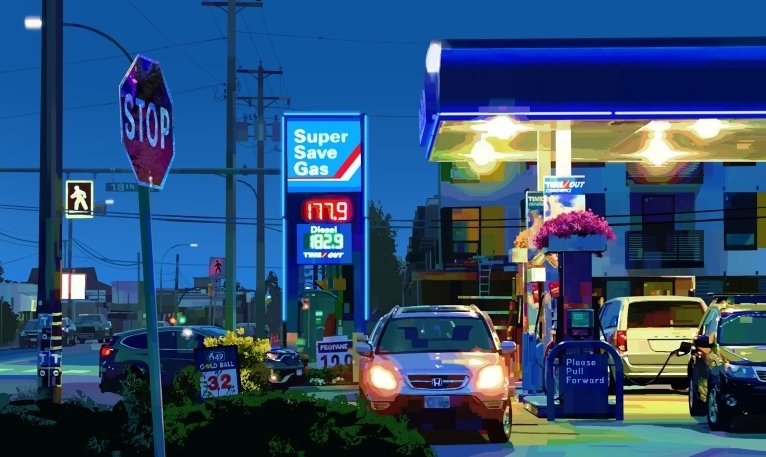
2.For readers who may be unfamiliar with visual development and background art, how would you describe your role in shaping the visual language of an animated project?
In animation, backgrounds play an important role in guiding the emotions the audience should feel in each scene. While visual development and background art are not always clearly separated, based on my experience, a background artist develops given designs into fully realized spaces and uses light, color, and texture to convey mood and emotion. Visual development, on the other hand, happens earlier in the process and focuses on designing the world, environments, and props, which is closer to concept art. Although the processes differ, both roles share the same goal of shaping the overall tone and direction of the project. My role is to visually persuade the audience, through atmosphere and design, how they should feel while experiencing a scene.
3.Could you walk us through your creative process, from early concept sketches to finalized background designs, when working on an animation project?
The process varies depending on the project. Sometimes I develop existing designs, and other times I help build an entirely new environment from scratch. When creating a new setting, research is the most important step. If a realistic approach is required, I study details such as the texture of trees or the materials of buildings. A believable environment can only be created once enough visual reference has been gathered. From there, I begin with rough paintings and gradually add value and lighting to bring life into the space. Throughout the process, careful observation is essential, and depending on the production, feedback from the art director is incorporated at specific stages. This workflow eventually leads to the final background design.
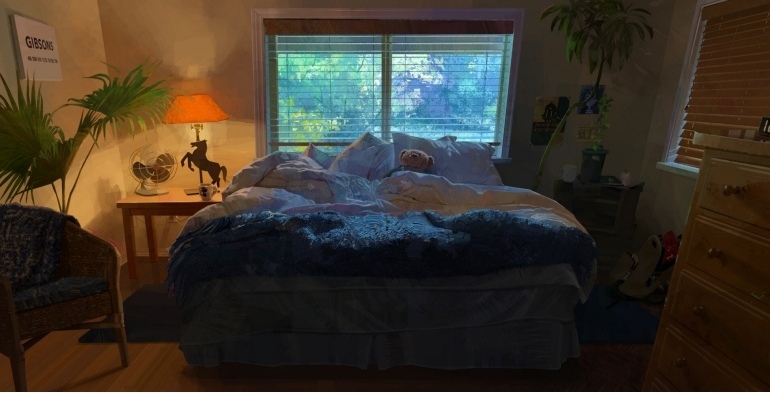
4.What has been one of the most challenging aspects of working in the animation industry, and how has it shaped you as an artist?
Adapting to new teams and production environments is always a challenge for me with every project. One particularly memorable experience was working on visual development for Teenage Mutant Ninja Turtles 2 with Paramount Animation. The project required maintaining a loose, expressive drawing style while also achieving a sense of realistic texture, which made quickly adjusting to the project’s visual language challenging. However, working alongside such talented artists and learning from their approaches allowed me to expand my range of visual expression. I felt that my ability to communicate ideas through art grew significantly through that experience.
5.Are there themes, worlds, or types of stories you hope to explore more deeply in your future work?
I grew up loving fantasy stories like Harry Potter and The Chronicles of Narnia, but in animation work, I have found myself more drawn to depicting real, existing places. Spending time closely observing a location naturally builds a personal connection, and visiting those places after a project wrap has become one of my great pleasures. Recently, I was deeply impressed by how beautifully Seoul was portrayed in K-Pop Demon Hunters. Seoul is a city filled with personal memories for me, and I would love the opportunity to reinterpret neighborhoods I care about, such as Haebangchon or Seochon, through my own visual lens and share them with audiences around the world!
As animation continues to evolve as a global art form, Kim’s perspective underscores the importance of artists working behind the scenes. Her journey offers valuable insight into the craft of animation and the growing international presence of artists contributing to visual culture worldwide.
How about this article?
- Like1
- Support0
- Amazing1
- Sad0
- Curious0
- Insightful0