On a quiet winter Friday, I decided to visit a museum I had never been to before: the National Museum of Korean Democracy. After the recent “December 3 Light Revolution” I thought it was time to immerse myself in the long Korean history for freedom and democracy.
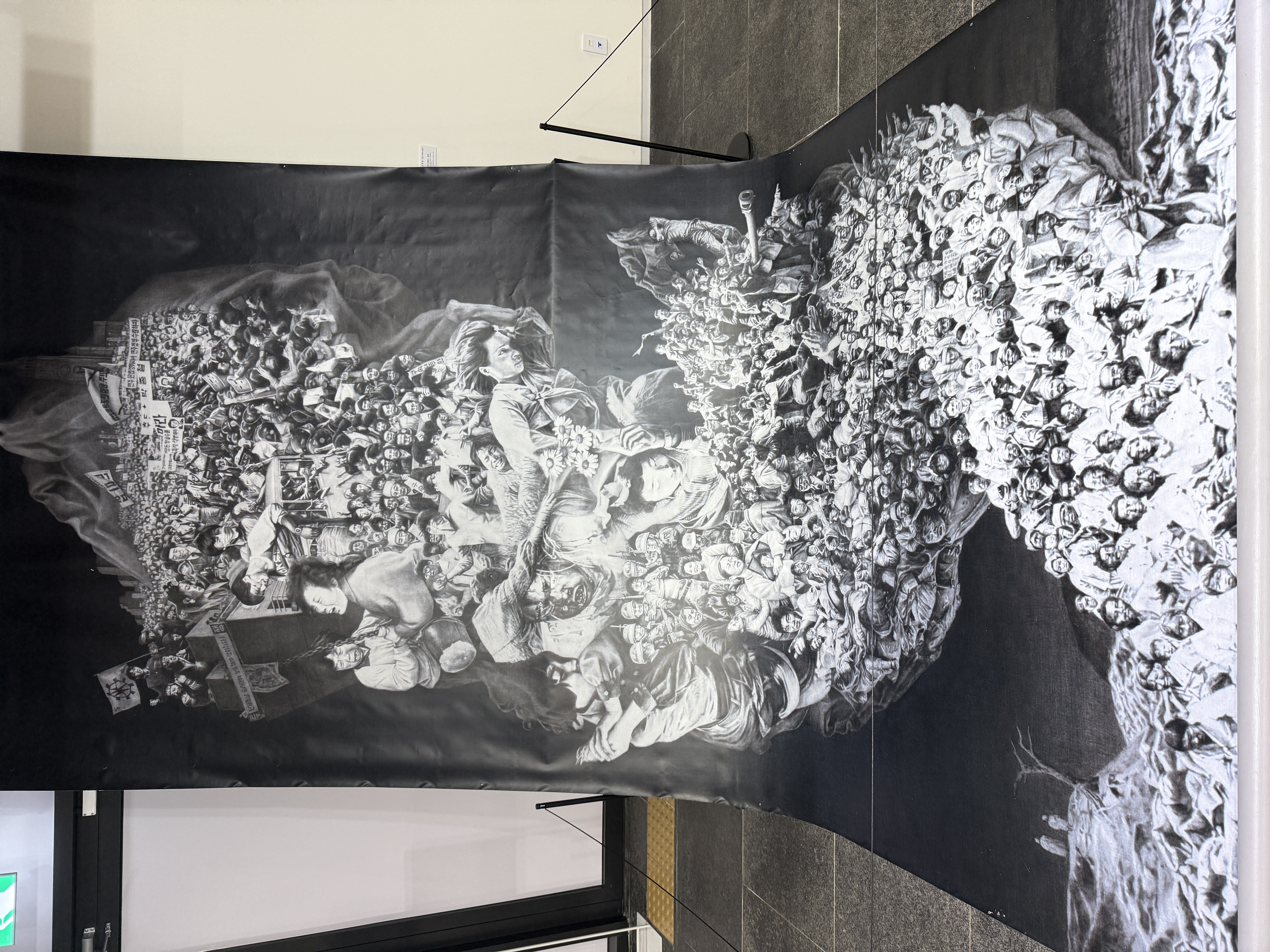
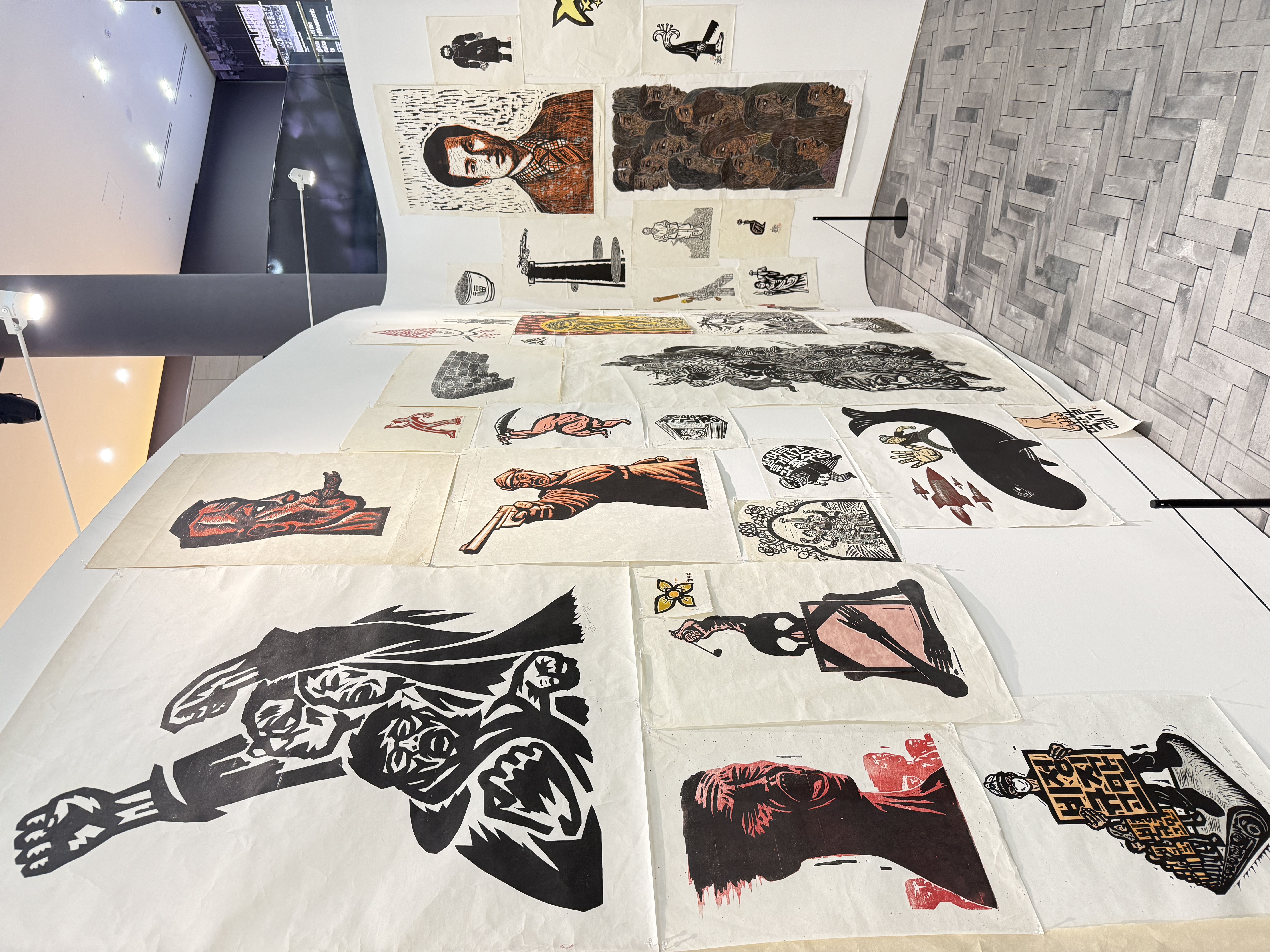
The visit begins in the first building, which currently hosts a not-to-miss exhibition titled “잘린문장 열린광장 (Severed Sentences, Open Agora)”, on view until February 29. History and contemporary art join hands here to create a deeply moving exhibition that brings forward stories once suppressed, interrupted, or deliberately silenced. Painting, sculptures, photographs side along reactivated archival images from the press, and immersive spaces to narrate historical events through emotional states and creativity.
This exhibition of Korean democracy is not presented as an abstract political concept, but as a fragile and hard-won conquest, embodied by human bodies, voices, and above all, by silence.
A torture site turned into a memorial for democracy
The second building of the museum is the former Namyeong-dong Anti-communist Interrogation Office, used from the late 1970s through the late 1980s by the police under military rule to interrogate citizens. Rising starkly within its residential neighborhood in the heart of Seoul, the building conceals one of the darkest chapters of modern Korean history.
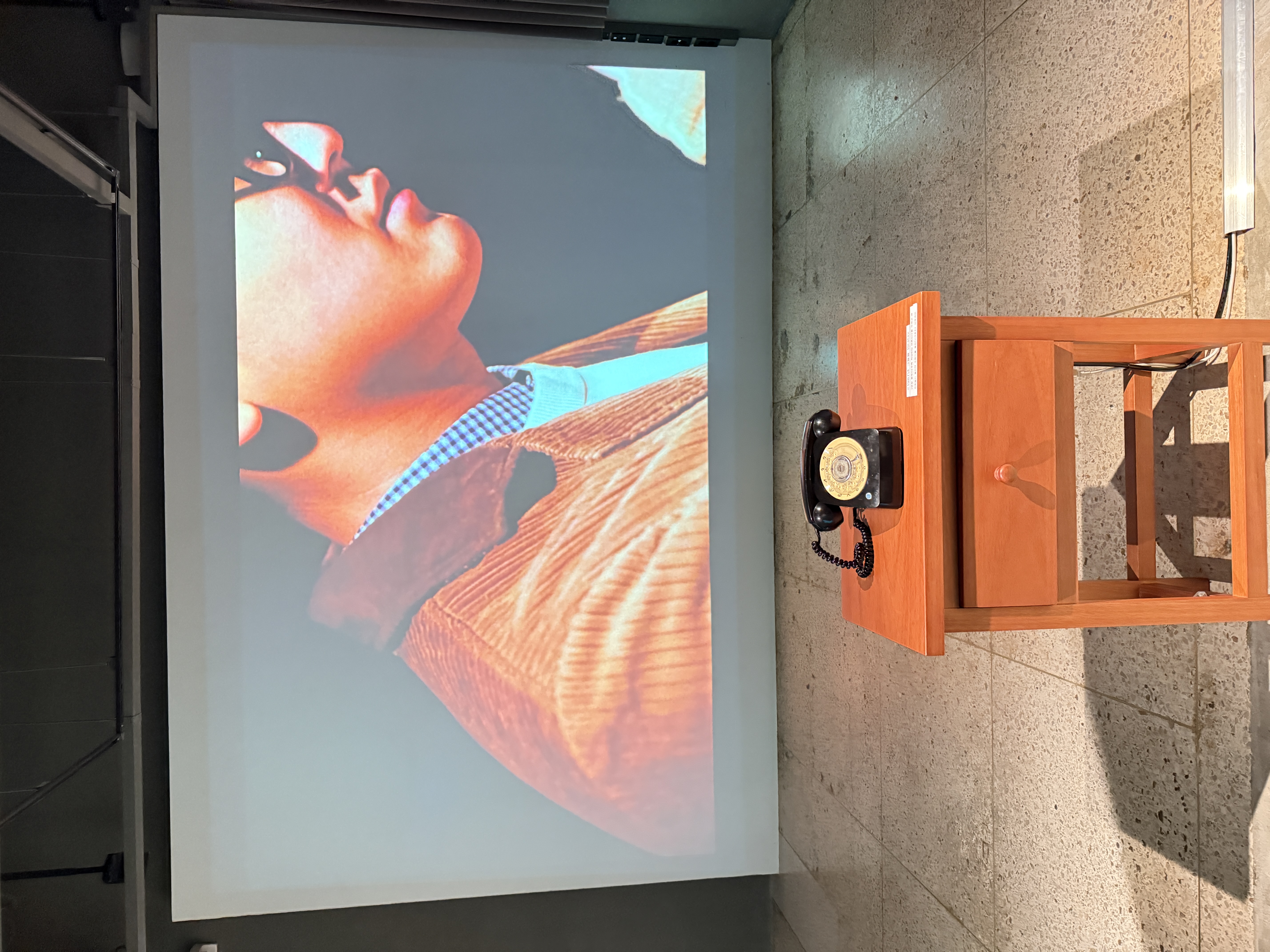
From the very first steps inside, the atmosphere feels heavy, dense and immerse you with emotions. In a darkened room, a mysterious 1960s administrative telephone suddenly rings. Visitors are compelled to answer. A video begins to play, tracing decades of resistance and struggle led by ordinary citizens fighting to reclaim their freedom. The fifth floor's curatorial scenography is designed as a fully sensorial experience. Rage, fear and grief surface repeatedly throughout the visit, not imposed but quietly awakened.
The room 509
In 1987, Park Jong-chul, a 22-year-old university student, was arrested by police investigating student protest networks. He died under torture in interrogation room 509. When the truth was revealed to the public less than a month later, nationwide outrage followed, triggering large-scale protests and demonstrations across Korea. The student became a symbol, still remembered by every Korean. On the fifth floor lies the interrogation room 509, the space feels bare and restraint. The visitor is confronted with the banality of the setting, and the unbearable knowledge of what occurred within its walls. Later that year, a nationwide movement for democratic reform forced the government to accept direct presidential elections, marking a major turning point in Korea’s path to democracy.
Leaving the National Museum of Korean Democracy, what remains is not only information, but impact. Through carefully used digital tools, sound, images, and immersive staging, the museum chooses to confront rather than comfort. Its intention is clear: to shake the visitor, to remind us that democracy is fragile and never guaranteed. More than a museum, it is a space that asks us to stay alert, aware, and responsible for the freedoms we inherit, anywhere we are.
How about this article?
- Like0
- Support0
- Amazing0
- Sad0
- Curious0
- Insightful0