[Interview] Two foreign residents named honorary Seoul citizens for contributions to culture and innovation
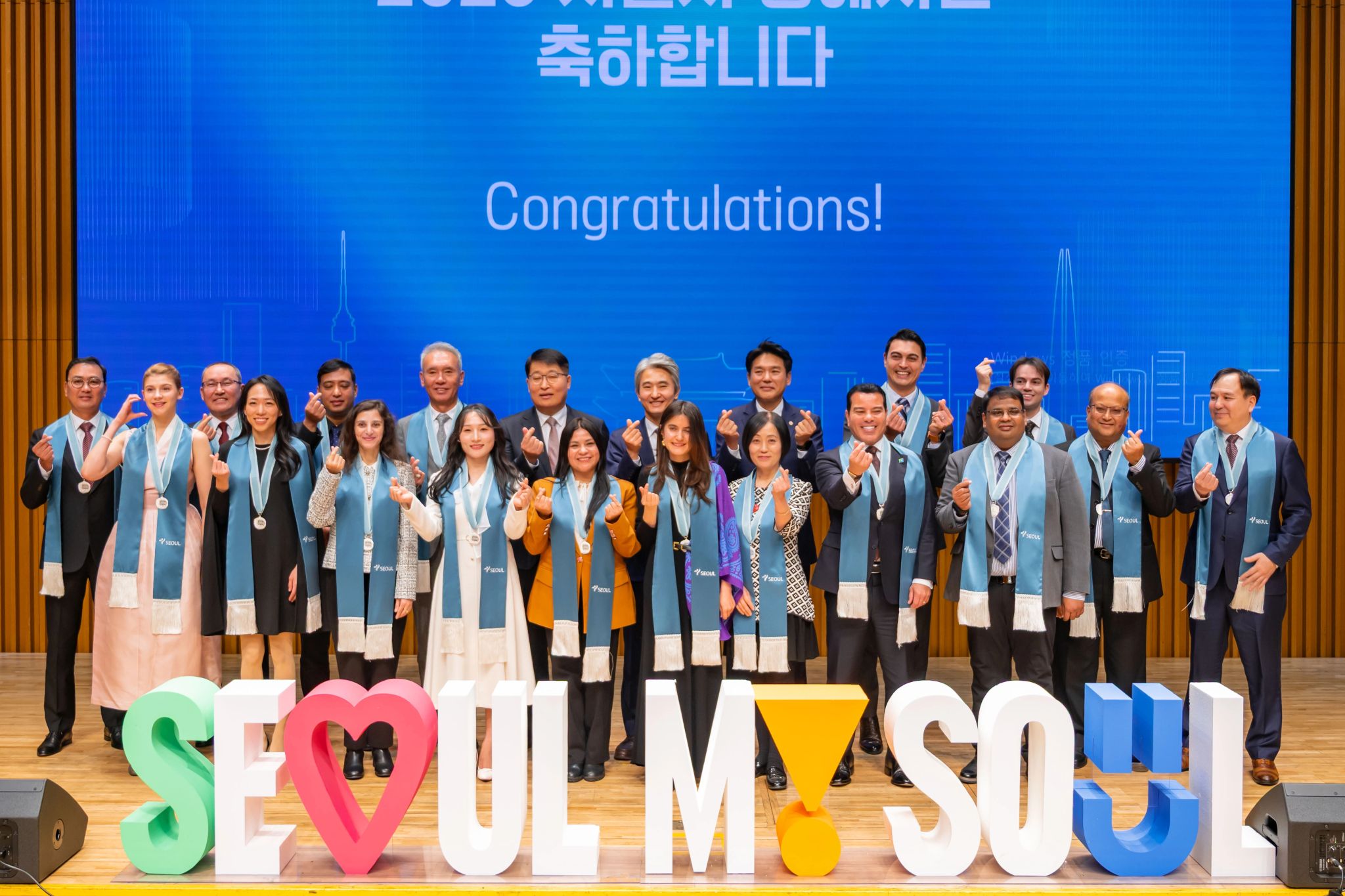
2025-12-22The Seoul Metropolitan Government held the 2025 Seoul Honorary Citizenship Award Ceremony on November 26 at Seoul City Hall, recognizing 17 foreign residents from 16 countries for their meaningful contributions to the city. The ceremony brought together newly appointed honorary citizens, city officials, and invited ambassadors to celebrate individuals who have helped shape Seoul’s cultural, social, economic, and global landscape. Kim Tae-kyun, First Deputy Mayor of Seoul attended the event.
The Seoul Honorary Citizenship program, first introduced in 1958, was originally created to express recognition and gratitude to foreign nationals and distinguished guests who contributed to Seoul’s post-war reconstruction. Over the decades, the initiative has evolved to honor long-term foreign residents who actively contribute to the city’s development and serve as bridges between Seoul and the wider world. As of this year, a total of 968 foreign nationals have been named honorary citizens of Seoul.
Candidates for the 2025 appointments were nominated between March 24 and May 16 through recommendations from embassies, public and social organizations, and petitions endorsed by at least 30 citizens. Following a review by an evaluation committee and approval from the Seoul Metropolitan Council, the final group of honorees was selected. All of this year’s recipients have lived in Seoul for at least five years, achieving professional distinction in their respective fields while remaining deeply engaged in community service and international exchange.
The 17 honorary citizens come from diverse backgrounds and nationalities, including Germany, Brazil, Nepal, the United Kingdom, Vietnam, India, the United States, and several other countries. They were recognized for contributions across a wide range of fields, including culture and the arts, science and technology, economic development, welfare, civic engagement, and global communication, reflecting Seoul’s growing international presence.
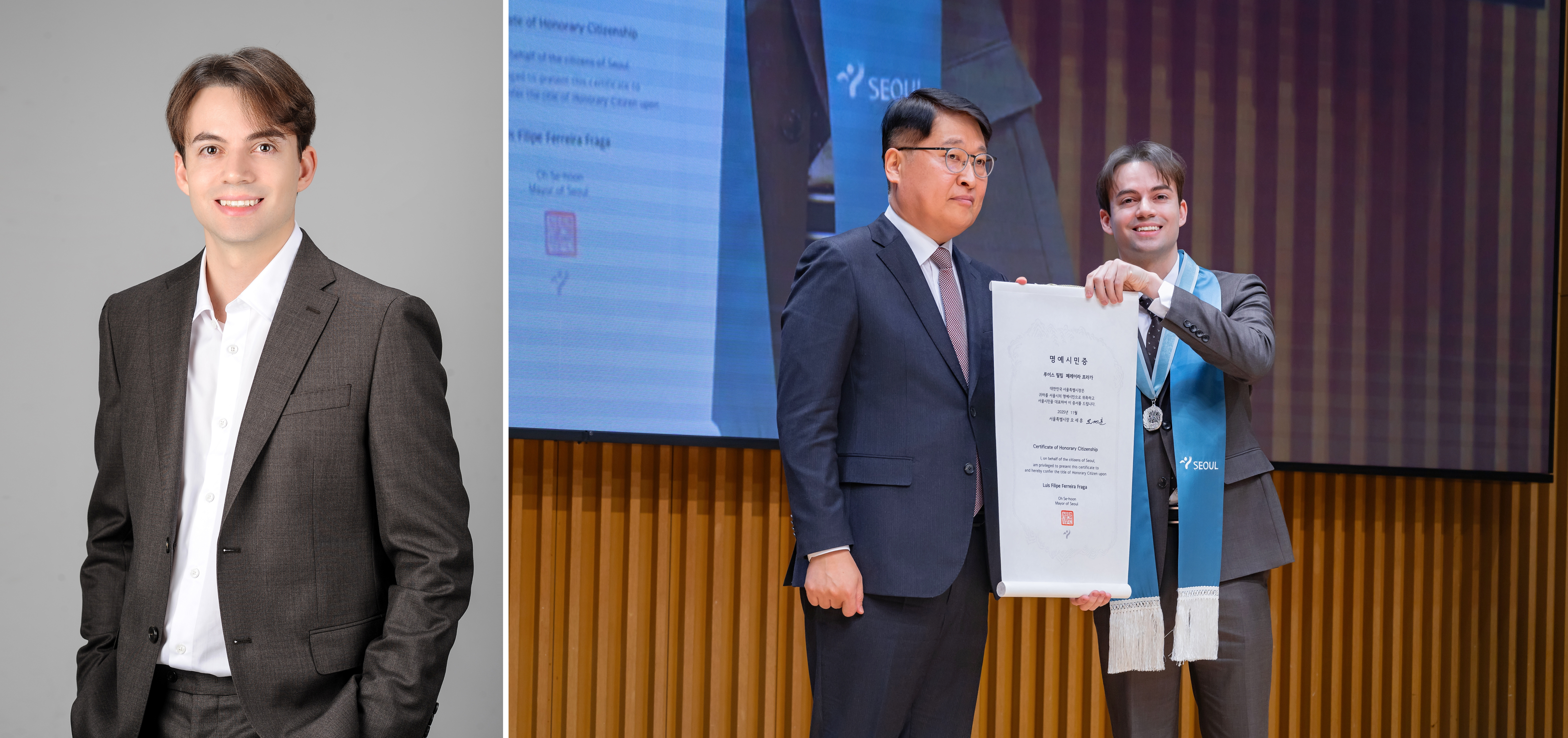
Among this year’s honorees are Anna Rihlmann, better known in Korea as Anna Yoon (윤안나), and Luis Filipe Ferreira Fraga, whose journeys in Seoul highlight the diverse ways foreign residents contribute to the city beyond national boundaries.
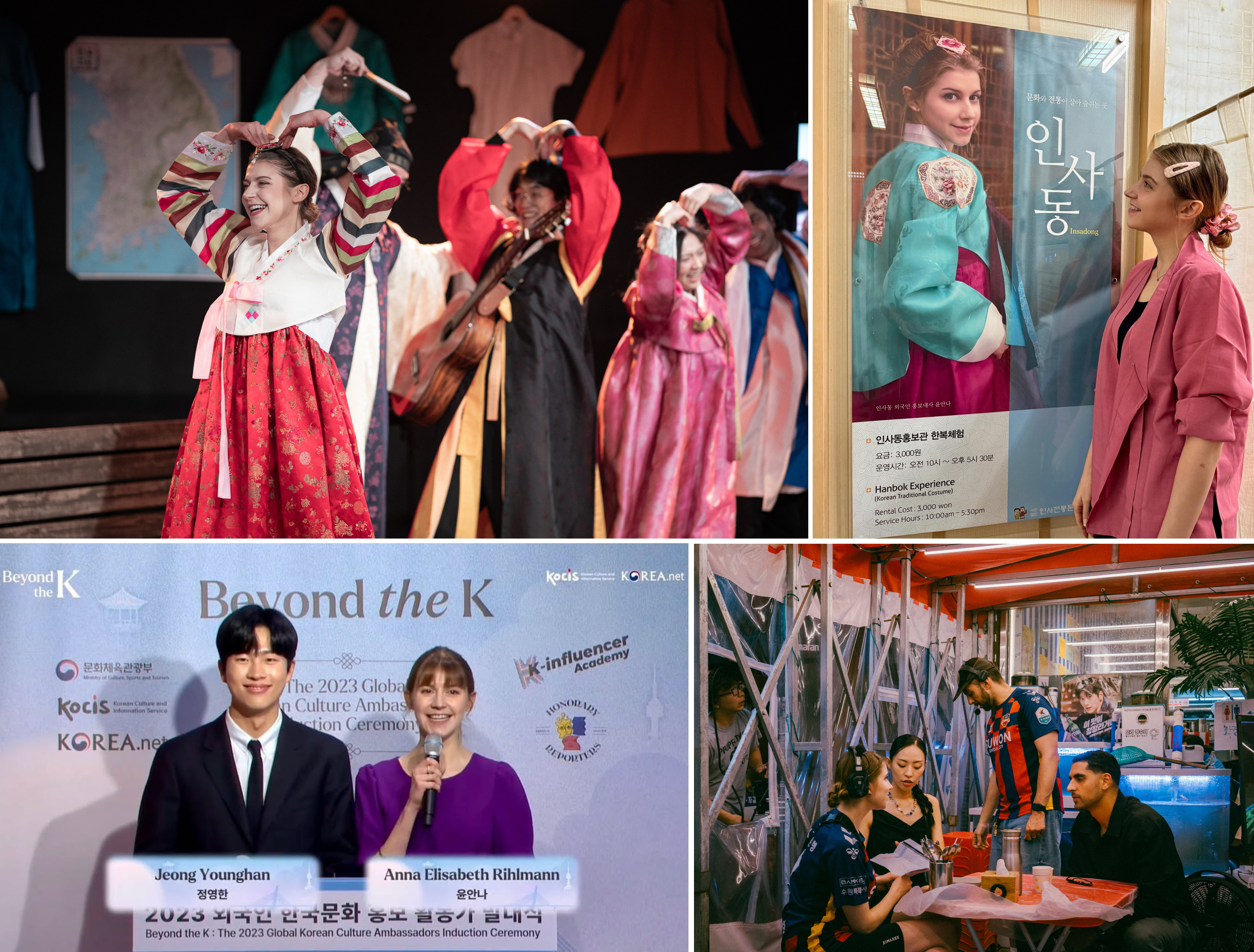
Anna Rihlmann, a German-born artist working across theater and film in Seoul, has lived in Korea for more than a decade and considers herself a citizen of Seoul in both practice and spirit. She has reinterpreted traditional Korean folktales through contemporary performance, most notably through Hallo Chunhyang: The Tale of Anna, a creative adaptation of the classic pansori narrative Chunhyangga. Beyond the stage, she has introduced Seoul and Korean culture to German-speaking audiences through her work as a reporter for KBS World Radio and the Korean Cultural Center in Berlin. Her involvement with the Seoul Foreign Residents Council and youth mentoring initiatives has further contributed to improving policies and support systems for foreign residents living in the city.
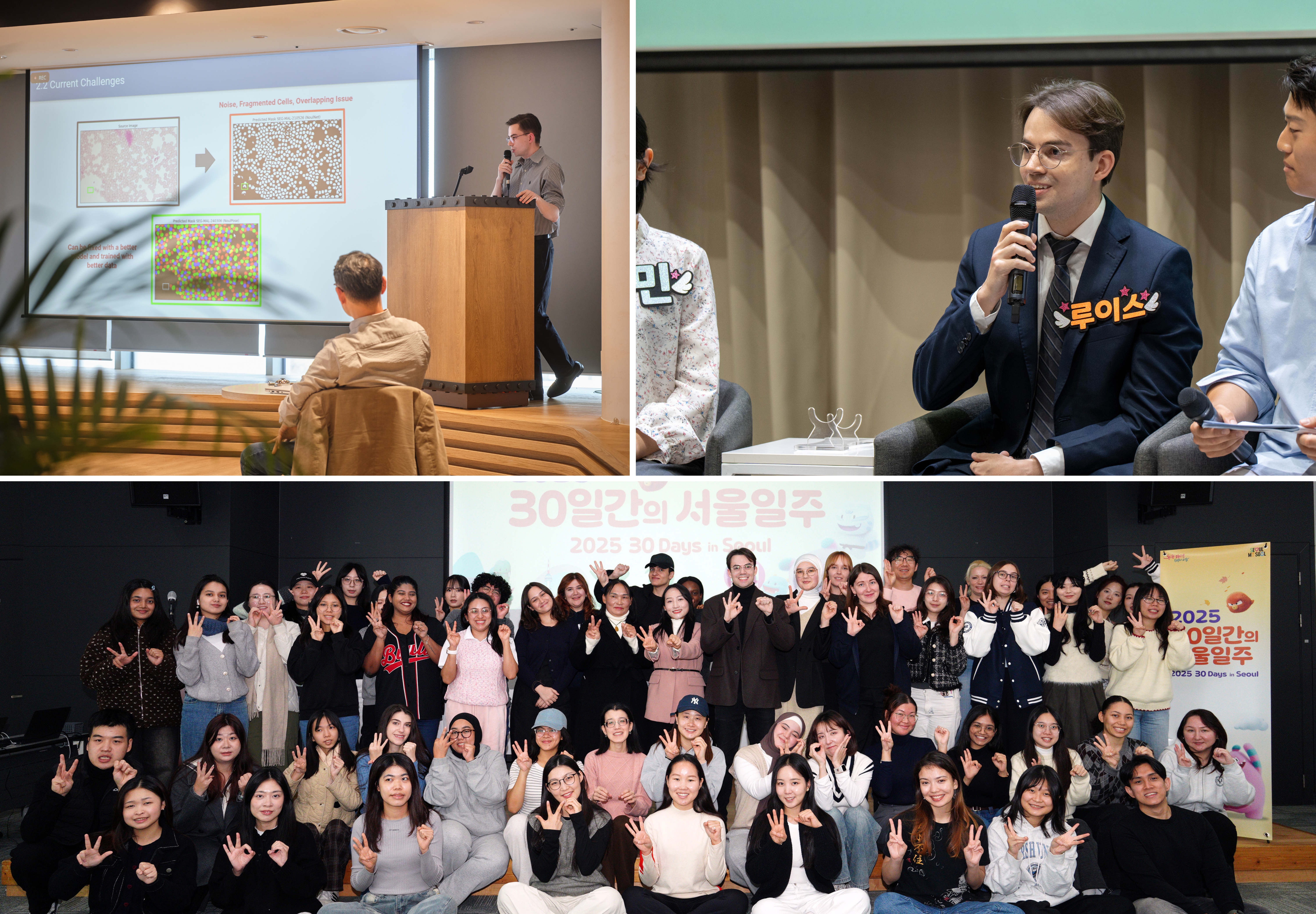
Luis Filipe Ferreira Fraga, a Brazilian artificial intelligence engineer, was recognized for his work in AI-based medical imaging and diagnostics, contributing to advancements in healthcare technology developed in Seoul. Alongside his professional achievements, he has actively mentored international students, supported immigrant communities, and promoted Seoul internationally through education, media engagement, and cross-cultural exchange. His work reflects Seoul’s growing role as a global hub for technological innovation and international collaboration.
Through their distinct yet equally impactful work, both Anna and Luis embody the spirit of Seoul’s Honorary Citizenship program: individuals who have not only built lives in the city, but who continue to shape its present and future through creativity, innovation, and sustained community engagement.
In written email interviews conducted between December 8 and 20, Anna Rihlmann and Luis Filipe Ferreira Fraga shared their journeys to Seoul, the work that led to their recognition as 2025 Honorary Citizens, and their reflections on identity, belonging, and contributing meaningfully to a city they now call home.
For readers who may be discovering your work for the first time, could you begin by introducing yourself and sharing the journey that first brought you to Korea? From your early beginnings to building your life in Seoul, what experiences most shaped the direction of your work and your decision to stay?
Anna Rihlmann (Anna Yoon): My name is Anna Rihlmann, and I work in Seoul as an actress, director, and producer. In Korea, I am more widely known under my artist name, 윤안나 (Anna Yoon). My connection to Korea began in high school, when I fell in love with Korean cinema. I started learning Korean on my own, studied Korean Studies and Media Science in Tübingen, and kept finding excuses to come back, first as an exchange student and later through several internships.
Everything changed when a radio MC I worked with invited me to his theater performance. That night, I completely fell in love with theater. After the show, I shyly mentioned that I secretly dreamed of acting, and that small confession changed my entire life. He introduced me to a theater company, and in 2014, I suddenly found myself debuting on a Korean stage. That moment was the beginning of everything. It also taught me something important: nobody knows your dreams unless you share them, and most people are far more supportive than you might expect.
Luis Fraga: My name is Luis Fraga. I was born in Porto Alegre and grew up in São José dos Campos, Brazil. I came to Seoul in late 2017 through the KGSP (Korean Government Scholarship Program) after completing my bachelor’s degree in Computer Science at the Federal University of São Paulo (UNIFESP). Through KGSP, I completed my master’s degree in Computer Science at Soongsil University, and that experience opened the door to the career I have today.
During my studies, I became deeply interested in how AI and machine learning could be effectively applied to medical diagnostics and global health. Korea’s strong ecosystem for innovation made it an ideal place to grow in this field. Over time, I specialized in hematology and medical diagnostics, developing advanced AI algorithms to enhance the accuracy and reliability of blood analysis. By combining machine learning with medical expertise, my work delivers solutions that improve disease detection and support clinical decision-making.
You have lived in Seoul for several years now. How would you describe the ways in which life in the city has shaped your personal growth or professional journey over time?
Anna Rihlmann (Anna Yoon): Living in Seoul shaped me in ways I never expected. Life abroad looks fun from the outside, but it also comes with moments of loneliness and confusion. I was lucky to meet my Korean host family early on. They welcomed me like their own child, complete with curfews, family traditions, and non-stop Korean. Through them, I experienced daily life from the inside, not as a visitor.
I spent all my early twenties here, which is when identity is formed. As a result, a big part of me became very Korean, from how I communicate and work in groups to the sense of harmony, and even the way I date and build relationships. At the same time, living here helped me appreciate my German roots even more. The independence my parents encouraged, the education system, and the less hierarchical culture shaped me just as strongly. Now, my identity feels like a mix of both worlds. I am not fully German and not fully Korean, but something in between that I am proud of.
Luis Fraga: Seoul has shaped me in many ways. Beyond its openness to new technologies and strong investment in innovation, Seoul can also be a high-pressure environment. The intense competition and strong work ethic you see everywhere can be challenging and even stressful, but they are also inspiring. They motivate me to keep improving, stay disciplined, and work hard every day to become a better person.
You were selected as a 2025 Honorary Citizen of Seoul, a recognition given to individuals who have made meaningful contributions to the city. Could you tell us about the work, activities, or contributions you believe played the most significant role in your nomination for honorary citizenship?
Anna Rihlmann (Anna Yoon): I think it is really the combination of everything I have done over the years. I have always loved acting as a bridge between the two cultures and countries that shaped me, whether that meant introducing Korean culture in Germany, promoting Germany in Korea, or building a career here as an international artist. My theater work also played a big role, especially the pieces that speak openly about the struggles foreign artists face and our fight for fair working conditions and recognition. Since 2014, I have been serving as an ambassador for Insa-dong, as well as for Dondeok Hall at Deoksu Palace. Through my involvement with the Seoul Foreign Residents Council, I was also able to speak up directly about issues that many foreigners experience in their everyday lives.
In a way, it feels like a natural calling. I know the language, I understand the culture, and I want to use that position to represent a minority that continues to grow each year and to help ensure that our voices are heard.
Luis Fraga: I believe the recognition came from a combination of my professional work and community involvement. On the technical side, my contributions to AI innovation, particularly in medical diagnostics and global health, played an important role. Beyond that, I have been actively involved in mentoring international students and immigrants, participating in cultural exchange activities, and helping promote understanding between Brazil and Korea. I have also taken part in public engagement through research conferences, lectures, interviews, modeling projects, and community initiatives. Altogether, these experiences demonstrated both my technical contributions and my sincere commitment to supporting the community.
What motivated you to become involved in the work and initiatives you are engaged in today, and what continues to inspire your professional and community involvement in Seoul?
Anna Rihlmann (Anna Yoon): For me, culture is something social and constantly evolving. Korean society has changed significantly over the past decade, not only with an increase in foreign visitors, but with many of us now living here long term. I have always felt that culture should reflect that reality.
I often say that I am an actor not only artistically, but also socially and politically. When I first said I wanted to study acting in Korea, people worried that there would be no roles for foreigners, or that they would all be based on stereotypes. And honestly, that concern was valid. I experienced it myself. But instead of feeling frustrated, I felt a strong urge to take action. If nobody writes our stories, then we have to write them ourselves. In many ways, only we can, because only we truly know what it feels like to live as foreigners in Korea.
Most of the stories I wrote were in Korean, and the most meaningful feedback came from Korean audiences. Many people told me they had never realized the kinds of struggles, emotions, and everyday experiences foreigners go through here. That was when I truly understood how powerful storytelling can be.
With Hallyu placing Korea firmly on the global stage, more people dream of living here, and foreigners are already an integral part of Korean society. We therefore need ways to communicate honestly and emotionally. I believe theater is one of the strongest tools for this, because it does not only speak to the mind, but also to the heart. That is where real understanding, and real change, begins.
Luis Fraga: My motivation comes from two main sources. I am fascinated by how AI and technology can be used in meaningful ways across different fields, from entertainment to healthcare, and I genuinely love both areas. I feel very fulfilled when my work contributes to the research and development of medical applications that help make healthcare more accessible in the real world.
At the same time, I am deeply honored to share my experiences and mentor international students and immigrants in Korea. It is very meaningful to me when I see that my efforts and guidance create a positive social impact and help others grow, adapt, or reach their goals.
Receiving honorary citizenship is a meaningful recognition. Looking at your work and community engagement over the years, what do you think resonated most with the selection committee?
Anna Rihlmann (Anna Yoon): I think what resonated most was my role as a representative for different communities: the German community in Seoul, people abroad who love Korean culture, and the foreign residents living here today. I naturally enjoy speaking up for others, and I believe the committee could sense that I genuinely care about these groups.
My love for Seoul is very real. When I speak up, it is not to criticize, but to help make the city even more welcoming for people who want to build a life here, just as I did. I hope they saw that my intentions are sincere and that I truly want to use my voice to help others feel seen, supported, and included.
Luis Fraga: I think the committee saw a balance between professional achievements and community engagement. It was not only about research or developing technology, but also about supporting people, building cultural connections, and contributing to Seoul’s multicultural environment.
Do you see this recognition as a meaningful platform for amplifying messages or raising awareness about issues you personally care about?
Anna Rihlmann (Anna Yoon): I was truly honored, and it means so much to me.
For me, this recognition is not just symbolic. I see it as a real platform to push for things I deeply care about: more space for foreign artists, greater visibility for our stories, and stronger support systems so we can stay, work, and grow here. At the moment, many opportunities are still tied too closely to nationality, even though so many of us live here, pay taxes, and actively contribute to Seoul’s cultural life. I want to help shift that perspective.
I am also planning to form an association so we can stand together not just as individuals, but as a community. Having 소속감, a sense of belonging, is incredibly powerful. When people unite, real change becomes possible. I would love to take a leading role in helping that community grow, shine, and be heard.
Luis Fraga: Yes, of course, there were many issues and challenges during my life in Korea that are worth mentioning. However, I hope to use this recognition to encourage more dialogue about global collaboration and support for international residents. I also want to continue contributing to the development of science and technology in Seoul and, hopefully, serve as a bridge connecting Brazil and Korea.
With this honorary status comes both visibility and influence. Do you feel a sense of responsibility that accompanies the title, and in what ways do you hope to use your voice moving forward?
Anna Rihlmann (Anna Yoon): For me, it feels less like a responsibility and more like something that comes from the heart. I naturally step into this role. I already invite myself to events, join networking gatherings, and actively look for opportunities to bring international residents together. There are so many powerful and beautiful stories within our community, and it is an honor if some of those stories can reach a wider audience through me. I want to use my voice to ensure that we are seen, heard, and understood.
Luis Fraga: Yes, I do feel a positive sense of responsibility. This title represents a form of trust, and I want to continue contributing through mentoring, community programs, and active participation in initiatives that help make Seoul more welcoming and better connected.
Having lived and worked in Seoul for many years, how do you balance your identity between your home country and your life here? Are there aspects of Korean culture or everyday life that have influenced the way you think, work, or express yourself?
Anna Rihlmann (Anna Yoon): Korean culture has influenced me in ways I never imagined. Sometimes when I return to Germany, I realize that I no longer fit in the same way. It is a strange but interesting feeling. Growing into adulthood in Seoul shaped everything: how I communicate, how I work with others, how I handle emotions, and even the rhythm of my daily life.
All of these elements naturally appear in my creative work. My identity now feels like a blend of both places, with German roots and a very Korean way of moving through the world. That mix is what makes my artistic voice unique.
Luis Fraga: Living abroad for many years has naturally changed me, and at times I feel that my strong ability to adapt has caused me to lose a bit of my daily Brazilian habits. Brazil and Korea have very different, and sometimes even opposite, cultures, behaviors, and values, whether in communication styles, work culture, or how people express warmth. There are things I prefer the Brazilian way and others I prefer the Korean way. Honestly, I think the ideal is often somewhere in the middle.
So I try to balance my life in Seoul by keeping small parts of my Brazilian identity in my daily routine whenever it makes sense. This helps me stay connected to where I come from while fully embracing my life and work here.
From your experience, what do you believe could help make Seoul an even more welcoming and inclusive city for international residents?
Anna Rihlmann (Anna Yoon): I think the key is communication and an open heart, and those things only grow through real, everyday interactions. As international residents, we are part of creating those experiences. No one is born with prejudice; it comes from the environment, which also means the environment can change. Simply talking with international residents and hearing their stories can already shift perspectives.
Another important step is access to funding. Support should not be limited only to Korean nationals but should also include Seoul citizens, meaning the people who live here, work here, and contribute to the city. Many European countries already follow this model, and I believe Seoul could take inspiration from these examples to create a more inclusive and creative environment for everyone.
Luis Fraga: Seoul is already a very international city, and it has made real progress, especially in areas such as multilingual public services and programs that help newcomers adjust. These efforts make a noticeable difference and are genuinely appreciated. However, challenges still remain when it comes to deeper recognition and acceptance of foreigners in everyday Korean society.
Many Koreans still view foreigners as temporary residents. While this may have been true a few decades ago, today there are many long-term and hard-working foreigners who live, work, and contribute here permanently. Yet they are not always taken seriously, particularly in important areas such as housing or employment.
I believe that creating more opportunities for foreigners and Koreans to participate together, both professionally and within local communities, in an integrated way rather than separately, would go a long way in helping international residents feel truly included and treated as part of the community.
Many international residents hope to contribute meaningfully to Seoul but are unsure where to begin. Do you have any message or advice for foreigners who wish to make a positive contribution to the city or build a fulfilling life and career here?
Anna Rihlmann (Anna Yoon): Find your people. Learn about the culture, but do not feel pressured to adjust to everything. When I first came to Korea, I made the mistake of thinking I had to somehow become Korean. It sounds ridiculous now, but at the time I wanted to be so accepted by Korean society that I created a kind of “Korean version” of myself. It was not how I was raised, but how I thought I had to behave.
After a while, it became exhausting to keep up with that self-created version of me. That was when I realized how important it is to keep your own cultural background, and that Korean society can only grow through the enrichment of difference. I imagine the ideal Korea as a growing, colorful mosaic. The more colors, the better.
Luis Fraga: I know that many international residents try very hard to gain visibility in Korean society through social media, YouTube, or even television programs. At the same time, there are also people who simply want to participate, support others, and feel embraced by the community, whether among fellow immigrants or together with Koreans.
For them, I always recommend starting small. Joining local events, doing some volunteering, applying for social programs, or taking part in school or community activities can make a real difference. Consistent and genuine participation creates meaningful impact. Seoul is a city that responds warmly to people who engage with openness and sincerity.
How about this article?
- Like0
- Support0
- Amazing1
- Sad0
- Curious0
- Insightful0