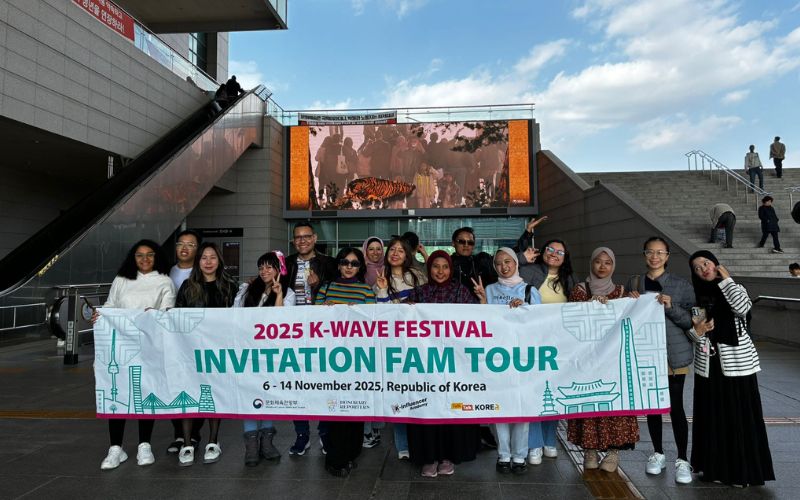
National Heritage Day, on November 9th, celebrates all aspects of Korean culture and its ancient and modern history. Korea boasts a civilization spanning nearly 5,000 years, and it has preserved its cultural identity despite many transformations over the centuries. This year, the K-Wave tour dedicated much of its itinerary to exploring Korea’s preserved heritage in museums and exhibitions, as well as in daily life. The tour included winners of K-Influencer competitions, honorary reporters, and Tok Tok Korea participants. The following article highlights some of the most notable heritage sites visited during the journey.
Sites visited during the K-Wave tour: Gyeongbokgung Palace, Deoksugung Palace, Bukchon Hanok Village, Ikseon-dong, Korean Folk Village (Yongin), Suwon Hwaseong Fortress, National Museum of Korea.
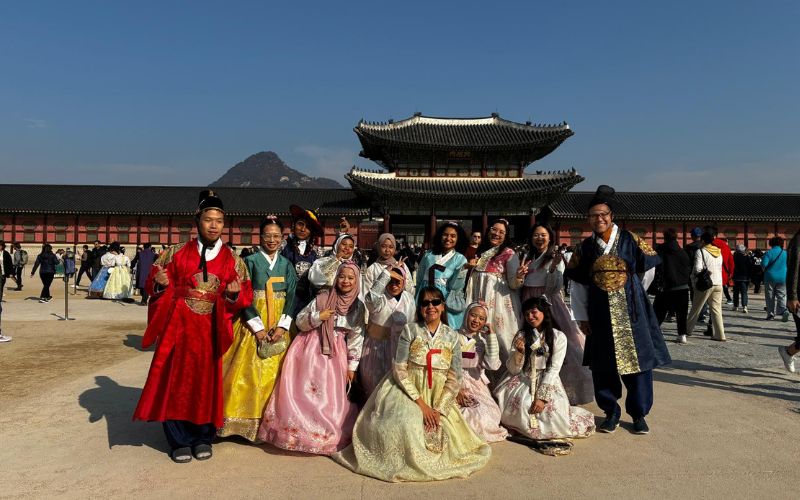
The journey began with the experience of wearing a hanbok and exploring a historic Korean palace. This immersive experience allows visitors to feel as though they have traveled through time. On the first morning, participants enjoyed a guided tour around Gyeongbokgung Palace, the largest royal palace in Seoul, built during the Joseon Dynasty. Its exquisite architecture and expansive gardens exemplify Korean design principles, blending beauty and simplicity with harmony with nature.
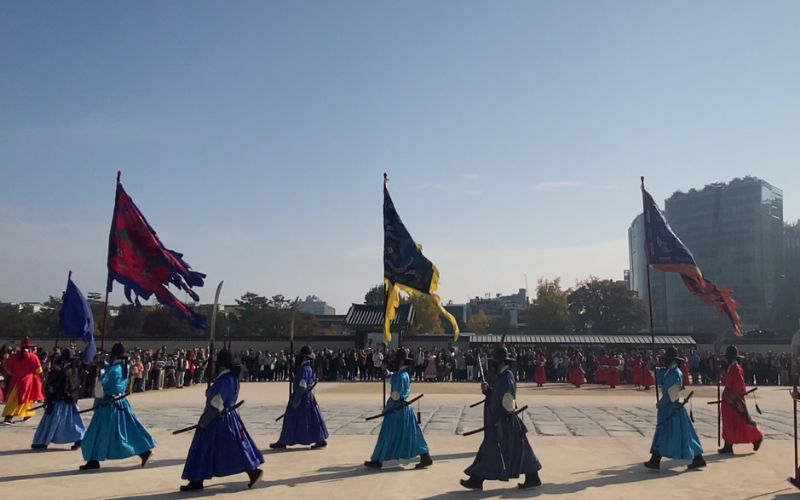
It is recommended to head directly to the hanbok rental area upon arrival. A variety of male and female hanbok designs were available, offering options for all visitors. Even walking into the room and seeing the designs was an enjoyable experience. Despite the crowds, visitors could appreciate the grand architecture, the scenic landscapes, and the vibrant seasonal foliage. A special ceremony reenacting the royal guard changing allowed participants to learn about the royal family's military and ceremonial traditions.
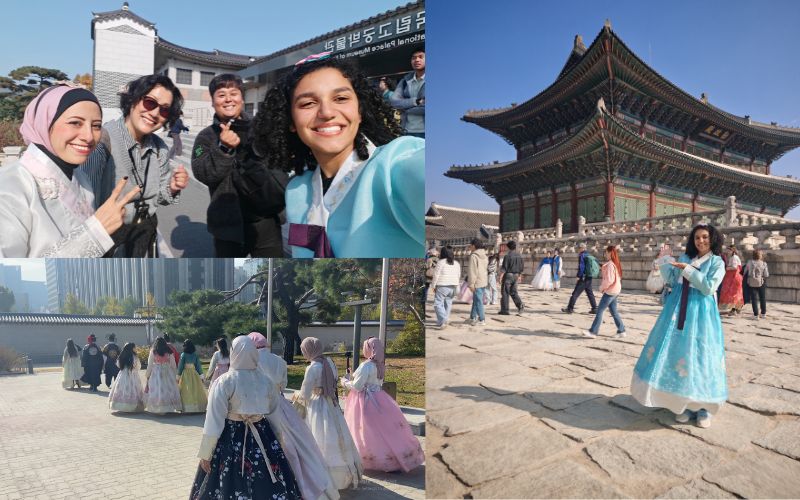
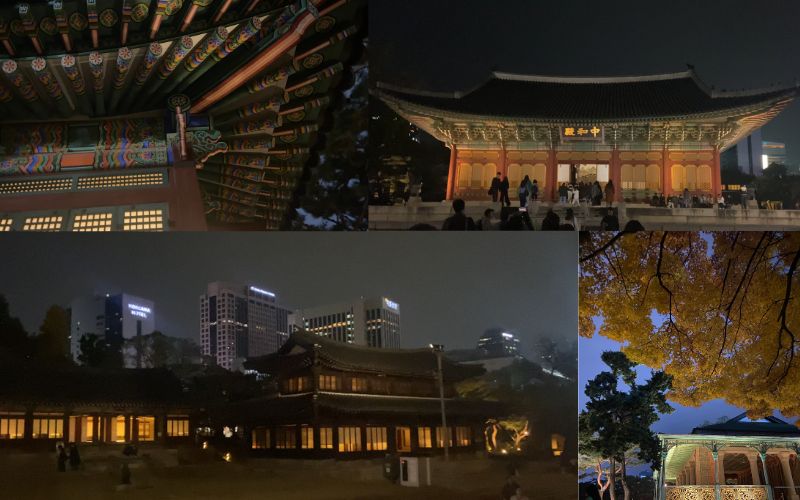
Deoksugung Palace is another royal palace worth visiting in Seoul. Located in the city center, it offers evening visits until 9 p.m., providing a unique nighttime experience. On the third day of the trip, the tour concluded at this palace. Deoksugung Palace combines traditional Korean and Western architectural elements, influenced by Greco-Roman styles, while maintaining traditional foundations. Its relatively small size includes peaceful seating areas among the trees, allowing visitors to relax and admire the surrounding historic buildings.
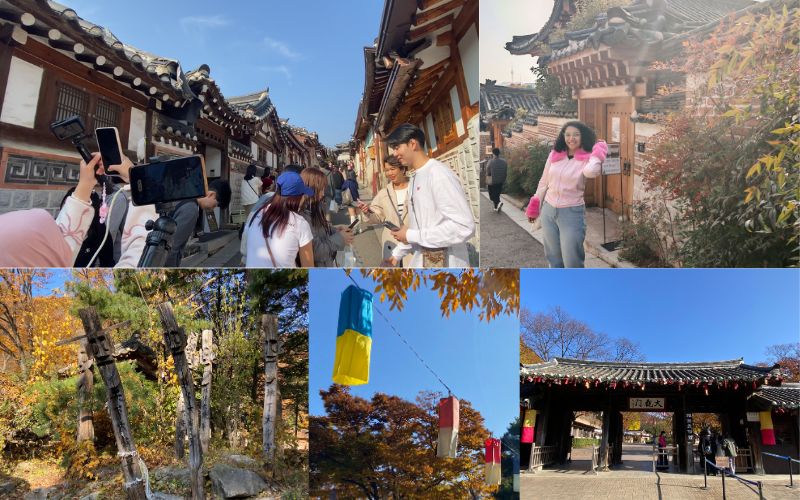
Also, traditional Korean houses, known as hanok, remain distinctive in design, with some still inhabited today. The tour included visits to several hanok-style villages, including Bukchon Hanok Village, Ikseon-dong, and the Korean Folk Village (Yongin).
Bukchon Hanok Village showcases how Koreans preserve their traditions. Many hanoks are still occupied, so visitors are encouraged to maintain a quiet atmosphere. The village offers excellent photo opportunities, and some uninhabited buildings are available for photography.
Ikseon-dong, although smaller, is one of the most charming traditional neighborhoods, featuring cafes and small shops built in the traditional style. With fewer residents than Bukchon, it primarily serves as a tourist destination.
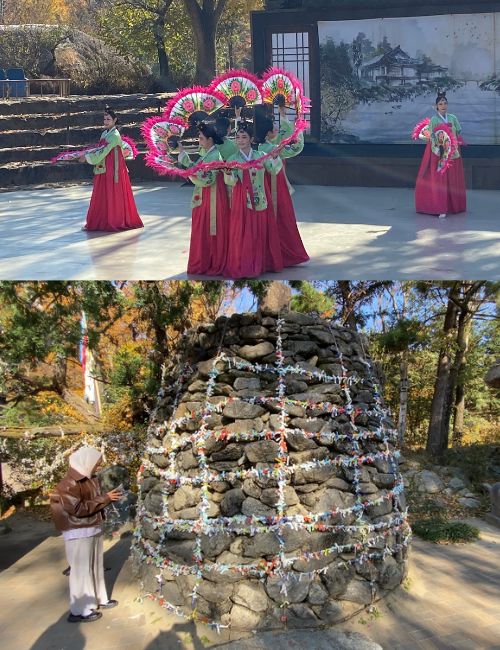
For a deeper understanding of historical interiors and daily life, the Korean Folk Village in Yongin provides a living museum experience. Established in 1974, it showcases traditional Korean homes and lifestyles. The village includes exhibitions of traditional tools and crafts, as well as cultural performances. One popular activity is writing wishes and placing them on the “luck stone” at the entrance, a tradition symbolizing protection and good fortune.
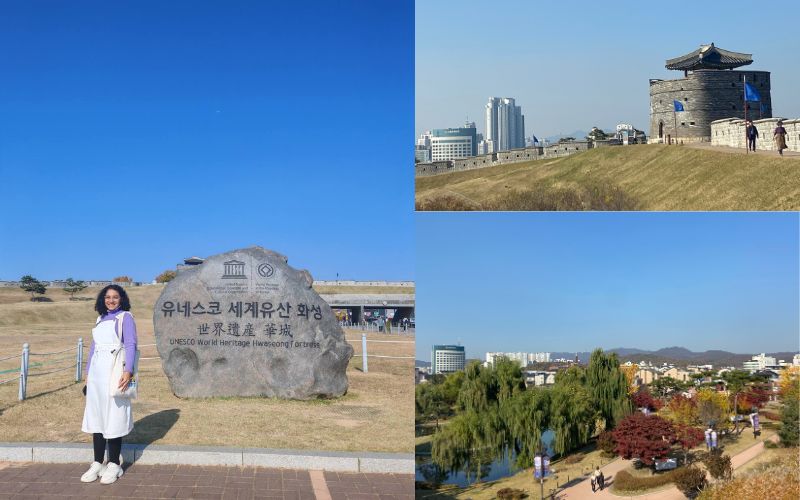
Besides that, military architecture can be explored at Suwon Hwaseong Fortress, the most famous heritage site in Suwon. Constructed between 1794 and 1796, the fortress is a UNESCO World Heritage Site, originally built to protect the city from invasions and demonstrate royal authority. Visitors can walk along its high walls and enjoy panoramic views of the city and surrounding areas.
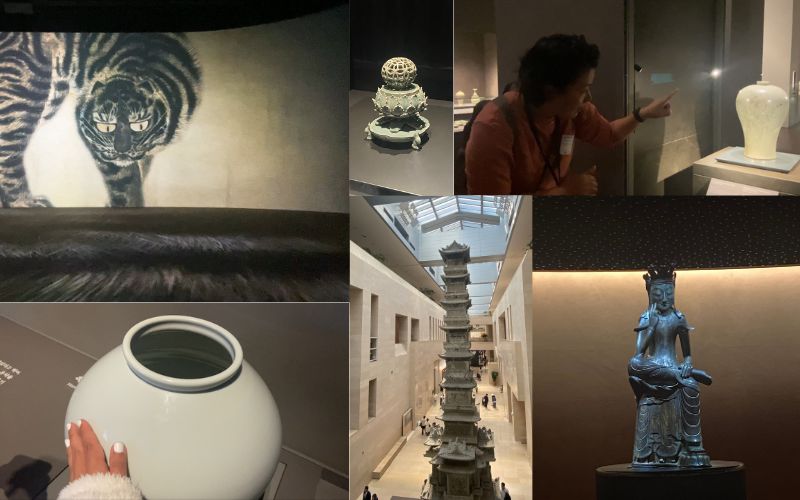
And the highlight of the tour was the visit to the National Museum of Korea, the country’s largest museum, presenting Korean history from prehistoric times to the modern era. Notable sections include the Ancient History Hall, displaying artifacts from the Three Kingdoms period; the Traditional Korean Art Hall, showcasing pottery, sculptures, and other art forms; and the Modern and Contemporary Art Hall, featuring works from the 20th century to the present.
The museum is easy to navigate despite its vast size, with intelligent robots guiding visitors. Interactive displays allow visitors to touch selected artifacts, such as celadon pottery, offering a tactile appreciation of heritage. Visual exhibitions creatively incorporate traditional symbols to enhance the learning experience.
Finally, Korea’s archaeological and heritage sites are diverse and accessible. Visitors can experience the country’s rich cultural heritage from the moment they arrive, with traces of its ancient civilization visible in even the smallest details.
Keywords:
Korean culture, Korean history, K-Wave, hanbok, hanok, Gyeongbokgung Palace, Deoksugung Palace, Bukchon Hanok Village, Ikseon-dong, Korean Folk Village (Yongin), Suwon Hwaseong Fortress, National Museum of Korea, Korea Net, Republic of Korea
How about this article?
- Like0
- Support0
- Amazing0
- Sad0
- Curious0
- Insightful0