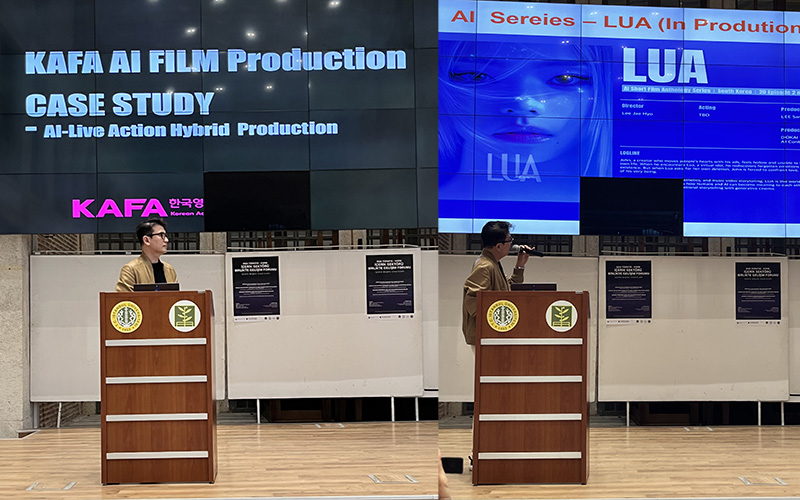
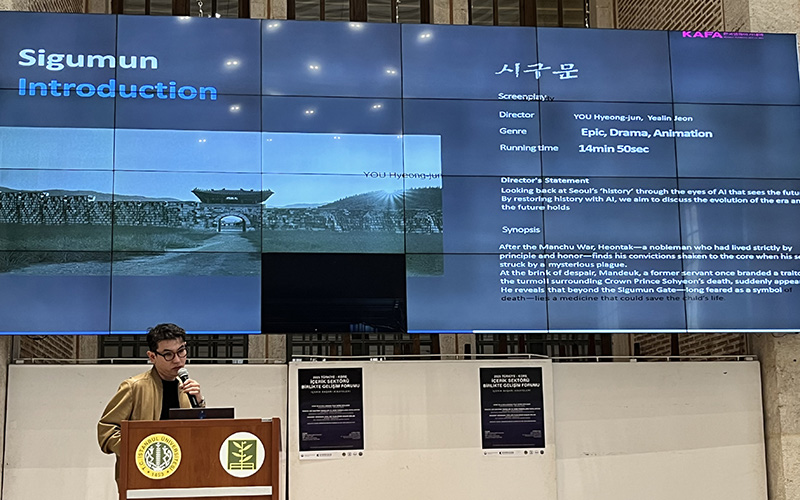
I met Woody Kim during a seminar held at Istanbul University as part of the K-Wave Festival and Korea Culture Week on November 24–25. The event, titled the Korea–Türkiye Content Cooperation Forum, brought together industry professionals to discuss the future of creative collaboration between the two countries. After the session concluded, I had the opportunity to briefly speak with Mr. Kim, which led to this interview exploring his insights on AI-driven filmmaking and the evolving landscape of Korean cinema.
This interview was conducted via email between November 25th and December 8, 2025.
Hello. First, could you briefly introduce yourself to our readers?
I have worked at the Korean Film Council (KOFIC) for 20 years, serving as the head of the International Business Team, and I am currently the Head of the Education Team at the Korean Academy of Film Arts (KAFA). As the head of the education team, I oversee the planning and operation of training programs for film professionals in Korea. I am also responsible for distributing KAFA-produced short and feature films both domestically and internationally.
Within your role at KOFIC, what developments in AI-based film production do you find most interesting?
As AI technology advances rapidly, the filmmaking paradigm is also changing. In commercial cinema, the most interesting aspect is the economic efficiency—reduced production budgets and shorter production timelines. For independent and art films, what fascinates me is the expansion of imagination and the democratization of creativity, meaning anyone can now create films.
Within a team that handles AI-generated content, how would you define the role of human creativity?
AI should not replace humans; it should be used as a tool. That is how truly creative and high-quality works can be produced. Therefore, humans will continue to hold the position of the conductor—the one who selects and directs. To maintain this role, human creativity must remain the foundation.
Do you see AI in film as a new artistic medium, or merely a tool supporting existing production processes?
I believe it can serve both purposes. AI films will emerge as a new medium or genre. Just as the invention of photography encouraged painting to develop its own unique expressive techniques, AI filmmaking will explore new paths. At the same time, AI will also function as a supporting tool in traditional film production, similar to post-production or VFX technologies. After all, film is inherently a technologically dependent art form.
How do you think AI will reshape cinematic language and aesthetics? And do you foresee new professions emerging within the next five years—such as “AI director,” “prompt screenwriter,” or “AI character designer”?
Those professions are already emerging. In Korea, roles such as AI Artist or AI Supervisor have started appearing in commercial film production. AI will not replace the grammar or expressive methods of traditional cinema, but it will become one of the new modes of expression. Ultimately, which method is chosen will remain within the realm of human decision-making.
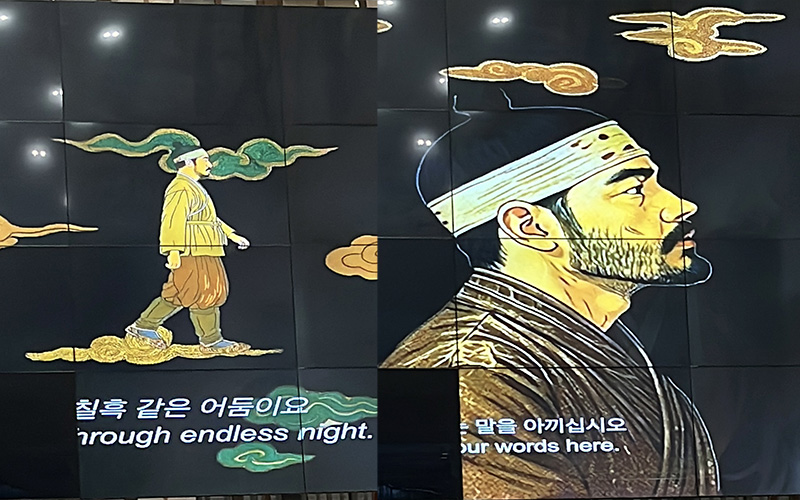
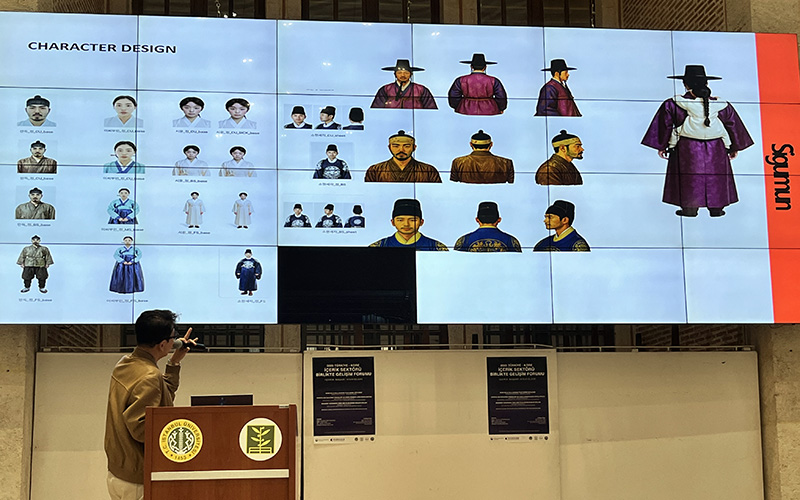
What was the most significant difference between the short film cases you presented today and traditional filmmaking methods?
Traditional short films are completed through a structure that begins with a script and live-action shooting, followed by editing and post-production. Our works, however, begin with characters, concept images, or a logline, and the story is shaped through interaction with AI. It is a more open-ended filmmaking approach. I see this as a circular production process in which the three stages—pre-production, production, and post-production—exist organically as one, rather than the conventional linear process.
Do you think that in 15 years, “films without AI” will become a nostalgic and rare concept?
Just as films shot on celluloid or films with a film-like texture now evoke nostalgia, I believe movies made without AI will feel like analog-sensibility films.
In terms of AI integration and innovation, where do you think the Korean film industry stands in the global market?
As for AI production tools and platforms, the United States and China currently lead the field and will likely continue to do so. It is essentially a battle of massive data centers, GPUs, and capital power. Korea will likely remain around the 5th place globally. However, in terms of producing content using these tools, Korea has strong competitiveness. With Korea’s IP strength, production capabilities, and its IT-savvy workforce, we may eventually see the emergence of the term “K-AI Content,” similar to K-POP or K-Drama.
Could you tell us about any upcoming projects or strategies KOFIC is planning to support AI-based film production?
Starting next year, KOFIC will launch a new AI Film Production Support Program. It will provide approximately 20 million KRW for short films and around 300 million KRW for feature films. The program aims to support around 20 shorts and 5 features. Additionally, we will operate year-round training programs for filmmakers to strengthen their AI capabilities.
Recently in Türkiye, the series Tesseract—featuring AI-replicated actors for the first time in the world—and Türkiye’s first AI-based virtual actor "İZ" have gained big attention. How do you evaluate these attempts and trends in Türkiye?
After watching the YouTube link, I came to know that Türkiye has considerable competitiveness in AI film. I think AI is changing the flow of global film production and the industry. I hope the Turkish government will also boldly establish AI film production support projects and operate education programs for filmmakers.
I also hope that opportunities for exchange will increase—such as holding AI workshops or exchange events between Korean and Turkish filmmakers—at the representative film festivals of both countries: the Istanbul International Film Festival (April), the Bucheon International Fantastic Film Festival (July), or the Busan International Film Festival (September).
We sincerely thank Mr. Woody Kim for his time and for providing such thoughtful and inspiring insights.
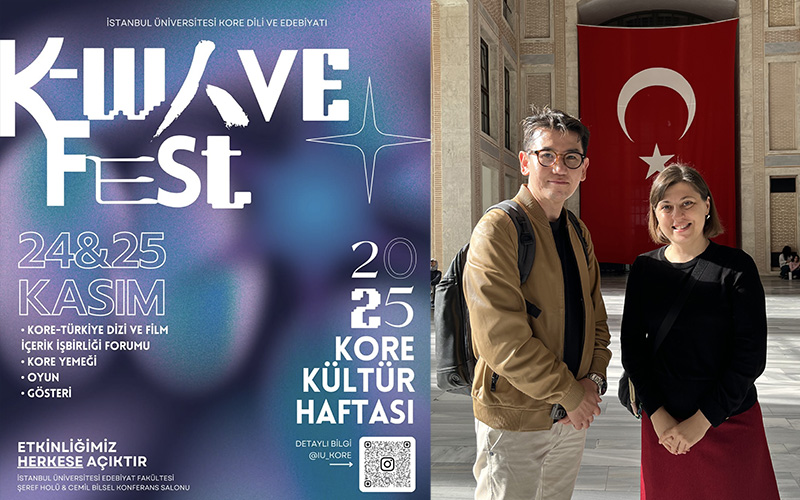
This interview was conducted via email between November 25th and December 8, 2025.
How about this article?
- Like0
- Support0
- Amazing0
- Sad0
- Curious0
- Insightful0