KPop Demon Hunters is an animated film released on Netflix on 20 July 2025, which became the most watched animated title on the platform within a few days. But what is the reason for such rapid and widespread success? Directed by Maggie Kang and Chris Appelhans, the film tells the story of Huntr/x, a girl band that fights the demons threatening the world. One of the most appreciated aspects is the film's ability to accurately combine elements of Korean culture, blending tradition and contemporary society in a way that is accessible and engaging for younger generations and international audiences.
Several factors have contributed to its popularity: the values it represents, such as friendship and collaboration, references to Korean culture and, above all, the music. The song Golden, for example, quickly climbed the music charts around the world, becoming the element that most impressed viewers.
The film also had a strong resonance on social media: many singers covered the songs, food influencers took advantage of the moment to explain traditional Korean dishes, and various profiles dedicated to Korea explored the traditions, places and cultural elements present in the story. In order to better understand the film's impact on the perception of Korea, I decided to gather the opinions of viewers. The responses were very interesting and made me reflect on the growing curiosity about Korean culture. The form was presented to people of various nationalities, including Italy, Argentina, Greece, Spain, and Malaysia, who responded anonymously.
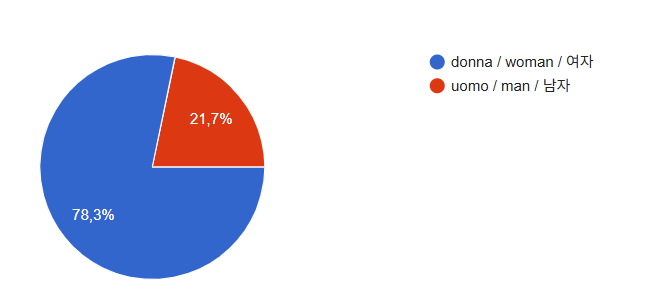
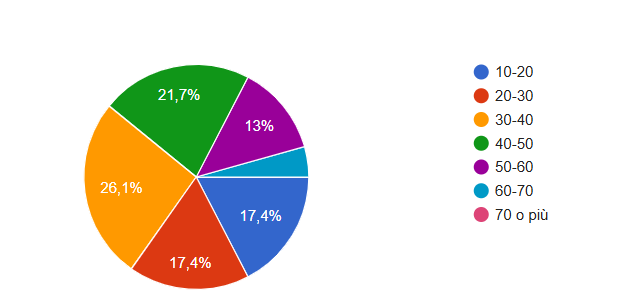
The first questions in the questionnaire were about the respondents' general details genre, age, nationality and their familiarity with K-pop. Surprisingly, 100% said they were familiar with KPop, a sign of how deeply rooted Korean music has become globally.
Next, I asked how many Korean cultural references they were able to recognise, 26% of respondents indicated food as the most immediately recognisable element, even though it is not particularly prominent in the film. However, the open-ended responses revealed a wide variety of recognised elements: KPop, traditional clothing and their symbolic colours, mythological figures such as the tiger and the magpie, spirit culture, shamanism, Namsan Tower, hanok houses, the walls of Seoul, the Hongdae neighbourhood, and even details of everyday life such as snacks or the habit of eating ramen.
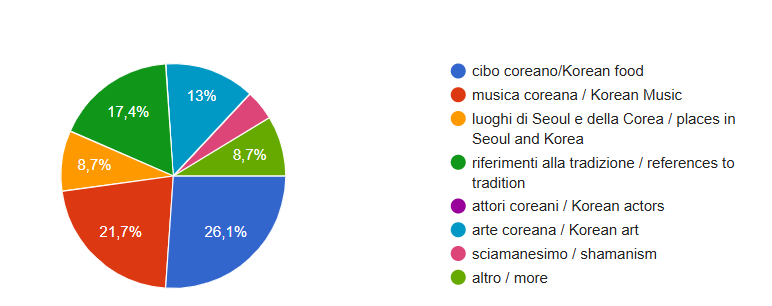
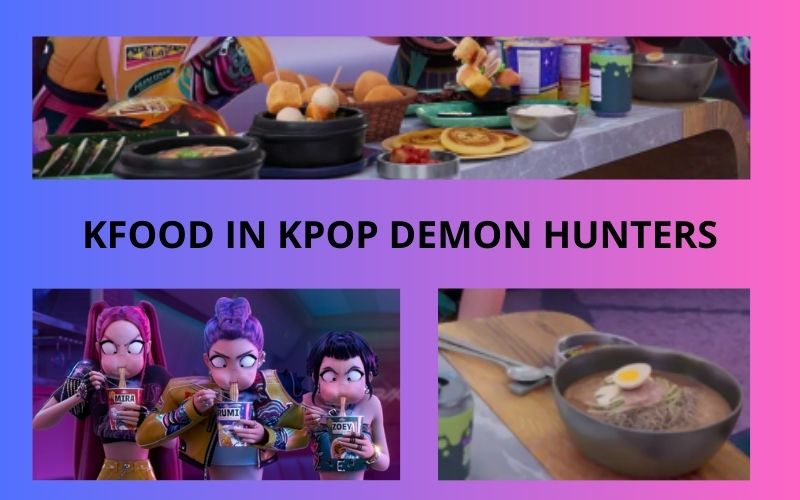
Many cited specific dishes: kimbap, ramyeon, kimchi, sundae, while others recognised characters such as the water demon, the grim reaper, the cat demon and more. Some identified obscure references, such as the minhwa of the messenger tiger or shamanism represented in the tree of life. This demonstrates an increasingly deep knowledge of Korean culture even outside the country's borders.
When I asked what aspects of Korean culture viewers would like to learn more about after seeing the film, the responses showed a strong interest in tradition: shamanism, mythology, art, historical architecture such as hanok houses, but also music and the entertainment industry. Some respondents expressed a desire to visit Korea and get to know its most traditional places; others said they already follow in-depth coverage of Korean culture and want to continue doing so.
The next question was about their favourite scene in the film. The most frequently cited was the one with the magpie and the tiger, two emblematic figures in Korean artistic tradition: the tiger as a guardian and the magpie as a messenger of good news. The scene of the protagonists' duet accompanied by the song Free was also very popular, interpreted as a moment full of hope and freedom.
Finally, I asked if they would recommend the film and why. Most responded positively. According to many, it is a story suitable for all ages, capable not only of entertaining but also of moving and introducing new aspects of Korean culture. One respondent wrote:
'Absolutely yes. It's a film suitable for everyone and it's not just an animated fantasy story: it deals with interesting and exciting themes.'
Others pointed out that, despite being a US production, the film still manages to represent some elements of Korean soft power very well:
'Definitely yes. It's fun while having a back story. Even though it had an Americanised essence, it represents beautifully some parts of Korea's soft power.'
Personally, I would recommend it to people of all ages: it is a technically well-made, engaging film that can bring even those unfamiliar with Korea closer to the country and its traditions. Thanks to discussions on social media and content dedicated to Korean culture, more people today are able to recognise elements such as norigae, the minhwa tiger and magpie, some typical dishes and various aspects of cultural tradition that were previously only known to the most knowledgeable enthusiasts.
How about this article?
- Like9
- Support0
- Amazing0
- Sad0
- Curious0
- Insightful0