Korea is one of the countries that is keen on reviving culture and drawing attention to it and to its essence through many events held throughout the year. There isn’t only one day dedicated to celebrating culture; rather, these are continuous and tireless efforts. The 26th of November of this month is a national occasion meant to encourage citizens to participate actively in artistic and cultural activities. Earlier this month, as part of the “K-Wave Tour” for the best honorary reporters, the Korean individuals’ interest in culture and their love of literature were highlighted. This article involves a quick introduction to the Korean literary scene based on my brief experience there.
If you are a citizen or resident of Korea, you can easily notice the efforts of institutions and individuals to promote reading and make it an important part of daily life, not through speeches or cultural lectures, even if they are sometimes important, but by providing opportunities for young people to read, write, and express their voices with ease.
And while this may be expected in countries with economic prosperity and high disposable income, or in countries with a huge commercial book market, such as the United States, the fact that a country still in the process of development invests so much in literature, arts, and young voices is striking. It is proof that despite the hardships of life and the demanding nature of work, art and culture remain essential foundations that must be nurtured for society to advance.
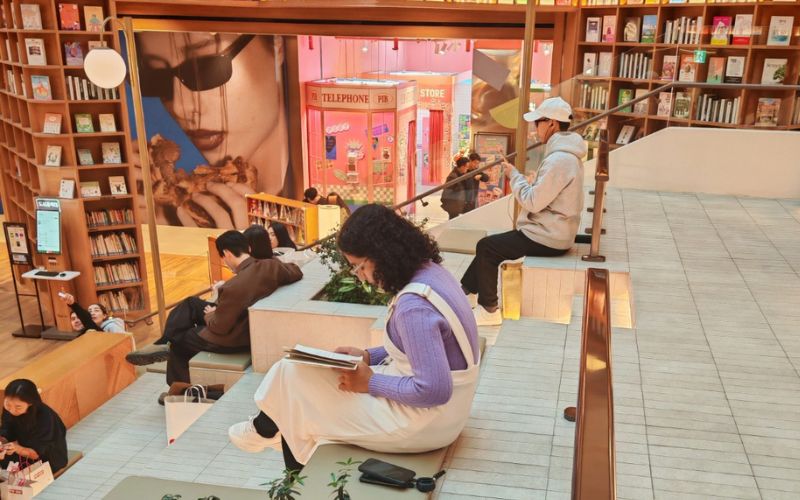
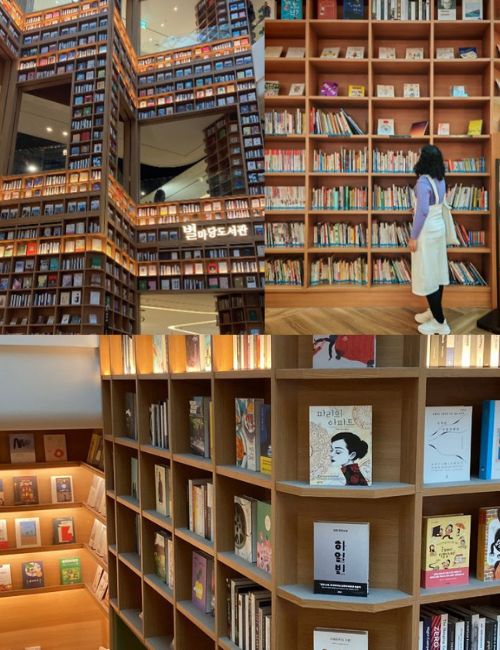
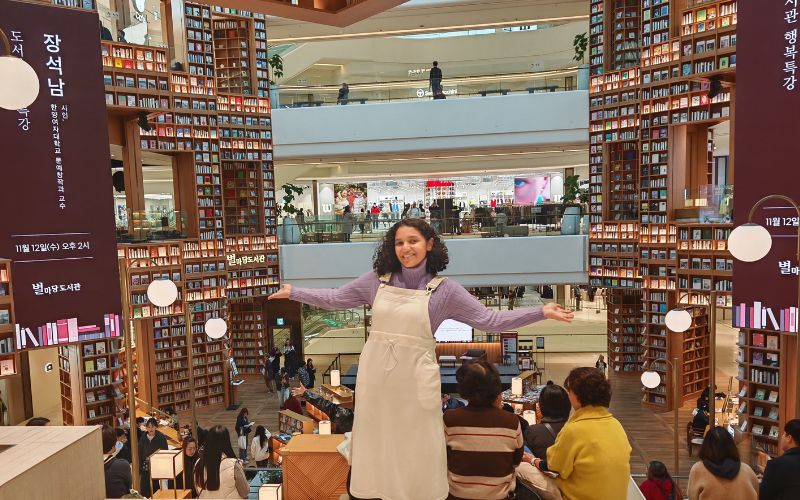
Reading may feel heavy or boring to some people, and instead of trying to change that perception through direct preaching, it is better to make reading enjoyable and turn a library visit into a pleasant outing, just like in the Starfield Library chain. That library is known for its elegant and distinctive design, which attracts tourists and citizens from various places to visit, spend time, and take photos and videos. Even if not all visitors go there mainly to read, the space encourages those who truly love reading to come and enjoy their time, and it may also open others’ eyes to new titles and to the beauty of reading itself.
There are several branches of the Starfield Library, and visiting the Suwon branch was part of our tour itinerary. It’s great that such attention isn’t limited to Seoul alone.
Despite the crowds and the different intentions of visitors, some wanting trendy photos and videos, others wanting to relax, and others looking to read, there was a harmony between everyone, and enough space for those seeking quiet to simply put on their headphones and dive into their own world with their favorite book. Sitting there reading while listening to my favorite music was one of the highlights of the trip.
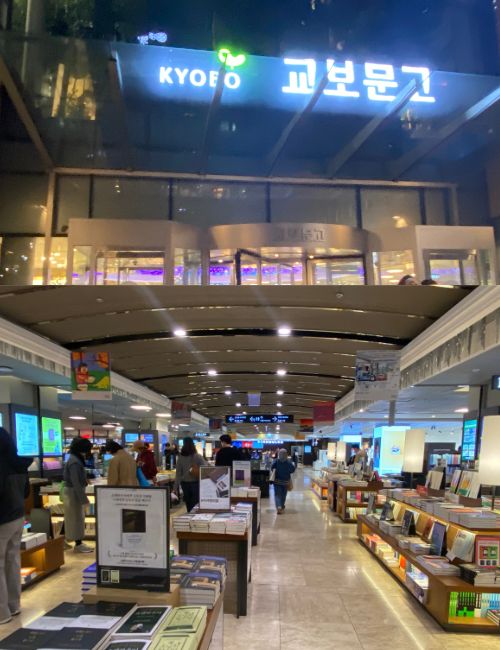
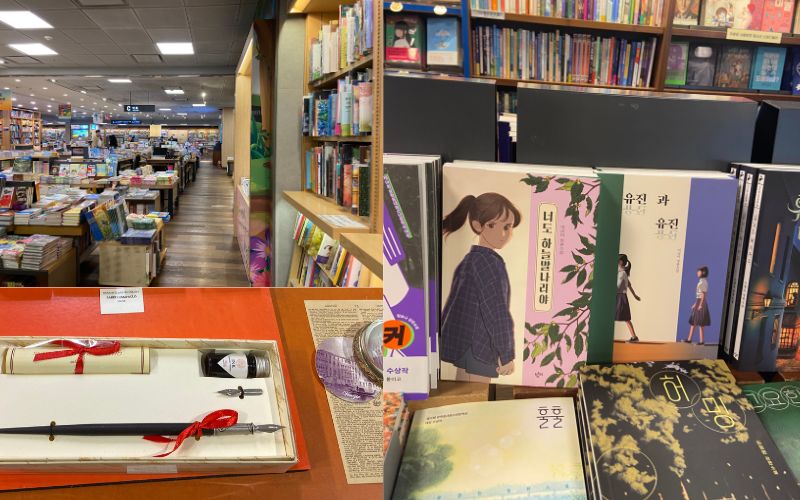
It is also notable how large bookstore chains are available in most cities, offering books from various publishers and all literary categories without the need to search extensively for titles that match your taste. Among the most famous chains is Kyobo Bookstore, well-known to anyone who loves Korean literature, but visiting one of its branches in person was a different and wonderful experience.
At first, the plan was just to take a quick look and find a specific title, but the shelves easily pulled me in. Time passed without notice, and choosing a single book became impossible in front of what felt like an entire library. That first visit turned into a quiet walk between rows of original editions and newly discovered voices, skimming through titles that caught the eye and offered a glimpse into the richness of contemporary Korean literature.
One of the most striking things was the level of recognition given to young authors and promising voices who had succeeded in literary competitions. Often, literary awards become a routine followed only by people in the literary field itself, but in Korea, the display space given to youth award-winners was almost equal to the space given to world-renowned or best-selling authors.
In addition, there is a wide availability of translated world literature, and exposure to different literary experiences is essential in building awareness.
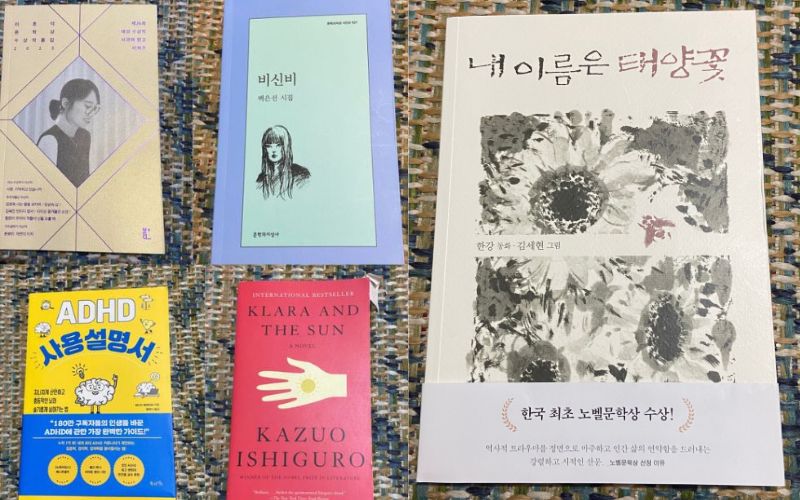
Restricting the final selection to specific titles. Below is a selection of contemporary works chosen during the visit, offering a chance to explore new voices and different dimensions of remarkable Korean writers.
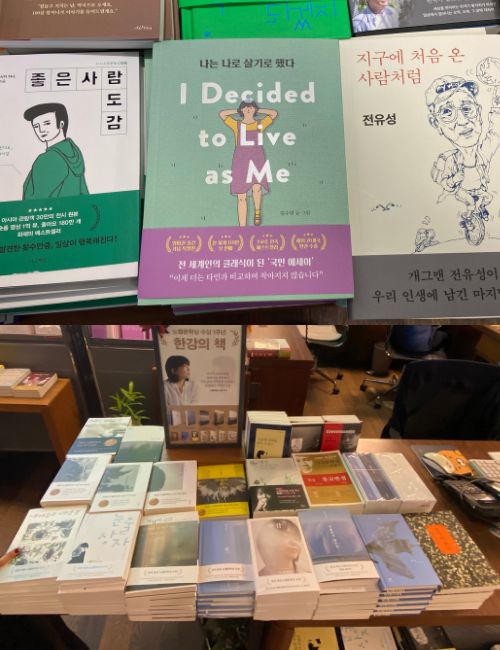
Author Han Kang needs no introduction, especially after receiving the Nobel Prize in Literature as the first Korean and Asian woman to achieve this milestone. But many global readers assume that her works are emotionally heavy or dark, like “The Vegetarian” or historically dense like “Human Acts”, which are her most internationally famous titles. While these books truly deserve to be read many times, Han Kang’s world is broader and more diverse, suitable for readers of various tastes. She has poetry collections and even children’s stories worth exploring.
I decided to buy her fantasy story “My Name Is Sunflower”, as I read most of it while at Starfield Library and found it easy to read, pleasant, and carrying Han Kang’s unique tone that distinguishes all her works. Her poetry collection “I put my evening Inside a Box” is also worth reading attentively, especially since Han Kang began her career as a poet, and getting used to her poetic style is key to understanding her other works.
And to explore new literary voices. Among the selections was a short story collection titled "Apple and Ringo" by a young writer named Lee Hee-joo. The book focuses on the unstable relationship between two sisters, the older one burdened with supporting the family, and the younger one struggling through life. Their relationship reflects modern Korean social realities.
This collection won the Lee Hyo-seok Literary Award this year, an important short story competition established in 1977 to commemorate the influential Korean writer known for capturing everyday life and social conditions during the colonial era.
One of the main goals was to buy a poetry collection by a Korean female poet I had never read before. Discovering new Korean poets has never been disappointing; Korean poetry, especially women’s voices, carries a distinct depth and tone. Among the new releases, a poetry collection titled The Non-Mysterious by Baek Eun-sun, published earlier this November, stood out as a compelling title to explore.
Also, the foreign books section offers both translated titles and original editions, making it easy to find specialized works, including psychology books. Several globally acclaimed literary titles were also available in the discount section, including a novel by a personal favorite author.
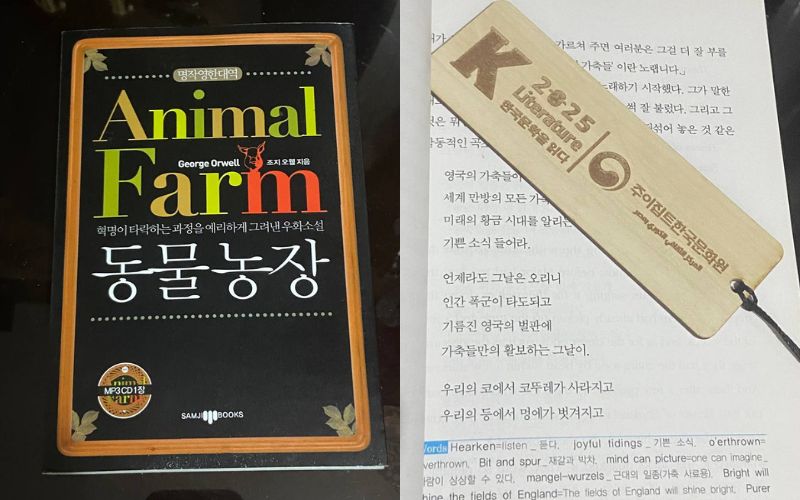
It’s also helpful for learners of Korean to buy bilingual books that allow reading in both Korean and English. One of the best of them was the famous novel “Animal Farm” by George Orwell. While most Korean buyers will probably use it to learn English, I’m happy to have it to learn Korean.
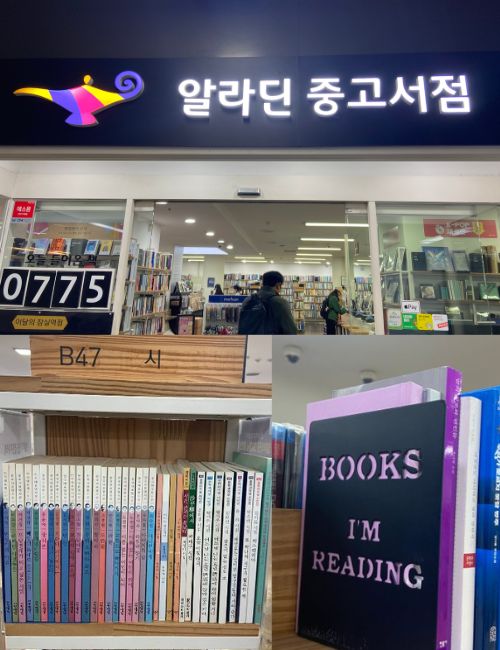
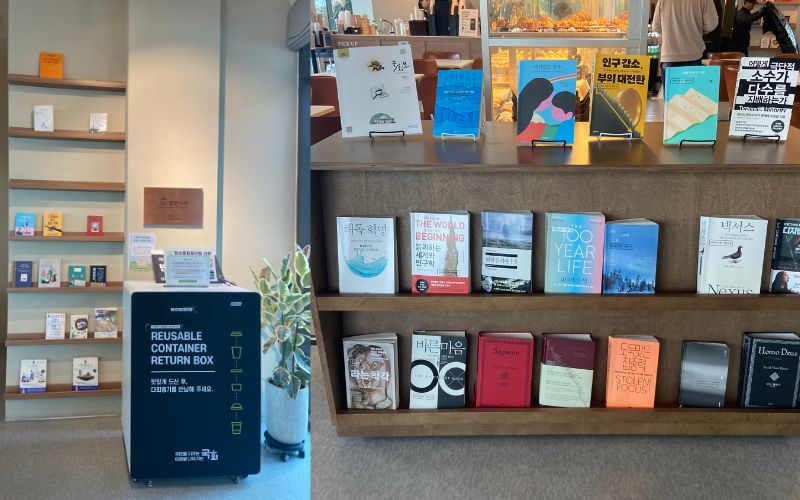
Throughout the trip, books surrounded every corner. In coffee shops, there are special book corners. Some chains sell used books, such as Aladdin Bookstores, which display them neatly and in good condition in central locations like metro stations, making reading materially and practically accessible without the need for a certain income level or cultural background. One doesn’t need to waste time searching for a place to buy a book; books surround you on your way to and from work, and the choice is yours.
Finally, Korean literature contains a kind of magic that sets it apart from the literature of any other country. It blends simplicity and depth, expressing the smallest details and daily emotions with striking realism without leaning toward excessive description or unnecessary figurative language. Every story is told exactly as it should be, without a desire for perfection or embellishment.
The essence of Korean art in general is naturalness and lack of pretension. One of the most famous Korean artistic concepts is “sobak-mi”, which means the beauty hidden in simplicity. Just as this concept influenced visual arts and architecture, its influence clearly appears in literary works as well.
Keywords:
Korean literature, Korean culture, Starfield Library, Kyobo Bookstore, Aladdin Bookstore, Han Kang, Baek Eun-sun, Lee Hee-joo, Korea.net, Republic of Korea
How about this article?
- Like0
- Support0
- Amazing0
- Sad0
- Curious0
- Insightful0