[INTERVIEW] Bringing Stories to Life: Director Yoon Ga-eun on Her Journey and Korean Cinema
2025-09-19Director Yoon Ga-eun is one of the most unique voices in modern Korean cinema, and she has been able to establish a reputation in her subtle storytelling and power to depict ordinary emotions with richness and reality. Yoon Ga-eun has proven herself to be one of the most unique new voices in cinema in Korea. She graduated with a degree in history at Sogang University and later earned an MFA in film from the Korea National University of Arts and started filming short films that received international acclaim. Both Guest (2011) and Sprout (2013) won big prizes at the Clermont-Ferrand and Berlin International film festivals, and her first feature, The World of Us (2016), premiered at Berlinale and received several international awards. She continued to direct The House of Us (2019) and The World of Love (2025), the latter of which premiered at the Toronto International Film Festival.
Her most recent work, Time of Cinema (2025), premiered today (19 September 2025) at the Busan International Film Festival in the Korean Cinema Today - Panorama section. The conflict between reality and performance is discussed in her segment, “Naturally”. So, on a hot summer day, children are invited to play outdoors, but such a simple task turns out to be quite unexpected due to the presence of the camera. When she captures that tension, Yoon also reveals her personal philosophy of films appearing natural and real, despite being a closely-crafted product.
“Films are a strange and peculiar medium. They have to look real, even though they are fake, and they have to feel natural, even though they are carefully crafted. It’s extremely difficult. But fortunately, it’s something we make together, not alone,” she says.
During this email interview conducted between 8th September and 18th September with the assistance of the Finecut team, the director Yoon shares her journey to filmmaking, the creation of Time of Cinema, and reasons why the Korean stories still appeal to audiences everywhere.
Can you share a bit about your path into filmmaking and what first inspired you to tell stories through film? How did that lead you to become a director?
There wasn’t really a specific moment of inspiration. I’ve simply loved movies since I was very young, and growing up, I naturally thought that if I could become someone who makes the very things I love, that would be wonderful and fulfilling. Interestingly, it was only after I decided to pursue directing that I started to worry about whether I truly had the talent to make films. That pushed me to delve deeper into the film language and the kinds of stories I could tell. I began as a fan of cinema, and now I’m walking the long road of studying hard to become a director.
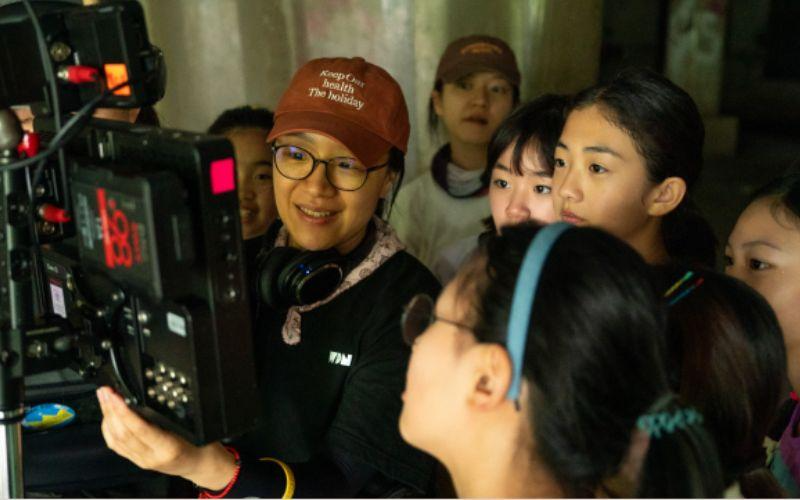
When you develop a story, what does your creative process look like? Do you draw more from your personal experiences, or do you find inspiration in the world around you?
In fact, it’s completely different for each project, and the more works I create, the more my approach seems to evolve. In the past, I mostly started from personal experiences, and during the process of learning what “story” really means, reflecting on my own life helped a lot. Even now, finding connections to my personal questions or struggles is still the most important part of creating a film. But unlike before, I now have more space to step outside myself and look at the world around me. Honestly, I’ve grown tired of always digging only within myself. Since my personal issues are ultimately tied to the world, I’m trying to keep my eyes wide open to what’s happening in the world right now.
Your films are known for capturing the thoughts and emotions of children and teenagers with great empathy. In Time of Cinema, is there something in particular that you hope audiences notice or feel more deeply?
I hope audiences get a closer look at what kind of work it really is when adult filmmakers make a movie together with child actors. Sometimes, when children’s acting feels so natural, it seems as if it just happened by luck — but is that really the case? I’d like viewers to experience what actually goes on behind that process.
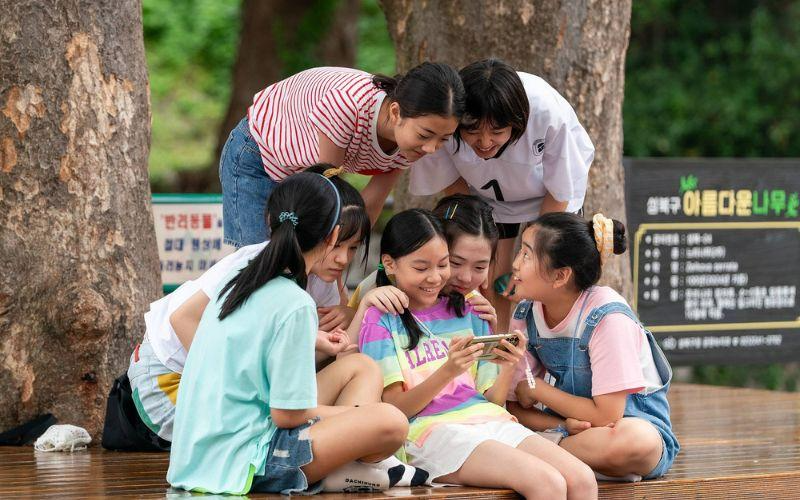
Every film has its challenges. What was the most difficult part of making Time of Cinema, and how did you work through it?
The hardest part was definitely the weather. We started filming just as the summer monsoon season arrived, and rain was forecast almost every day. But since our film was shot entirely outdoors, delaying wasn’t an option. After much worry, we decided to pack as many scenes as possible into a very short shooting schedule and simply prayed every day for the rain to hold off. Of course, there were a few delays when it did rain, but miraculously, we managed to finish under mostly clear skies. I like to think the heavens were impressed by the dedication of KO A-sung and the seven child actors, who gave their absolute all.
With Time of Cinema being selected for the “Korean Cinema Today – Panorama” section at BIFF and having its world premiere there, what does this moment mean to you personally, and how do you feel about sharing your film with audiences in this context?
This is such a meaningful and grateful moment for me. It’s especially an honour to be able to attend Busan with actress KO A-sung, who has introduced so many films at BIFF over the years. A few years ago, during the festival season, we both happened to be in Busan for different reasons and promised to meet up, but we were each so busy that it didn’t happen. At the time, I secretly thought, “Next time I come to Busan, I hope it’s with a film we’ve worked on together — that way, there’s no way we’ll miss each other!” That’s why this trip to Busan feels even more meaningful and rewarding. I also believe this will be such a joyful and unforgettable experience for the seven child actors, getting to present their film for the first time at such a major festival, in front of so many people.
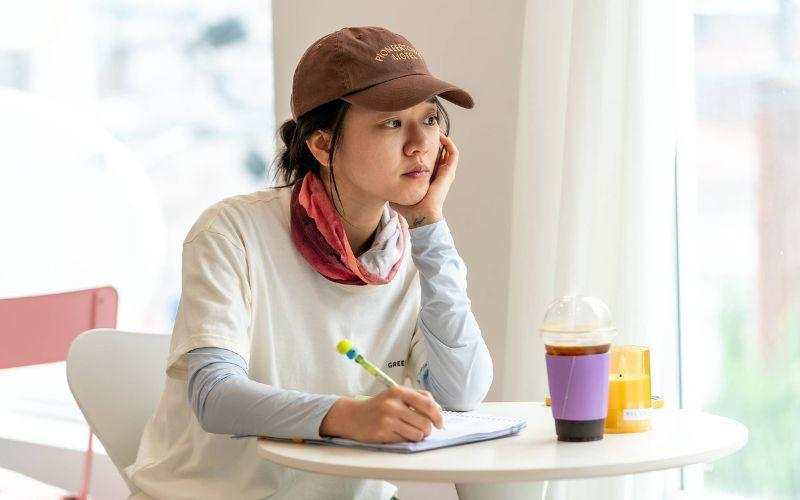
Looking back at your journey—from your early short film The Taste of Salvia to your award-winning features, The World of Us, The House of Us, and now Time of Cinema—how do you feel you have grown as a storyteller?
I honestly hope I’m growing, but I’m not sure. I’m not even certain I can call myself a storyteller. What I do know is that my love for cinema keeps growing deeper, which is surprising to me. There were times I felt exhausted and discouraged, but when I returned to film with clear eyes, I found myself discovering something new every day. Whenever I encounter works that are astonishing, strange, or awe-inspiring, I feel deeply grateful to be alive to experience them. And with each project I make, I realize anew just how vast and profound cinema as a medium truly is. If watching and making good films can help me grow into a better person, that would be the greatest gift.
Korean cinema has been evolving in many ways over the past decade. From your perspective as a filmmaker, what do you think makes Korean stories unique, and what excites you about its future?
I often think Koreans are people with an innate strength in storytelling. Historically and even now, audiences here truly love and know how to enjoy stories at a very high level. That makes it incredibly difficult as a writer/director to create something that satisfies them. A Korean film has to be entertaining and moving, but also original and authentic. And audiences here have an uncanny ability to recognise and embrace new and daring attempts. They are a very demanding and challenging audience. The film industry is facing difficulties and has slowed down, but if we creators can truly grasp what audiences genuinely want at the core — and strive to deliver it — then I believe both filmmakers and audiences can grow together. Of course, it’s an incredibly hard road, and full of struggle for creators, but with enough support and encouragement, it’s possible.
Looking back at your career so far, what advice or insight would you like to share with young filmmakers or storytellers who are just starting out?
I don’t feel I’m in a position to give advice as a peer. But I increasingly believe that making stories is an extraordinary privilege — and with that comes responsibility and purpose. Films and stories are not essential for survival; you can live perfectly fine without ever watching a movie or enjoying a story. In that sense, they are “nothing.” And yet, paradoxically, films and stories can make people truly live. They can make someone look back on their life with pain and awe, or seriously think about how to live the life ahead. I still believe films can change people, and even the world, at least a little. I hope more fellow creators will walk this path with me, sharing such stories.
Link to the trailer of the movie
The story of Yoon Ga-eun teaches us that filmmaking is a privilege and a responsibility, a profession that must be empathetic, patient and believe in the strength of stories. With Time of Cinema, she not only allows the audience to see how fragile the process of bringing performances to life is, but also ponders the strength and cooperation that enable cinema to exist.
As she keeps on evolving as a director, Yoon points out that even though films need not be a survival requirement, they can still be capable of touching people, inspiring them, and even transforming lives. Her words are an encouragement to the future generation of filmmakers who are hoping to have a voice of their own in a difficult industry. We can expect to see a Korean cinema that is both true to itself, brave, and very human, with directors like Yoon Ga-eun at the helm, to make sure that the films will still find an echo in audiences worldwide.
The Interview was conducted in Korean, translated and reviewed again by the team.
How about this article?
- Like5
- Support0
- Amazing0
- Sad0
- Curious0
- Insightful0