The documentary analyzes how Min Yoongi’s artistry has become a multifaceted manifestation of Korea’s “soft power.” In an era where cultural exchanges play a key role in shaping international relations, Min Yoongi steps into the role of an influential cultural representative of his country.
His music, refined over years as a producer, transcends mere entertainment. It carries profound values that resonate with a global audience: self-acceptance, the strength of community, the importance of genuine self-expression. These themes, transmitted through his unique style and honest lyrics, resonate with people’s personal experiences worldwide, overcoming linguistic and cultural barriers.
Min Yoongi’s connection with his vast audience is not simply an interaction between an artist and fans; it is the creation of a community based on shared values and mutual respect. This community, in turn, becomes an ambassador of Korean culture, sharing it not only through music but also through communication, mutual respect, and cultural exchange.
Speakers from the most diverse fields are responsible for the analysis in the film – from the music industry and cultural fields to journalism and Korean cultural studies.
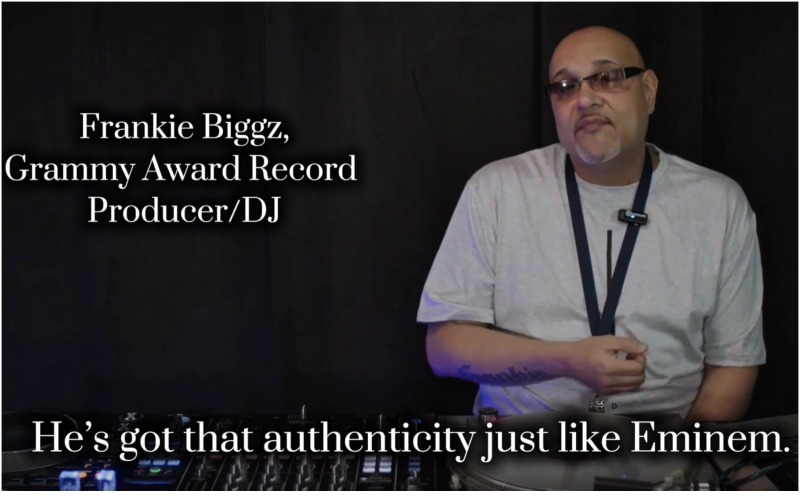
For example, Frankie Biggz, a Grammy Award Record Producer, shares his vision of Min Yoongi’s work as a producer, assessing his contribution to global music production.
Jiyoung Lee, Research Professor at Hankuk University of Foreign Studies, Author of “BTS, Art Revolution” analyzes the breadth of themes addressed by Yoongi – from self-analysis and and influence on audience to pressing social issues.
Maria Osetrova, Candidate of PhD in Korean Studies and Research Fellow at the Center for Korean Studies at the Institute of China and Contemporary Asia, Russian Academy of Sciences, Candidate of Cultural Studies, views K-pop, and BTS in particular, as a phenomenon that has become a catalyst for interest in Korean culture as a whole.
In the film, we can see how music and its cultural expressions can be a powerful tool of international influence. And here, the example of the group BTS’s performance at the UN platform is illustrative. As one of the film’s speakers – international TV journalist Anna Voronina – notes: "And the first question I had for myself was: who do you have to be and what weight do you have to possess, what level of influence do you have to possess, in order for them to let you climb out from under the tribune of the UN General Assembly, with a microphone and sing your song, and also walk around the hall of the UN General Assembly, and also put on a real show on the territory of the United Nations. This speaks not only of influence, but also of a unifying factor. Because the UN today is, after all, a structure that unites very many countries, tries to solve some problems and to provide its platform for such a group – this means showing the significance of both the organization, and the significance of the group itself, and the power of its influence."
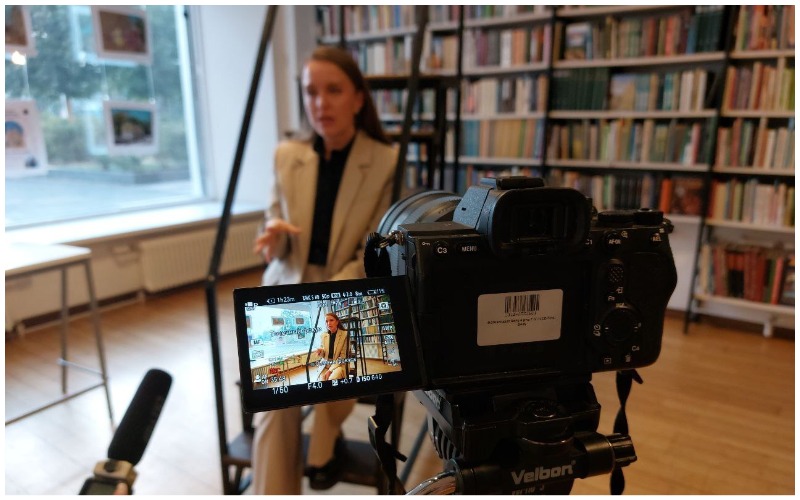
Min Yoongi, being not only a performer but also an author, addresses pressing social issues in his songs. Artist, culturologist, and honorary reporter for Korea.net Ekaterina Rybakova highlights this aspect in the film: “He very boldly voices social problems. He also talks about the pages of his history, the history of his country…”
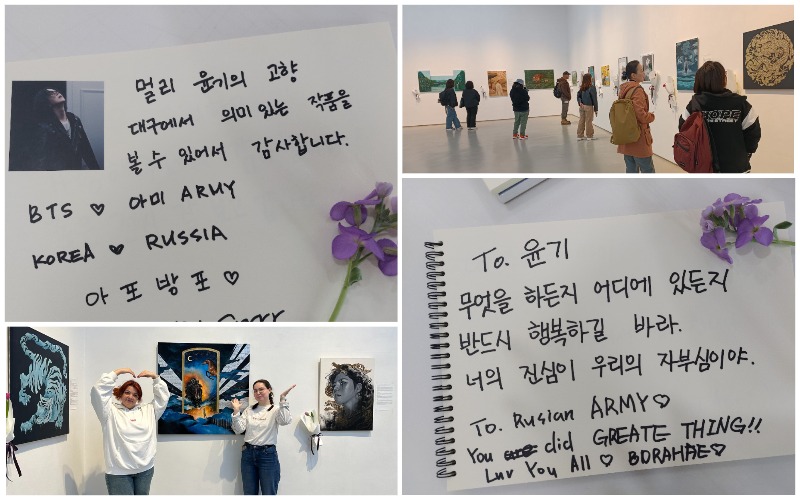
The film sheds light on Min Yoongi’s broader influence on contemporary art and culture. In particular, it highlights an international art exhibition in Daegu, organized by the International Cultural Center K-R Community at the Bongsan Cultural Center. The exhibition featured works inspired by his music. Moreover, the film features female artists whose paintings were presented at this exhibition, sharing their vision of how the artist’s music became a source of inspiration for them.
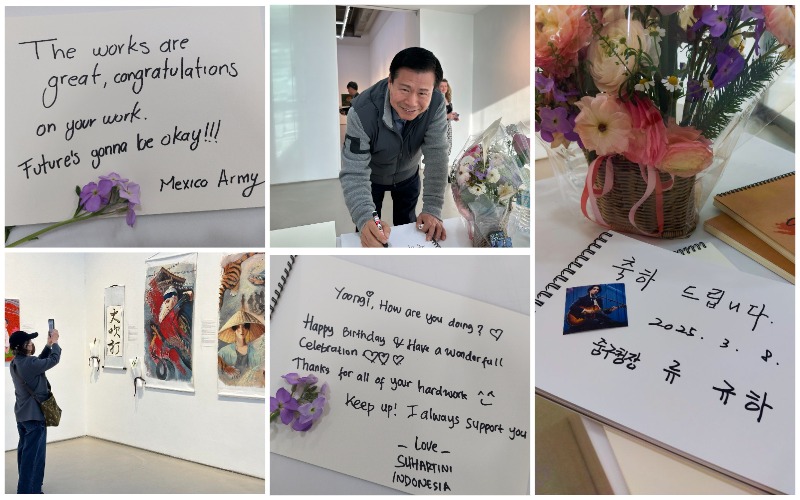
This fact clearly demonstrates how Min Yoongi’s creativity transcends the music industry, becoming a source of inspiration for artists and initiating a deeper dialogue between different art forms and cultures. This intertwining of musical and visual creativity underscores his ability to influence the cultural landscape as a whole.
Min Yoongi’s activities as a music producer also play a significant role in understanding his cultural contribution. His innovative approaches to music, which go beyond traditional genres, not only shape a new sound but also contribute to the transformation of global music production. This is part of a broader trend within which the Korean music industry is beginning to occupy one of the dominant positions on the world stage. An important aspect is also his collaboration with Western artists, which draws the attention of the international audience to Korean music and culture, opening new horizons for intercultural dialogue and demonstrating the potential of the Korean music market.
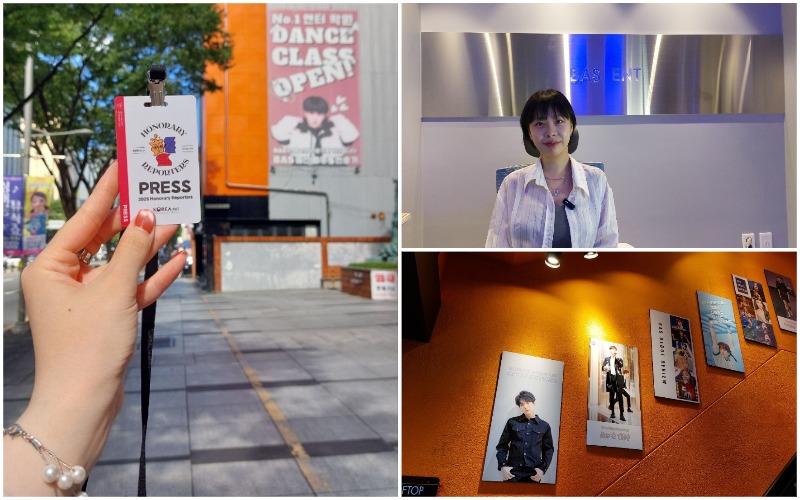
Work on the idea and script for this film began by me last year with the aim of showcasing the multifaceted influence of Korean culture through the prism of Min Yoongi’s artistry. In the process of working on the film in 2025, numerous speakers from three countries – Russia, Korea, and the USA – were involved, with whom I became acquainted personally. Some interviews took place in Moscow; other participants sent their video recordings. Part of the research was conducted directly in Korea, including interviews and the collection of unique material at an art exhibition in Daegu.
This documentary film becomes a testament to how music and cultural expressions can be a powerful tool of international influence. Through its authenticity, boldness in expressing complex themes, and ability to create music that touches the deepest strings of the soul, Min Yoongi not only shapes a positive image of Korea but also contributes to a deeper understanding of its culture, values, and the spirit of the times. He demonstrates how individual creativity can become a catalyst for global cultural shifts and the strengthening of international ties.
How about this article?
- Like319
- Support5
- Amazing23
- Sad3
- Curious0
- Insightful3