Learning Korean can be a beautiful and humbling experience. It is often marked by gradual progress, practical insights and occasional mistakes. Like many language learners, traditional methods such as Korean classes, studying grammar and keeping your eyes on Korean media are used to better understand the language as a whole. Since the spring of this year, Korea.net has been posting a Korean word along with explanations and example sentences to their social media platforms. The beauty of Korea.net's vocabulary posts is that they make Korean feel approachable. Each post is simple and to the point. There is no pressure to memorize a full grammar rule or hold a conversation. This way works well for learners who juggle family, work and everything in between with hardly any time to spare.
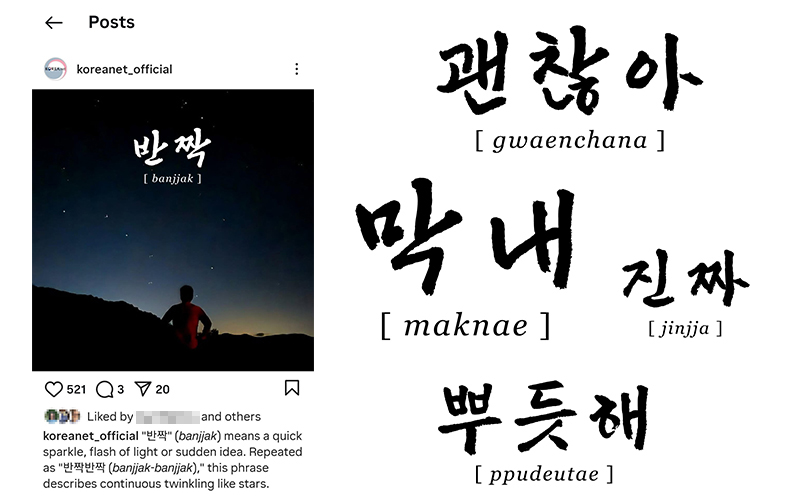
Screenshot of a post from @koreanet_official on Instagram and some of the other words they shared on their social media platforms. Translation to English: banjjak (반짝) means sparkling or twinkling, gwaenchana (괜찮아) means It's okay or I'm fine, maknae (막내) means youngest sibling, jinjja (진짜) means really or for real, ppudeutae (뿌듯해) is an expression of quiet pride. (Image credit: Korea.net)
For example, “banjjak” (반짝), meaning sparkling or twinkling is in the lullaby called, “Banjjak banjjak jageun byeol” (반짝반짝 작은 별), which is Twinkle Twinkle Little Star in English. It was also recently popped up in the animated film, K-Pop Demon Hunters, when a fan was holding up a sign with the words, “Banjjak banjjak Rumi” (반짝반짝 루미), which means Sparkling Rumi. She is one of the members of Huntrix, the all-girl K-pop group in the movie. In the same film, the word, “maknae” (막내), was used when they called Zoey their cutest and youngest member. Earlier this year maknae was added to the Oxford English Dictionary.
One word at a time may not seem like very much progress, but over time, it helps build both linguistic competence and confidence. There is something satisfying about seeing a word, remembering it later and actually understanding it in context. Learning a language isn’t just about advancing to the next level, it is also about the moments when mistakes happen and become the most memorable lessons.
There was a time when I was in Korea for a few weeks and I wanted to be polite to thank the staff for the delicious meal I just ate so I said, jal meokgetseumnida (잘 먹겠습니다), which means “I will eat well” and is said before eating your meal. However, at that time, I did not realize my mistake and said this phrase after every meal; breakfast, lunch and dinner. Most people smiled or nodded and said ne (네), “you’re welcome”, so I thought I was doing something good. However, towards the end of my trip I had lunch with a Korean friend and she kindly let me know that, jal meogeosseumnida (잘 먹었습니다), which means “I ate well”, is the correct way to say thanks for the meal we just ate. In the end I learned the correct phrase and for my last meal in Korea, I said jal meogeosseumnida (잘 먹었습니다), “I ate well”, after finishing my meal.
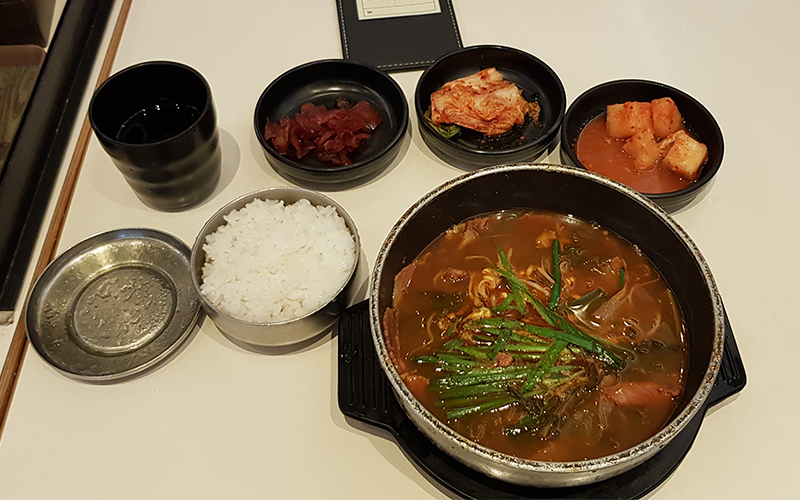
Yukgaejang (육개장), a spicy beef soup. This was my last meal in Korea from my trip in 2022.
Then there was the time I was introduced to the honorific, nim (님). This is used after a person's name or title to address someone respectfully such as seonsaengnim (선생님), which means teacher. I thought it was used the same way as we often include Mr., Mrs., Miss. or Ms. when we sign our name in English. So naturally, I began signing my name with nim (님), in letters to people at church, work and even to Korean government officials. It wasn’t until much later that a dear friend and mentor kindly informed me that we don’t use ‘nim’ (님), when referring to ourselves. Even though embarrassing, this was a well-learned lesson.
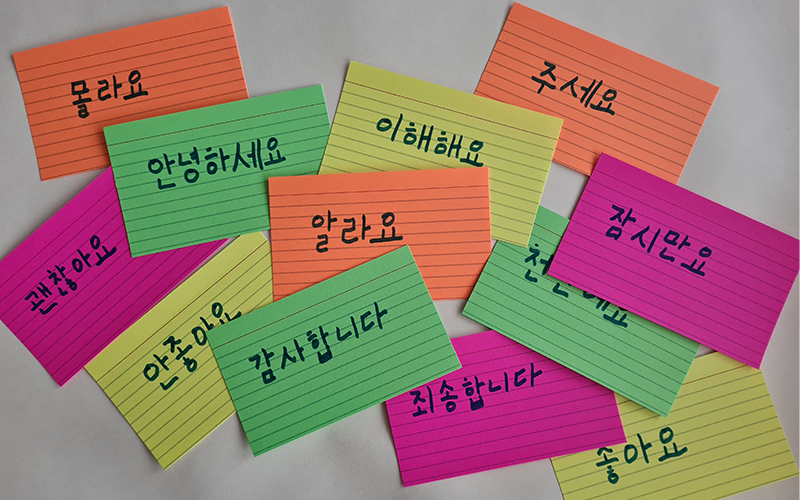
Korean flashcards with a few basic expressions from my personal study routine. Translation to English: annyeonghaseyo (안녕하세요) means hello, kamsahamnida (감사합니다) means thank you, cheonmaneyo (천만에요) means you’re welcome, jamsimanyo (잠시만요) means excuse me, gwaenchanayo (괜찮아요) means okay, joesonghamnida (죄송합니다) means I’m sorry, juseyo (주세요) means please give me, mollayo (몰라요) means I don’t know, arayo (알아요) means I know, ihaehaeyo (이해해요) means I understand, joayo (좋아요) means good, an joayo (안 좋아요) means not good.
Learning a language isn’t something that clicks all at once. At first, it seems like you are trying to solve a jigsaw puzzle with missing pieces. Then one day, a piece fits and more of the picture starts to come together. Korea.net’s vocabulary posts have become a valuable resource for language learners. It offers practical content that supports long-term growth one word and the occasional mistake at a time.
How about this article?
- Like5
- Support1
- Amazing11
- Sad0
- Curious0
- Insightful3