Exploring Korean History through Historical Sites: My Visit to the Myeongdong Catholic Cathedral in Seoul
2025-05-15The Republic of Korea has several historical sites and cultural monuments that have been featured on the UNESCO World Heritage List and recognised for contributing to the development of Korean national and cultural identity, such as the Haeinsa Temple, Suwan Hwaseong Fortress, and the Jongmyo Royal Shrine, among others. Apart from these cultural and historical monuments, Korea also have several historical sites, attractive spots, and natural monuments that are state-designated cultural heritage under the heritage preservation system for locations of historical significance. The Administrator of the Cultural Heritage oversees these sites in accordance with article 25 of the country’s Cultural Heritage Protection Act. Among these historical sites is the Myeongdong Catholic Cathedral (also known as The Cathedral of Our Lady of the Immaculate Conception), which was designated as National Historical Site No. 258 on November 22nd, 1977, for being one of the earliest and most prominent examples of Gothic Revival architecture in Korea. The cathedral is also one of the most important physical representations of Roman Catholicism in Korea and is the seat of the Archbishop of the Metropolitan Archdiocese of Seoul.
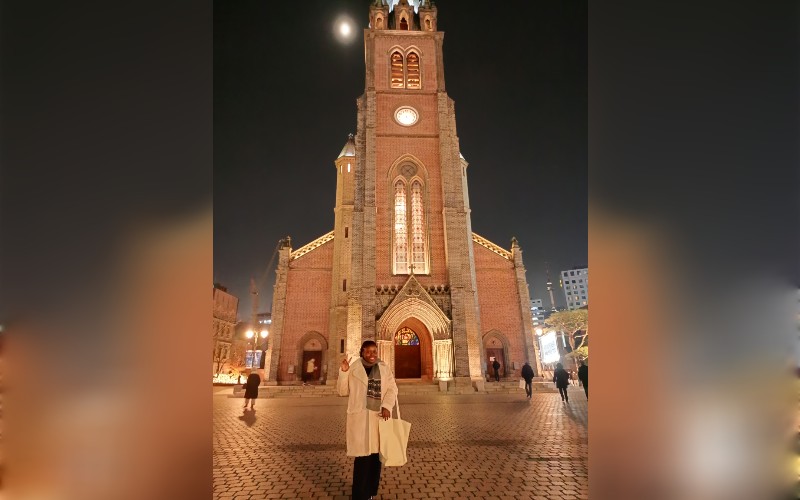
During my last visit to Seoul in December 2024, I stayed at one of the Line Hotels in the Myeongdong district, which is often regarded as one of the major economic hubs, tourist destinations, and shopping centres in Seoul. Eager to immerse myself in Korean culture, I spent my second evening there exploring the popular Myeongdong street food market and visiting popular stores like Daiso, Line Friends, and different K-Pop merchandise stores. By chance, I came across the Myeongdong Catholic Cathedral and was amazed by the gigantic structure and decided to pay a visit. As it was already late at night, I briefly looked around but promised myself to visit the next morning to get a clearer view of the Cathedral, especially since it was within walking distance from my hotel.
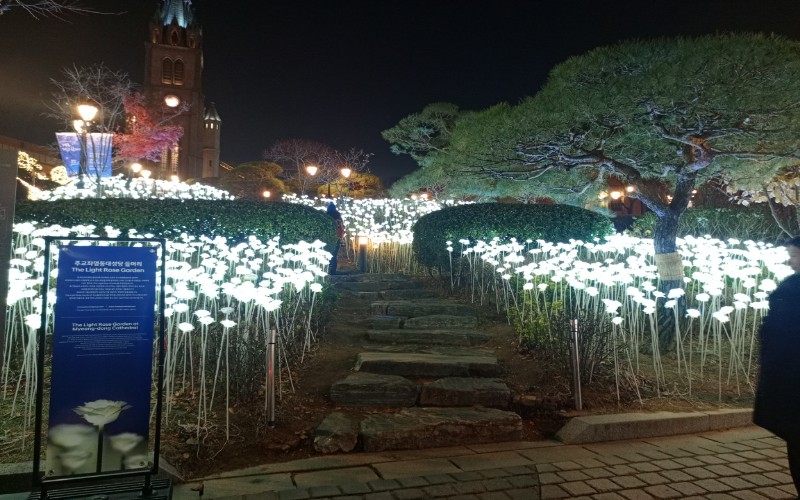
At the entrance of the Cathedral was the Light Rose Garden, which I found out was created in memory of Cardinal Stephen Kim Sou-hwan, who spent his time at Myeongdong Cathedral dreaming of a world where the right to an adequate standard of living is granted for all. Because it was late at night, the garden was completely lit, and I found out that every year, from November to early January, about 4000 LED roses light up to celebrate the joy of Christmas and hope for the New Year.
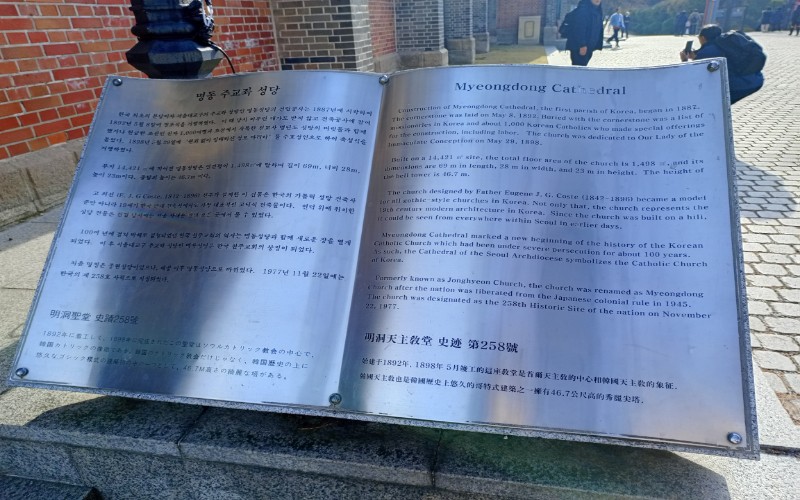
The next morning, I paid another visit to the Cathedral and took a tour around the premises. I also received an informational pamphlet, which, alongside the various writings found within the cathedral, provided me with insights into the history of the Myeongdong Catholic Cathedral and its role in shaping Korean history, politics, and cultural identity. Located in the Myeongdong-gil neighbourhood of the Jung District in Seoul, the Cathedral is the first Catholic Church in Korea. During the Joseon dynasty, it was called “Myeong-rye-bang” and was the birthplace of the very first Roman Catholic Community in the country, established in 1784.
The Cathedral also has a very rich architectural history that dates back to the 19th century. It was the first brick church in Korea and was built in pure Gothic style with no architectural adornments, with the main building rising to 23m and the bell tower to 46.7m. The Cathedral was designed by Fr Eugene Jean Georges Coste (1848-1896), a French missionary priest sent to Korea by the Society of Foreign Missions of Paris. Construction work for the Cathedral started in 1892 and it lasted for six years, with financial support obtained from the Paris Foreign Missions Society, as well as from the active contributions of local Catholics who willingly offered their labour. Following the death of Fr Eugene in February 1896, Fr Victor Louis Poisnel took charge of the building project until its completion in 1898. On 29 May 1898, the Church was consecrated with Our Lady of the Immaculate Conception as its patron saint.
During the 19th century, it was called the Jonghyeon Cathedral but lost its formal title during the Japanese occupation of Korea. However, in celebration of Korea's Liberation Day in 1945, the name of the Cathedral was changed from Jonghyeon Cathedral to Myeongdong Cathedral. The cathedral serves as a sanctuary for the underprivileged and is a symbol of the freedom of faith gained through years of persecution. For instance, during the Korean War, active relief efforts were channelled through the Myeongdong Cathedral, which stood for social welfare and justice. Additionally, during the 1970s and 1980s, it served as a sacred space for the Korean pro-democratisation movement and a strategic location of opposition during various Korean social movements. To date, the cathedral remains a landmark in the community and continues to spread its message to the world through prayers and missionary activity.
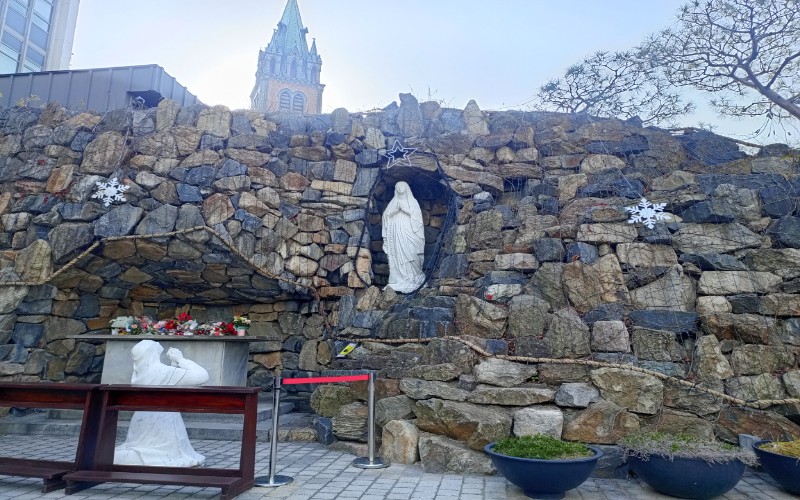
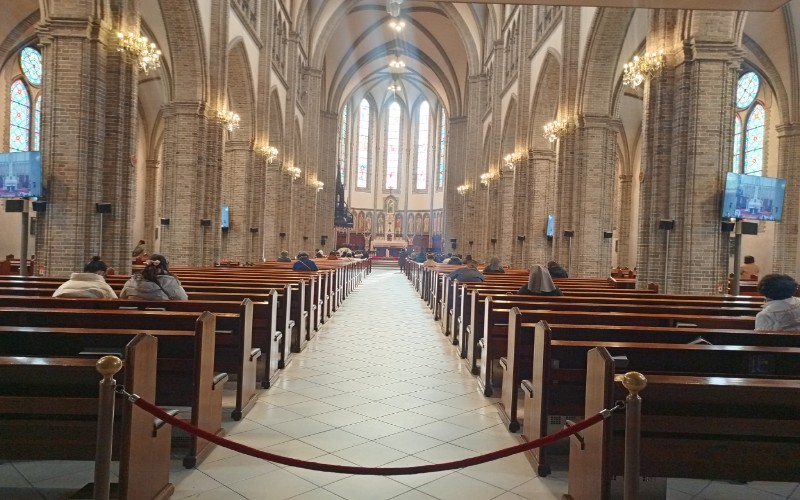
I also visited the grotto of Our Lady of Lourdes, which was located at the left side of the entry stairway of the cathedral. The grotto was consecrated by Archbishop Paul Rho Ki-nam on August 27 1960, with the goal of praying for peace in the Korean peninsula. As someone with a deep interest in Korean history, culture, and tradition, I was excited to learn about the Cathedral’s role in shaping modern Korean history and to see first-hand various elements of Korean architectural history. If you are ever in Seoul and near Myeongdong, I highly recommend that you take a moment to visit the Myeongdong Catholic Cathedral because it is one of the major community and religious landmarks in the area and also an important symbol of the modern cultural heritage in Korea. Visitors are free to attend mass in the cathedral or simply walk around the surroundings.
How about this article?
- Like8
- Support0
- Amazing2
- Sad0
- Curious0
- Insightful2