[INTERVIEW] From Seoul to Copenhagen: Chef Kristian Baumann fuses Korean and Nordic flavors
2025-03-19Kristian Baumann, a chef born in Korea and raised in Denmark, is acclaimed for his unique blend of Korean and Nordic cuisine. He is the owner and head chef of Koan, which originally opened as a pop-up in Copenhagen, Denmark, in 2020, and on April 4, 2023, transitioned to a permanent location. The restaurant was awarded 2 Michelin stars just ten weeks later. Additionally, Kristian owns Juju, a casual Korean eatery that opened in 2022.
Kristian merges his two worlds by combining the tradition, purity, and deep seasonality of his Danish upbringing and career with the innovation of Korean techniques and its rich culinary heritage. Drawing inspiration from his rediscovery of Korea; ranging from street kitchens and temple cuisine to renowned barbecue and royal court dining; Koan’s dishes are the result of years of in-depth research and refinement.
In an email interview from Feb 27 to Mar 18, he shares insights into his culinary style and the philosophy that drives Koan.
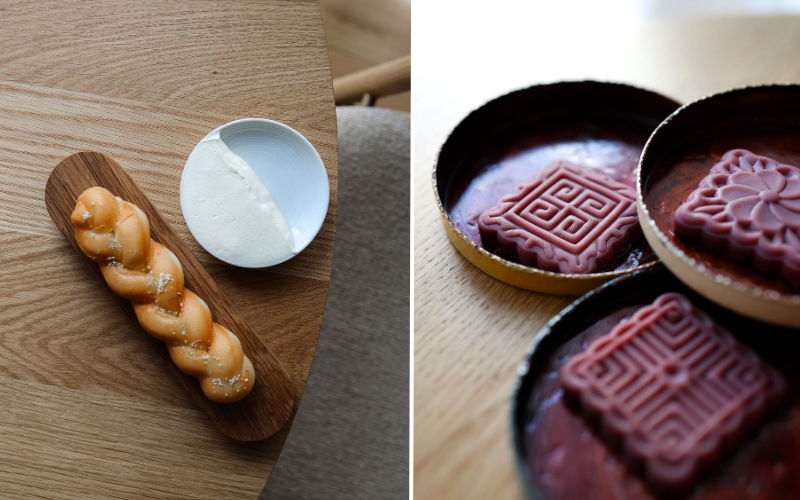
1. What inspired you to become a chef, and how did your journey lead you to Koan?
Growing up in a traditional Danish home, I was always exposed to Nordic flavors. I was also blessed to have a family that immersed me in my heritage and wanted me to embrace my culture by taking me to Danish/Korean events and gatherings. These events involved eating Korean food, experiencing traditional Korean culture, and celebrating in the best way possible.
By the time I was in boarding school, I had discovered my love for the kitchen; even tedious tasks like peeling potatoes were enjoyable. I decided to pursue this passion and got the chance to work in prestigious kitchens in France and Copenhagen. Throughout this time, I learned the ethos of many established chefs, which made me question my own. I would look in my cabinets at home and see Korean condiments and ingredients; all I could think of was the endless possibilities of flavor combinations. From then on, I began to work on my business plan. 108 came along, and while it was never supposed to be a Michelin-star restaurant, it received the accolade and became a thriving feature of Copenhagen’s culinary scene until Covid hit and the restaurant closed. This did not, however, stop my passion. If anything, it intensified it.
I regularly traveled to Korea to learn about my heritage. I eventually formulated a new concept: a restaurant where Denmark and Korea meet, showcasing a perfect reflection of my personal and professional journey. After several pop-ups and pandemic lockdowns, we found Koan a permanent location on the beautiful harbourside, close to ‘’The Little Mermaid.’’ From the moment I stepped foot in the place, I knew it was it. The fact that we looked at 30+ different locations prior to this solidified my decision. It felt like everything came together at that very moment.
Another sign that this was the ideal location is the memorial stone gifted from Korea to Denmark in gratitude for sending the hospital ship "The Jutlandia" during the Korean War. One hundred doctors and nurses traveled from Denmark to Korea to help during the war; they were only supposed to treat soldiers but also helped aid and treat the local population. Because of this, Korea granted a memorial stone to the country. Today, the memorial sits outside of Koan.
2. The name Koan comes from Zen Buddhism. How does that philosophy manifest in your cooking and dining experience?
In Zen Buddhism, a koan is a question that opens one's mind. I truly appreciate the idea of keeping an open mind and accepting that there are no absolute answers. This philosophy deeply resonated with my philosophy for Koan, which introduces guests to the possibilities of what a menu can be. For me, that is the amalgamation of Danish and Korean flavors.
3. How did your research trips to Korea impact your understanding of Korean cuisine, and were there any surprises along the way?
Throughout my travels to Korea, I explored various restaurants, frequented numerous street vendors, visited temples, and even went to the orphanage where I was adopted. I met many inspiring people along the way, and these experiences and memories have shaped the dining experience at Koan today.
During one of my visits to Seoul, I had the opportunity to travel to the very famous Baegyangsa temple, where I met a monk named Jeong Kwan. At the temple, we went foraging, we spoke about life, and she also showed us all her different jangs and other preserves. The experience greatly impacted me and changed my perspective on life in many ways. To this day, I still carry this beautiful memory with me whenever we’re creating new dishes at Koan.
A fun fact is that she showed us a 500-year-old tangerine tree at the temple, and she gave me a bag of these beautiful sun-dried tangerine slices; the incredible flavor is something I vividly recall every time I think about it. We have been extremely lucky to work with a citrus supplier based just North of the Pyrenees, where we have dried and preserved their beautiful Sudachi as a direct influence from my visit to the Baegyangsa temple.
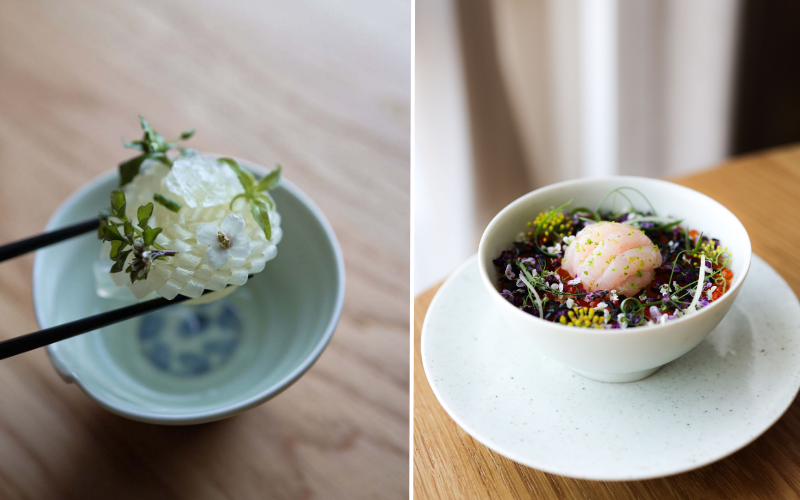
4. What would you say is Koan's most iconic signature dish, and what makes it stand out?
Our signature dish is the White Kimchi. This dish is especially sentimental to me because of its backstory. Before the opening of Koan, I was in Seoul purchasing the final touches for the restaurant. I was specifically looking for a plate to serve the white kimchi in. I found myself in a gallery, where I was shown a cup made by a Korean artist who spent many years traveling to China, collecting pottery fragments dating back to the Ming and Qing dynasties. He was then allowed to bring these age-old fragments back to Korea and brought them back to life, layering porcelain over them to support the structure.
When they showed us these beautiful cups at the gallery, they told us that the art piece was called “Reborn.” When they said this, my wife and I got goosebumps. I immediately told the gallerist about my story, closing 108 and starting Koan. It felt like the sun, moon, and stars had all aligned for us to find these cups. It was the perfect moment for us to be at the gallery. When you look into the cup in which the white kimchi is served, you are looking at the original fragments. We encourage guests to eat the white kimchi in one bite and then drink the sauce that accompanies it to reveal the original fragment of the cup. While this story may seem long, it truly embodies our philosophy of old and new life and creating a special moment.
5. How do you bridge Korean and Danish culture in your dishes and Koan restaurant?
Korean and Danish cuisines are inherently very different, so there isn’t a specific method for marrying the two. There are free reins to experiment with the flavors. I draw inspiration from both places, but what inspires me the most is the people I’ve met along the way. From my mother and grandmother's traditional Danish recipes to the renowned chefs, each had a part to play in my knowledge about the legacies of each cuisine. That is most important to me, and it’s what I try to articulate in my dishes at Koan.
One of the most fascinating similarities between our Danish and Korean guests is that they often express similar sentiments. They both recognize familiar flavors paired with new and unexpected ones. To me, this is extremely gratifying because it’s an authentic display of the unique dining experience we aim to create.
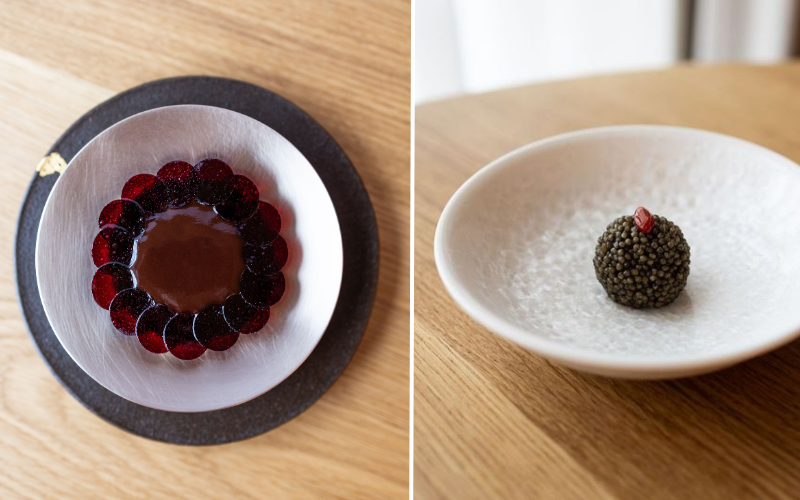
6. What Nordic ingredients have surprised you in how well they pair with Korean flavors?
One of my favorite ingredients is wild rosehip. It’s a quintessential Nordic ingredient because it blooms these beautiful flowers we pick and preserve in oils and vinegar. It has a very beautiful aroma and then comes the berry afterward. Once the berry is fully ripened, you can pick them, and inside, you will find these tiny seeds that are extremely difficult to sort, so you must be very careful. You toast them and blend them into an oil; it becomes very strong with almost the same notes as sesame oil, which is quite interesting.
The petals are wonderful, and the berries are very sweet, but what surprised me the most was when we went foraging in the mountainsides by Baegyangsa temple; I also saw them there. It’s technically a weed. In many places in Denmark, they are cut down and removed because they will consume the landscape. To me, it’s a beautiful ingredient that is great flavor-wise in both Korean and Danish dishes. Everything from the flower to the leaf to the seeds.
7. What’s next for you and Koan restaurant?
I aim to maintain my beginner's mindset in everything I do. This allows me to be versatile and fluid. I continue to create every day, and I’m excited about it, which is something I never want to lose. The creative aspect is my favorite part of the job, so I can only hope that this momentum continues.
I hope to make an impact and help the next generation reach their goals in life. For me, success would lie in witnessing them achieve their set milestones.
How about this article?
- Like5
- Support2
- Amazing1
- Sad0
- Curious0
- Insightful0