Beyond the Battlefield: The Yeonpyeong War’s Profound Impact on Geopolitics, Diplomacy and Human Lives
2024-06-28In a flash of gunfire that lasted less than one hour, the Yeonpyeong War ignited, a pivotal conflict that would forever alter the trajectory of the Korean Peninsula. On a fateful summer day in 1950, the world was thrust into a new era of tension as the border dispute between North Korea and Republic of Korea erupted into battle that would have far-fetching consequences. Many decades after, an aftermath of the war between these two countries resurfaced on June 29th, 2002. The Second Yeonpyeong Naval Skirmish battle was a brutal wake-up call for Republic of Korea and the world. The Second Yeonpyeong Naval Skirmish happened on June 29, 2002, and lasted about thirty to forty minutes. After the Korea War in 1953, the UN set an invisible line in the Yellow Sea called the Northern Limit Line (NLL) as a de facto maritime boundaries. This line separates North Korea and Republic of Korea, but North Korea continually disputed this boundaries and conducted provocations near it, they often crosses the line for fishing purposes because the waters around Yeonpyeong Island are rich in marine life making them valuable to both countries. This added to the tension and was one reason for the fight.
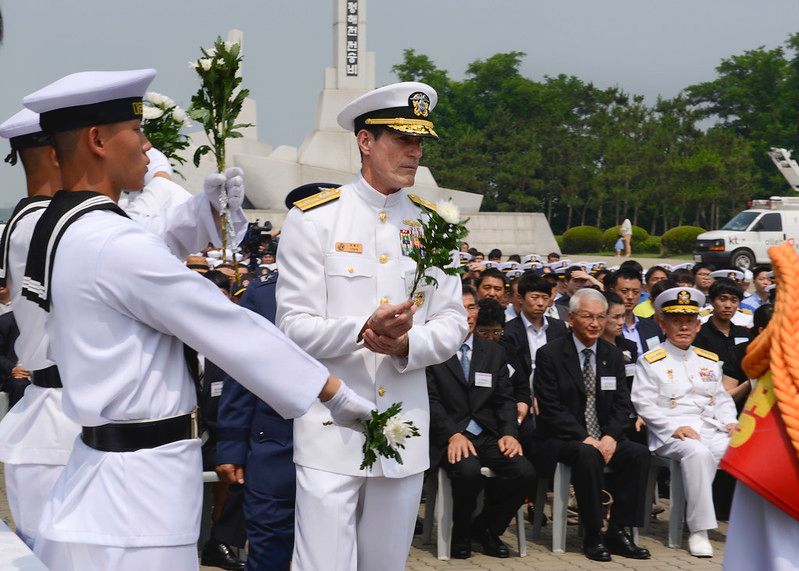
Republic of Korea Rare Adm. Bill McQuilkin, Commander of US Naval Forces Korea, participate in the 11th Anniversary of the second Yeonpyeong Naval Skirmish on June 29, 2013.
On the day of the battle, two North Korea patrol boats crossed the NLL, a disputed maritime border, ignoring the warning signs from the Republic of Korea Navy. As the North Korea vessels unleashed heavy fire, nearby Republic of Korea patrol boats swiftly turned to aid their comrades aboard the stricken PKM-357 (Patrol Killer Medium). The intense camaraderie among the sailors became palpable amidst the chaos, as they navigate their vessels closer to the enemy to provide crucial support and suppressive fire. This courageous effort under fire exemplified the bravery and solidarity among the Republic of Korea Naval personnel, as they fought to defend their positions and protect their fellow sailors amidst the intense naval confrontation, which left Republic of Korea boat badly damaged, and North Korea boats also took some hits but retreated after. About twenty-five Republic of Korea sailors were killed and wounded in action including the Commanders and leaders, Yoon Yeong-Ha, Lee Hui-Wan and Han Sang-Guk. And the damages PKM-357 boat eventually sank while being towed back to the port. North Korea did not report their losses, but it was estimated that about thirty to thirty-five North Koreans were killed or wounded in action. The Yeonpyeong War was a significant escalation of tension between North Korea and Republic of Korea, which have been building for years. The conflict highlighted the dangers of the disputed maritime border and the need for peaceful resolution.
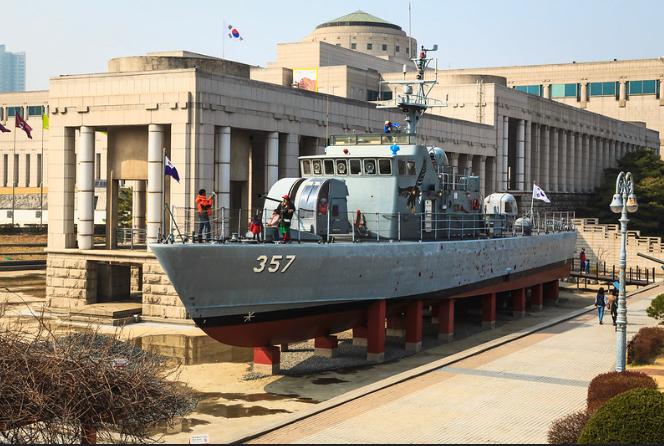
Replica of the Republic of Korea gunboat PKM-357, on display at the War Memorial of Korea.
The Second Yeonpyeong Naval Skirmish holds significant historical importance as it was a pivotal event that escalated tension between the two countries. The clash highlighted international awareness of the ongoing conflict in the region and underscored the fragility of peace on the Korean Peninsula and the need for diplomatic solutions to prevent escalation. The Skirmish serves as a reminder of the persistent geopolitical challenges in East Asia and the delicate balance of power in the region. The Yeonpyeong War also had political implications. The incident led to a hardening of attitudes in Republic of Korea towards North Korea and an increased support for a tougher stance against Pyongyang. The incident also led to diplomatic efforts to resolve the dispute peacefully.
The Yeonpyeong War last for less than one hour, showcasing the intensity and swiftness of the attack. Helicopters were used during Yeonpyeong War to evacuate injured soldiers. The incident raised concerns about Republic of Korea’s military preparedness, leading to a reassessment of defense strategies. North Korea’s decision to keep their number of casualties or damage a secret added mystery and speculations to the aftermath of the attack. The shelling on the island sparked debates about the stability of the region and the potential for further conflicts.
In the aftermath of the conflict, Republic of Korea and its allies condemned North Korea’s actions, and the international community called for restraint and dialogue. The incident led to a significant increase in military spending and modernization in Republic of Korea, as the nation sought to strengthen its defenses and prevent similar incidents in the future.
A visual experience of the Second Yeonpyeong Naval skirmish was fully documented in the Korean movie titled ‘Northern Limit Line’, showing in details the whole clash and how the Republic of Korea Naval personnel handled the conflict. At the end of the movie, the Republic of Korea Sailors that survived the attack, shared their personal story about the skirmish and sending their love to the victims and families.
FORMER 357 ARTILLERY CPO JEON CHANG SUNG
"We were blocking the north vessel from entering our waters. We were in very close proximity and when in parallel position, they began firing. Lt. Commander has a pool of blood under him, behind him PO2 Kwon Ki-Hyung's hand was torn apart, he was screaming. Lt. Lee Hee-Wan's leg was blown up but he kept giving us orders in that state. He asked for Lt. CRD.'s status and I said he'd died"
FORMER 357 COMM. OFFICER KIM YONG TAE
"Radar specialist P03 Cho Hyun-Jin was so badly injured that I was in shock. He was hit with a shrapnel in the head and his intestines were coming out from a wound in his side. He asked what it was and tried to put it back in, and we held him close. He kept saying he was going to die"
FORMER 357 P02 KIM SEUNG HWAN
"I sometimes dream that those who died come back and we fight the battle again"
FORMER 357 P02 KWON KI HYUNG
"I feel terrible that I'm still alive because I was injured. I feel so sorry not only for those deceased but for the bereaved families of our men"
FORMER 357 COMM. CHIEF LEE CHUL GYU
"I am so grateful and I think of them often and miss them"
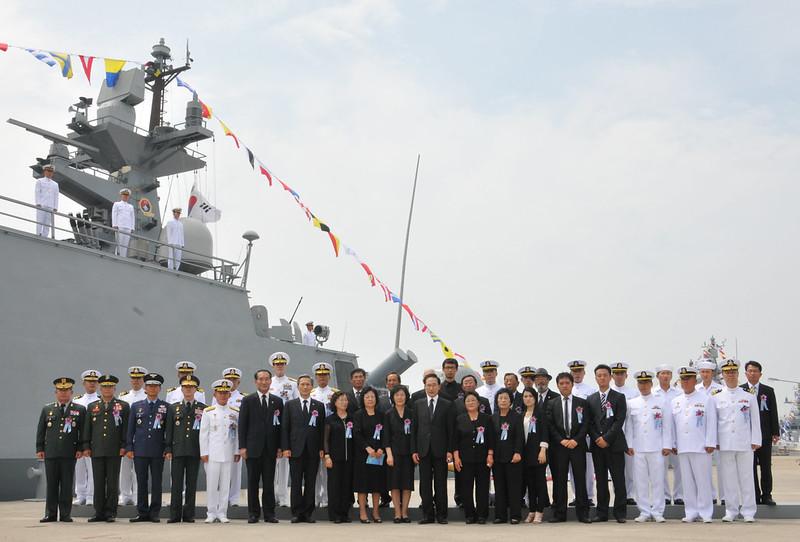
Republic of Korea former President, Lee Myung-Bak, alongside military leaders with the family members of Sailors who died during the second Yeonpyeong Naval Skirmish tenth anniversary on June 29, 2012.
Sources of Information
‘Northern Limit Line’, A Korean war film that dramatized the Second Yeonpyeong Naval Skirmish, providing a cinematic portrayal based on real events'
BBC News Outlet
CNN News Outlet
Library of Congress
How about this article?
- Like15
- Support2
- Amazing1
- Sad0
- Curious0
- Insightful2