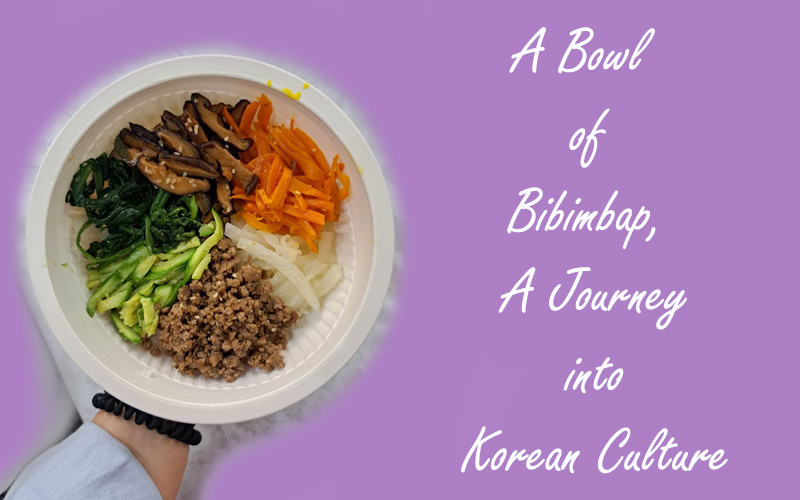
When Language Takes on Flavor
Sometimes learning a language is not limited to words and textbooks; sometimes it must be tasted. A program organized by the Cultural Section of the Embassy of the Republic of Korea created exactly such an experience for Korean language learners an opportunity to encounter Korean culture through K-Food within the formal setting of the embassy itself.
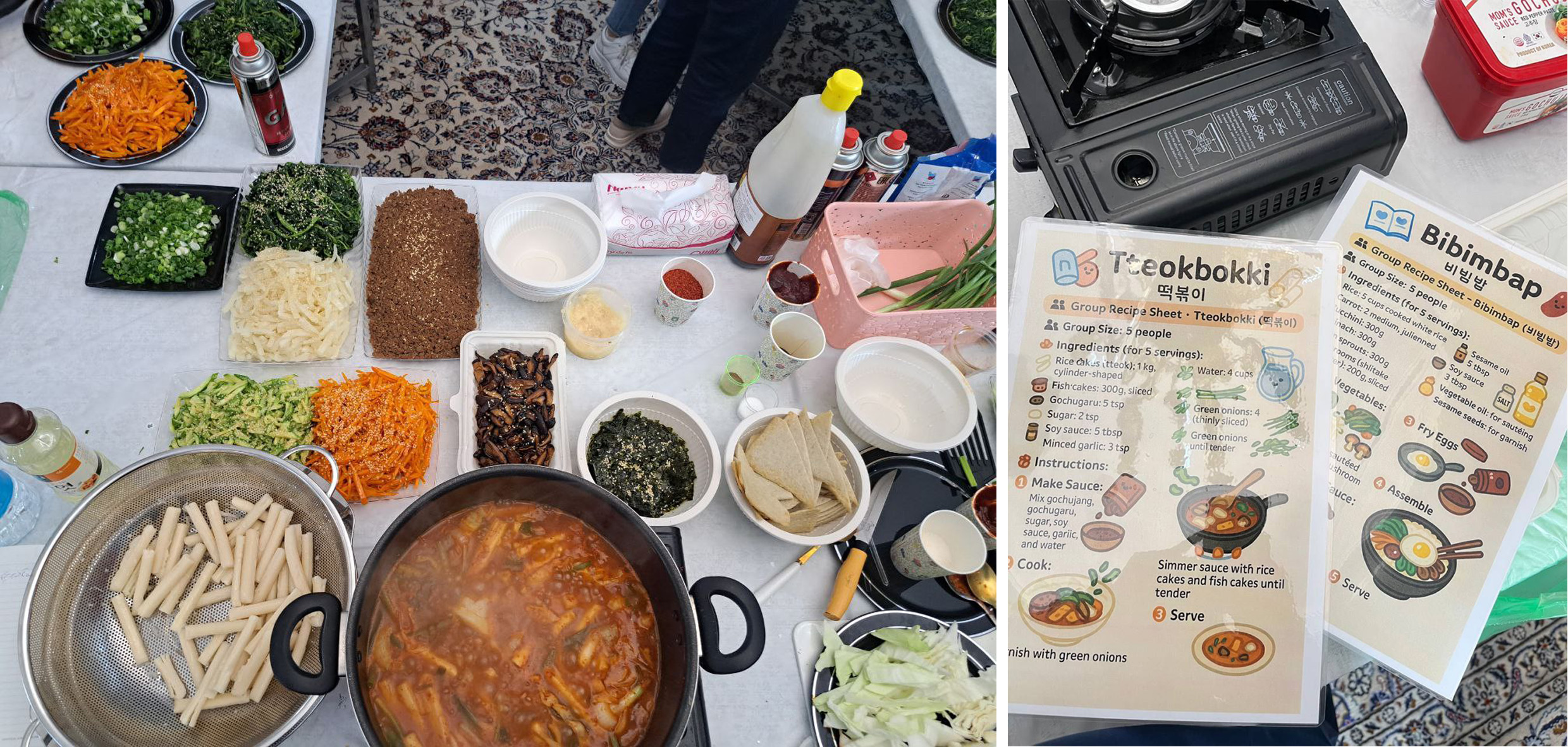
The workshop was designed specifically for students of the Korean language, and the presence of learners from different levels gave the event a distinctive atmosphere. Unlike the usual classroom setting, where each level remains within its own boundaries, this program removed those divisions. Participants worked side by side as one team, communicating and collaborating, which naturally led to new connections and friendships.
The students were divided into two groups to prepare two popular Korean dishes: Tteokbokki and Bibimbap. One group focused on preparing the spicy sauce and rice cakes for tteokbokki, while the other carefully arranged the colorful ingredients for bibimbap. Each participant took responsibility for a specific task—from sautéing meat to chopping vegetables and preparing rice. This division of roles strengthened the sense of cooperation and shared purpose.
During the preparation of bibimbap, adding the egg became one of the most delicate and exciting moments. As participants cracked the eggs into the pan, all eyes were on the yolk, hoping it would remain intact. The unbroken yolk, meant to shine at the center of the bowl, turned into a small symbol of success. Whenever it stayed perfectly whole, cheers followed; when it broke, laughter filled the room. This simple moment became one of the most memorable scenes of the day.
At the end, each learner decorated their own bowl of bibimbap according to their personal taste. The variety of colors and the careful arrangement of ingredients gave each bowl an artistic quality, as if every dish reflected an individual interpretation of a shared culture. Finally, everyone gathered around a large table to enjoy the meal they had prepared together.
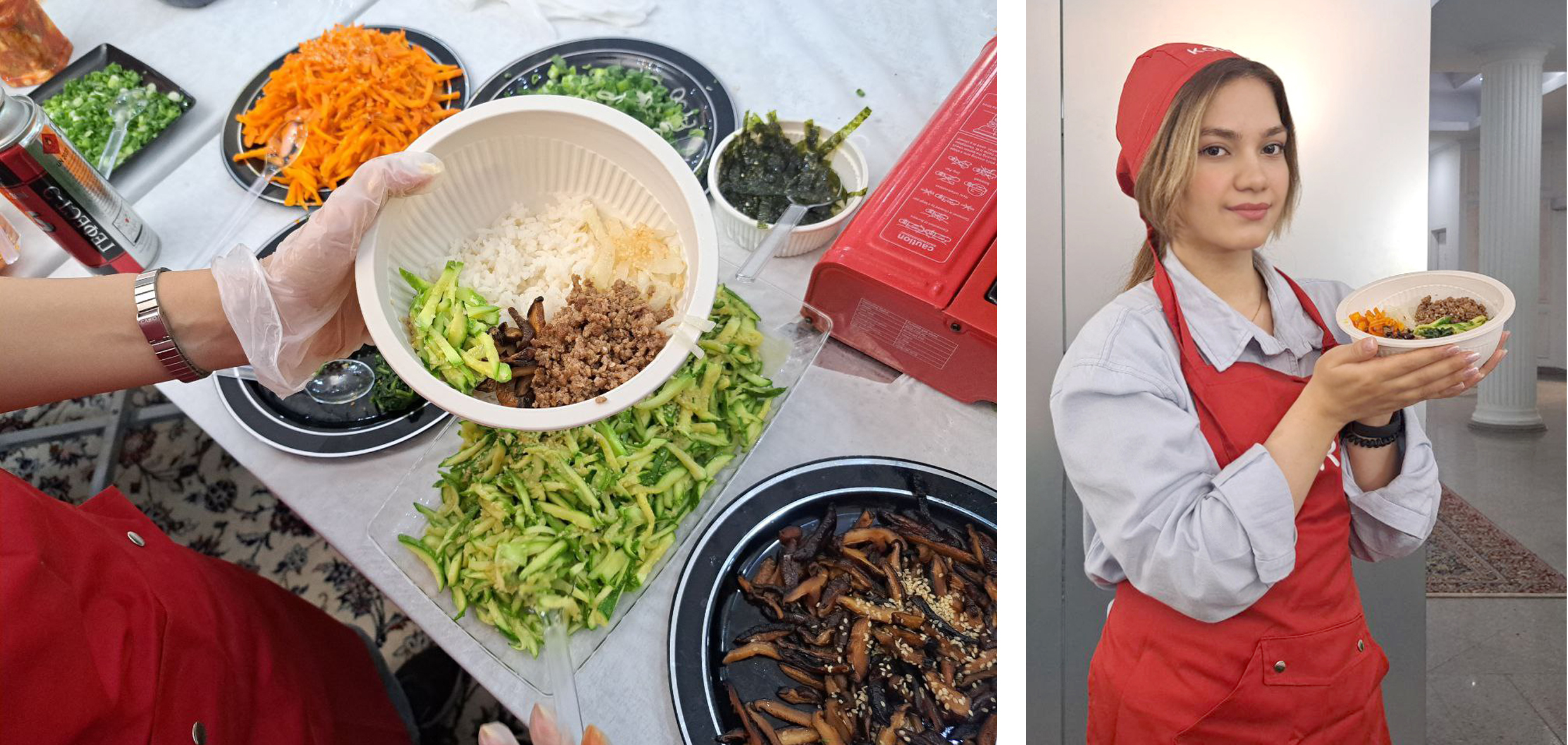
The program demonstrated that experiencing culture goes beyond reading about it. When language learners are given the chance to directly engage with a country’s culinary traditions, the process of learning becomes more meaningful. That day, the Korean language was not only present in spoken sentences, but also in aromas, colors, and shared moments.
For me, bibimbap holds a special place. Three years ago, it was the first Korean dish I ever tried, and also the first one my family tasted and they loved it. Perhaps that is why every bowl of bibimbap is more than just a meal for me; it is a reminder of how a single flavor marked the beginning of a deeper journey into the Korean language and culture.
How about this article?
- Like0
- Support0
- Amazing0
- Sad0
- Curious0
- Insightful0