My journey into Korean culture began, like many others, through music and dramas. However, over time, my curiosity moved beyond entertainment and toward understanding the deeper artistic and philosophical aspects of Korea. One of the most meaningful steps in this journey has been learning Korean calligraphy; an experience that transformed language learning into a form of meditation and cultural discovery. What began as curiosity towards the Korean writing system soon developed into a meaningful learning experience that allowed me to understand both the cultural significance of Hangeul and the values reflected in Korean artistic traditions.
Korean calligraphy, known as “Seoye(서예)" is more than just decorative writing. Rooted in centuries of East Asian artistic practice, it emphasizes discipline, balance and harmony between movement and intention. While calligraphy historically developed through the use of Chinese characters (Hanja), the creation of Hangeul in the 15th century during the reign of King Sejong introduced a uniquely Korean dimension to the art form. The scientific structure of Hangeul allows calligraphers to experiment with composition while maintaining clarity and readability.
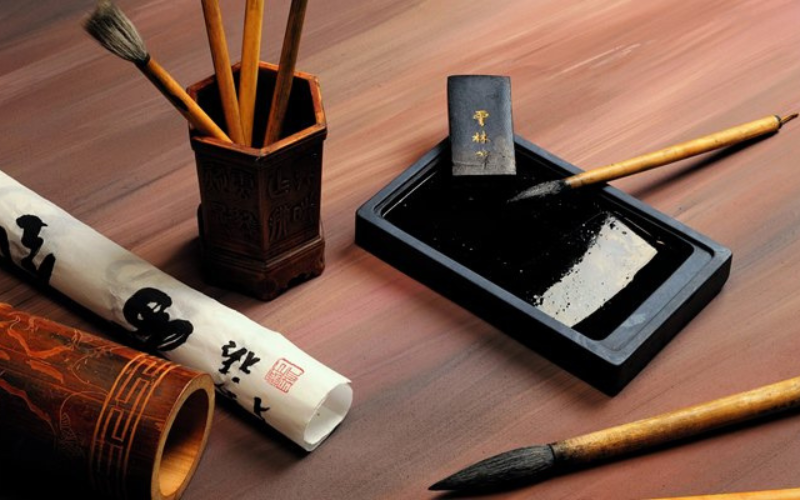
As I began learning Korean calligraphy, I realized that mastering brush techniques requires patience rather than speed. When compared to everyday handwriting, calligraphy is focused on stroke order, pressure control and spatial balance. Every consonant and vowel should be written with careful movement, because, the difference in the intensity of the brush produces difference in the thickness and flow. This activity brings out the fact of writing as a physical act of focus and feeling.
Attention to empty space is one of the defining features of the Korean calligraphy. The composition of the characters on paper portrays the Korean aesthetic value of the harmony between fullness and nothingness. Instead of filling the whole surface, the calligraphers pay much attention to proportion and breathing space so that the composition can seem to be balanced and peaceful. Practice had taught me to value this artistic restraint as one of the ways traditional Korean art and architecture re-evaluate wider aspects of art in which simplicity can easily express elegance.
Learning ‘Seoye’ also deepened my understanding of Hangeul itself. Designed to be accessible and systematic, the alphabet reflects sounds through carefully structured shapes. Writing these characters repeatedly helped me recognize the linguistic logic behind the script while simultaneously experiencing its artistic flexibility. Calligraphy transformed language learning from memorization into creative engagement.
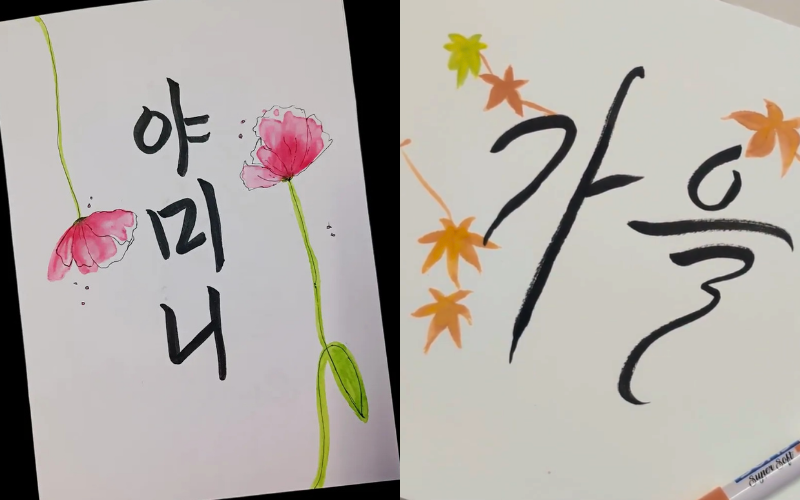
Practicing Korean calligraphy in India allowed me to experience Korean culture beyond observation. Communicating with, and having no physical presence in Korea, the process of ink preparation, brush-handling, and repetitions of strokes established a physical connection to an ancient art tradition. The habit promoted mindfulness where one had to be attentive and relaxed unlike in digital communication.
Over time, I noticed that improvement in calligraphy was closely linked to consistency and self-discipline. Each work is characterized by minor shift in confidence and control showing how conservative arts tend to place value on slow development rather than immediate perfection. Through this learning process, I realised that Hangeul Seoye is a form of art as well as a technique of developing patience and paying attention.
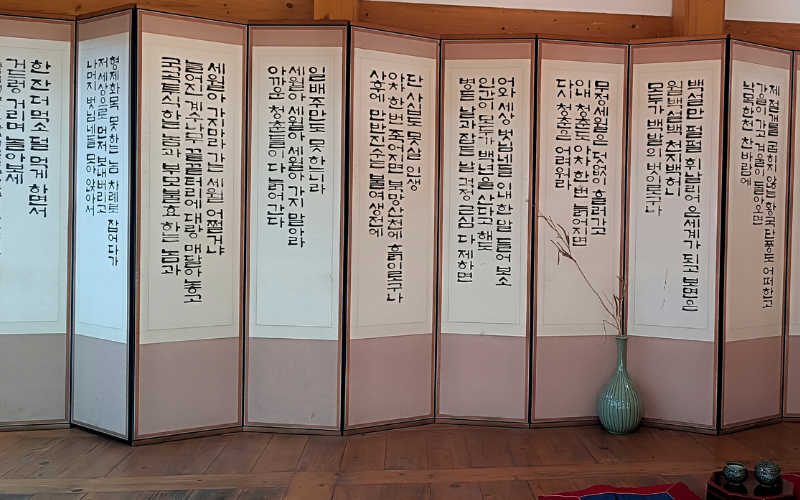
Through exploring and learning Korean calligraphy, I gained deeper appreciation for how cultural values are preserved through artistic practices. Linguistic innovation, the philosophy of aesthetics, and individual expression combined, subsequently, makes 'Seoye' an enduring symbol of Korea's cultural identity. For me, learning this art continues to serve as a bridge between cultures, showing how language, when expressed through art, can foster understanding beyond geographical boundaries.
Exploring Korean calligraphy has ultimately reshaped my approach to both art and learning. It demonstrates that cultural exchange often begins with small, intentional efforts; a single brushstroke capable of connecting history, tradition, and personal experience.
How about this article?
- Like0
- Support0
- Amazing0
- Sad0
- Curious0
- Insightful0