Indian academician-researcher discusses contributions to scientific innovation and Indo-Korean ties
2026-02-20Seoul-based Dr. Nagendra Kumar Kaushik is a distinguished academician and scientific leader known for expanding the foundations of science and technology research in Korea through significant academic contributions, including the publication of numerous research papers, patent filings, and the organization of several international conferences.
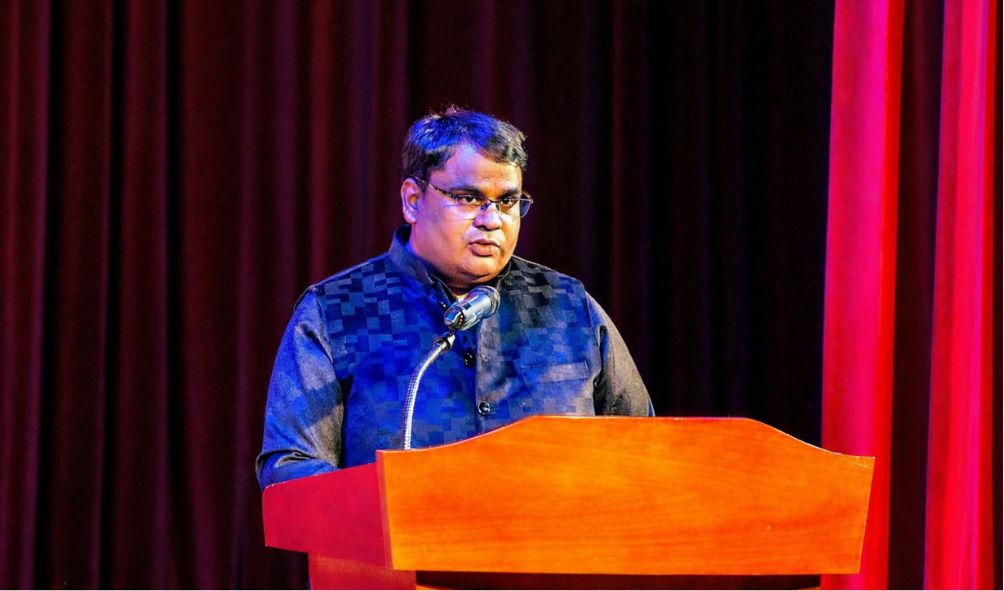
Dr. Kaushik currently serves as a Professor in the Department of Electrical and Biological Physics / Plasma Bioscience at Kwangwoon University, where he has been a full-time faculty member since 2011. He is also the Vice Director of the Plasma Bioscience Research Center (PBRC) and the President of Indians in Korea (IIK), a registered community chamber and non-profit organization in Korea.
With research focused on plasma technologies and their applications in biomedical, bioscience, and nanotechnology, and with a strong emphasis on interdisciplinary and translational research, Dr. Kaushik has published over 300 SCI- and Scopus-indexed research articles. These include 25 publications in journals with impact factors above 10, and his work has accumulated more than 10,000 citations, resulting in an H-index of 52—a mark of his sustained, high-impact research contributions over time.
Dr. Kaushik also holds 15 patents and has received 12 major awards, including Fellow of the Royal Society of Chemistry, UK (FRSC), Korean Parliamentary Award by the Ministry of Family, Gender Equality and Culture, Early Career Award in Plasma Medicine by the International Society of Plasma Medicine (USA), Highly Cited Researcher (HCR) Award 2024, World Top 2% Scientists by Stanford University & Elsevier (an honor he has received continuously since 2020), and more recently, the Honorary Citizenship Award by the Seoul Metropolitan Government in 2025.
Furthermore, Dr. Kaushik has delivered over 75 keynote, plenary, and invited talks at international conferences and has been actively involved in PhD supervision and doctoral advisory committees, mentoring researchers from diverse international backgrounds.
In an email interview conducted between January 19 and February 9, Dr. Kaushik reflected on his research journey, scientific contributions, and his recent recognition as an Honorary Citizen of Seoul.
What inspired your decision to pursue your academic career in Korea, and how has your work expanded over the years in terms of research, collaboration, and leadership?
After completing my PhD at the University of Delhi, India, in 2010, I joined academia in Seoul in early 2011, motivated by the opportunity to work in a country that places strong emphasis on science, technology, and innovation. Korea’s rapidly expanding research ecosystem and openness to interdisciplinary and international collaboration made it an ideal environment for long-term academic growth.
Initially, my focus was on establishing a robust plasma bioscience research program. Over time, this evolved into leading large-scale interdisciplinary research initiatives, mentoring young scientists, securing competitive research funding, filing patents, and collaborating extensively with hospitals, industries, and international research institutions.
Beyond research, my role expanded into academic leadership, international collaboration, and science diplomacy, including the organization of major international conferences and strengthening Korea’s global research visibility.
What initial challenges did you encounter as an international scholar in Korea, and how did those experiences shape your journey?
Like many international scholars, I initially faced challenges related to language, cultural adaptation, and differences in academic systems. I addressed these through openness, mutual respect, and consistent engagement—learning the culture, building strong collaborations, and focusing on shared scientific objectives. Over time, Korea became not only my professional base but also my second home. My understanding of Korea has also evolved significantly. Professionally, I admire its discipline, resilience, and innovation-driven mindset. Personally, I have experienced its warmth, respect for relationships, and strong community values.
Could you please elaborate on your key research contributions and their broader scientific and societal impact?
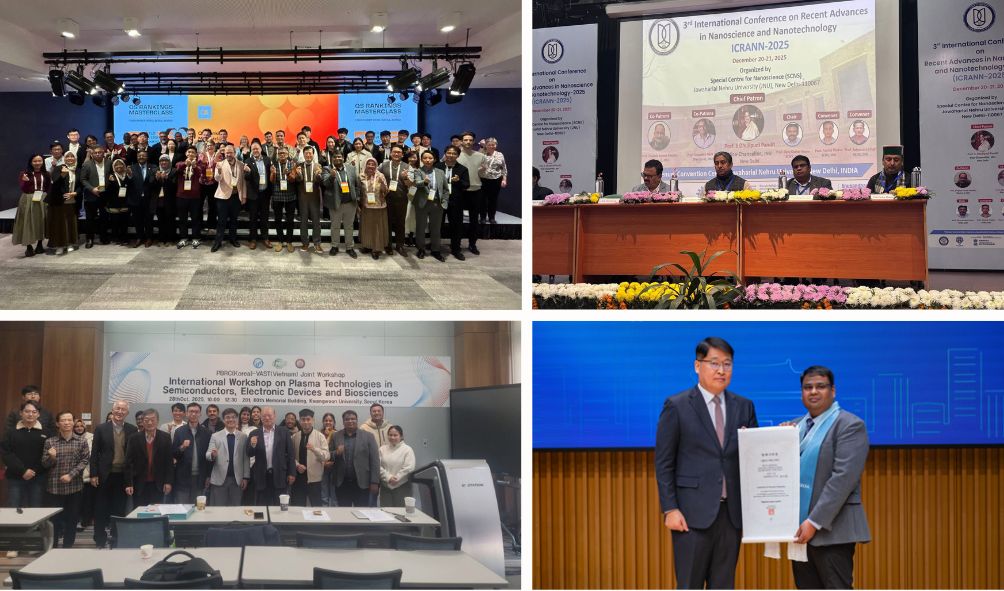
My most significant contributions are in plasma medicine and plasma-based biomedical technologies, particularly in pathogen control, future-threat preparedness, and anti-aging solutions using plasma-generated nitric oxide systems. Our work has demonstrated that non-thermal plasma technologies can efficiently inactivate viruses and bacteria in an environmentally sustainable manner, without inducing harmful residues.
Many of these studies have contributed to translational research, successfully bridging fundamental laboratory discoveries with clinical and industrial applications. Our publications and patents have also influenced emerging domains such as plasma cosmetics, anti-aging biomedical technologies, green nanomaterial synthesis, and plasma-based environmental remediation, opening new avenues for healthcare, industry, and public health preparedness.
What makes Seoul a significant global hub for innovation, and how do international academic collaborations strengthen that position?
International collaborations are fundamental to innovation. They bring diverse perspectives, global expertise, and shared resources, accelerating scientific progress. Seoul’s openness to global researchers positions it naturally as a world-class hub for innovation and advanced research.
Beyond your academic work, you have also contributed to strengthening Indo-Korean relations, particularly through multicultural exchange and your leadership role in Indians in Korea (IIK). Please tell us more about it.
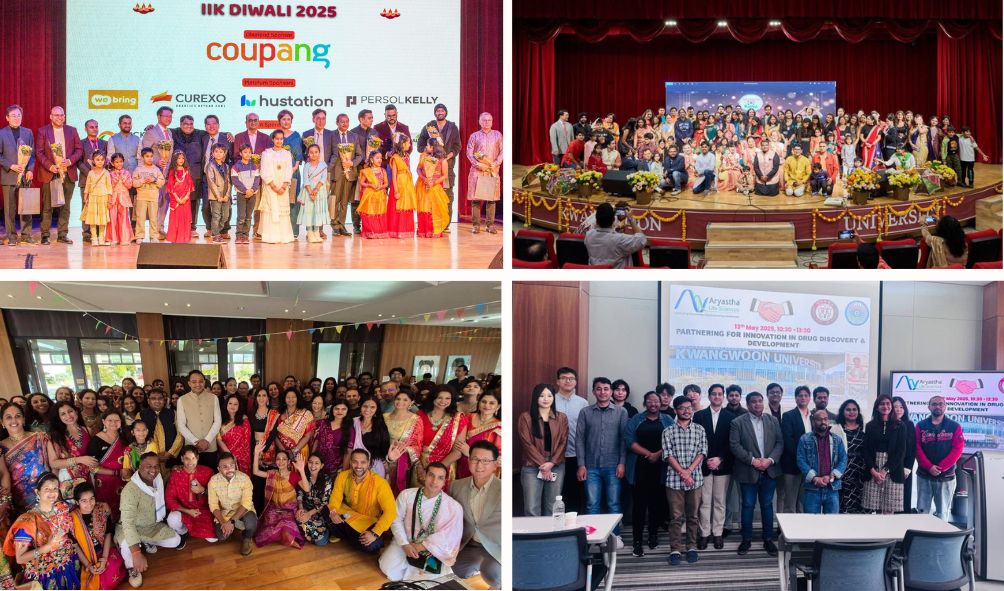
Indians in Korea (IIK), established in 2002, is a registered community chamber that serves as a bridge between the Indian diaspora and Korean society and friends of India. As the President of Indians in Korea, a responsibility that I assumed on April 1, 2024, I oversee community representation, academic-industry engagement, cultural initiatives, and coordination with diplomatic and governmental bodies.
Our efforts include facilitating university collaborations, joint research programs, student exchanges, and bilateral scientific forums. At the community level, I support initiatives that promote cultural harmony, inclusivity, and mutual understanding between Indian and Korean communities. Our objective is to ensure that the Indian community contributes positively to Korea’s social, economic, and academic development.
You were recently honored with the Seoul Honorary Citizenship. What did the honor mean to you personally and professionally?
This honor reflects years of sustained academic and societal contribution, including high-impact publications, patent development, mentoring global talent, and organizing international scientific platforms in Seoul. Hosting global conferences and fostering Korea-centric international collaborations were particularly significant. I view this recognition as an acknowledgment of science as a powerful bridge between nations and cultures.
I am deeply grateful and humbled. While I remained fully committed to my work, I did not anticipate such a distinguished civic honor. Personally, it is profoundly meaningful; professionally, it reinforces my responsibility to continue contributing to Korea’s scientific advancement and global engagement. Being recognized alongside individuals from diverse fields reflected Seoul’s inclusive and forward-looking spirit. It reaffirmed my belief that industry-academia, service, and cultural exchange are deeply interconnected.
As an Honorary Citizen of Seoul, what future initiatives and collaborations do you hope to advance?
I look forward to expanding Indo-Korean deep-tech collaborations, mentoring the next generation of global scientists, and launching new interdisciplinary platforms that integrate science, innovation, and societal impact. In this context, the Industry–Academic DeepTech Conference 2026, scheduled for March 26–27, 2026, in Seoul, is envisioned as a Davos-style strategic forum with a strong industry focus, bringing together industry leaders, technology enterprises, startups, investors, policymakers, and academia from India, Korea, and global partners. The objective is to catalyze industrial innovation, technology transfer, co-development, and long-term partnerships that strengthen Indo–Korean economic and technological cooperation. I see this honor not as a conclusion, but as a new beginning of greater responsibility and service.
*This article was written by a Korea.net Honorary Reporter. Our group of Honorary Reporters are from all around the world, and they share with Korea.net their love and passion for all things Korean.
How about this article?
- Like3
- Support0
- Amazing0
- Sad0
- Curious0
- Insightful1