The light seems to settle on the wood as if it were alive. In Invisible Forest, her first exhibition in Brazil — presented as part of the 2025 COP30 Brazil – Korea Art Project — Korean artist Lee Seungyoun presents an imagined ecosystem where roots, rivers, and animals from Korea and America coexist.
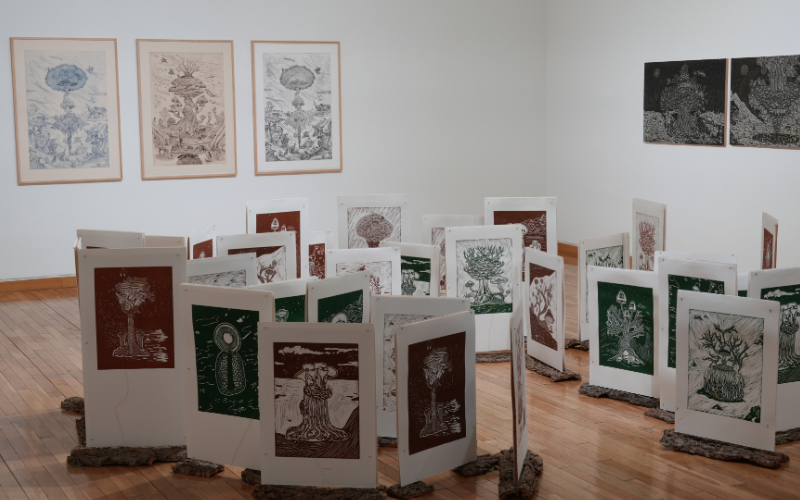
The central installation — 36 birch-plywood panels shipped from Korea to Brazil, “almost like transporting an entire forest across the ocean,” as she describes — combines layers of monotype and silkscreen to evoke movement, fluidity, and forms that grow in unseen directions. The exhibition is presented by the Korean Cultural Center in Brazil (KCCB) and organized by Seletivo.art.
Recognized internationally with exhibitions in Korea, the United Kingdom, Germany, and Romania, Lee works across drawing, printmaking, sculpture, textiles, video, and storytelling. Trained in Design and in narrative-based spatial practices, she chooses each medium according to the story the work needs to hold, creating environments where ecology and imagination merge. Her research often begins with drawing and expands into materials such as steel, wood, and fabric, forming installations that explore cycles, regeneration, and coexistence.
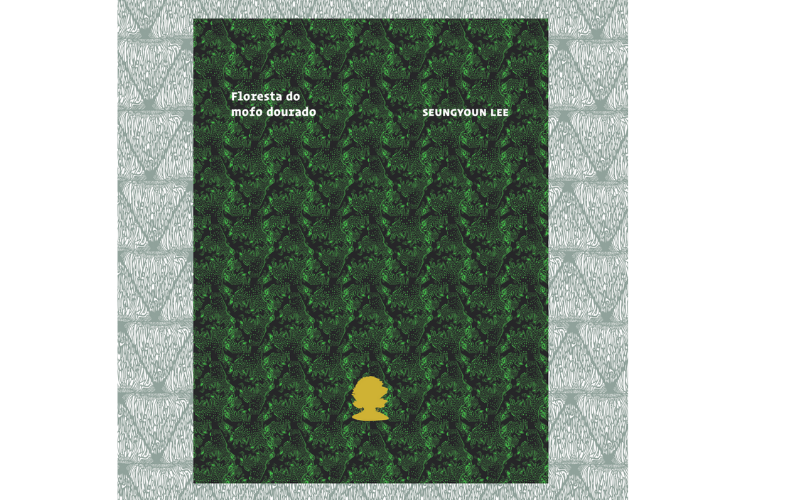
Parts of this inquiry trace back to a moss-covered Finnish island, where Lee first began exploring fungi, mycelium, and the invisible systems that sustain life. These questions deepened during her travels across South America and later evolved into the Dear My Forest series, including the picture book Dear My Forest: Golden Mold — selected for the 2025 Bologna Ragazzi Award – Amazing Bookshelf (Sustainability) and now published in Portuguese as Floresta do Mofo Dourado.
For Lee, nature, myth, and sustainability are not themes but ways of understanding the world. Her work imagines forests that cross continents and disciplines, linking organisms that are almost invisible to the human eye with narratives about memory, time, and transformation. In São Paulo, this vision finds new ground — a meeting point between the visible and the invisible, and between the forests of Korea and Brazil.
The following interview was conducted via email from November 1 to 24, 2025.
Your solo exhibition has just opened in São Paulo. Could you share its official title and what visitors can expect?
In this exhibition, visitors will experience a large-scale installation of thirty-six birch-plywood panels that flow from the wall to the floor, forming shapes that shift between roots and river currents. Along the panel edges, phrases engraved in both Korean and Portuguese symbolize the “heart of the forest,” allowing the two languages to coexist around the piece. Subtle variations in height let the strong Brazilian sunlight cast delicate shadows, enhancing the depth of the carvings.
Animals from South America and Korea appear together in this imagined ecosystem, creating a “portrait of the forest” where distant species coexist. The installation invites visitors to feel both the familiarity and strangeness of this forest, and to quietly sense the boundary where the visible world meets the invisible one.
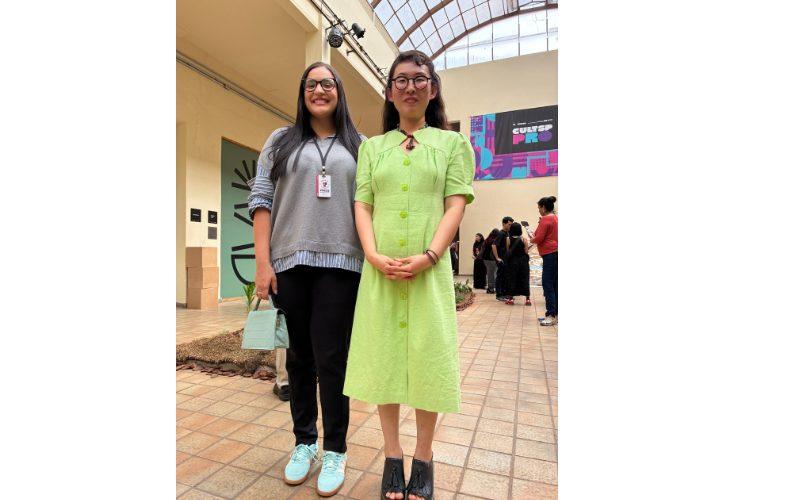
You mentioned shipping 130 kilograms of artworks to Brazil. What works are included?
The shipment consisted mainly of the thirty-six birch-plywood panels that make up Invisible Forest, built with layers of monotype and silkscreen to create a flowing forest of roots and river-like forms. It also included works from my printmaking series, such as Flowing Forest, Mushroom Power, and new drypoint drawings, blending elements from South American and Korean forests.
Outdoors, steel Mushroom Power sculptures inspired by my picture book form a living garden that evolves as the metal rusts and plants grow around it. I will also lead workshops connecting original prints and drawings to the Portuguese edition of my book. Seeing the artworks interact with Brazilian sunlight, vegetation, and space has made the journey worthwhile.
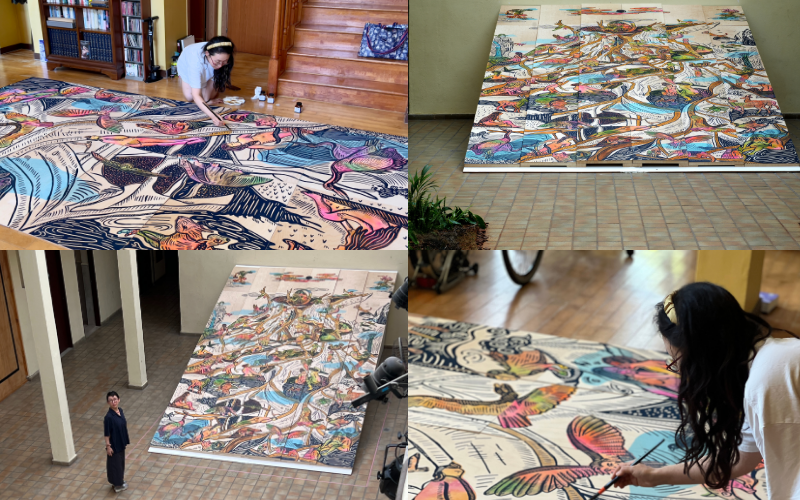
One of your works, The Flowing Forest, received special attention. What inspired it and how was it created?
The Flowing Forest was inspired by my travels in Argentina and Brazil, where enormous tree roots rose above the ground like living sculptures. I have always felt roots resemble rivers—branching, spreading, and constantly shifting. In this work, I depict these in-between forms: both root and river, flowing yet unstable.
The imagery includes animals from both continents—South American species like anteaters alongside cranes and tigers from Korean iconography—creating a portrait of a forest where different worlds coexist. I began with monotype, embracing spontaneity, added blue silkscreen lines that suggest roots or streams, and layered translucent cloud-like forms to create a dreamy atmosphere.
The Flowing Forest reflects the idea that a forest does not grow in a single direction; it flows, reconnects, and transforms, inviting viewers to sense life moving quietly by shifting rather than remaining still.
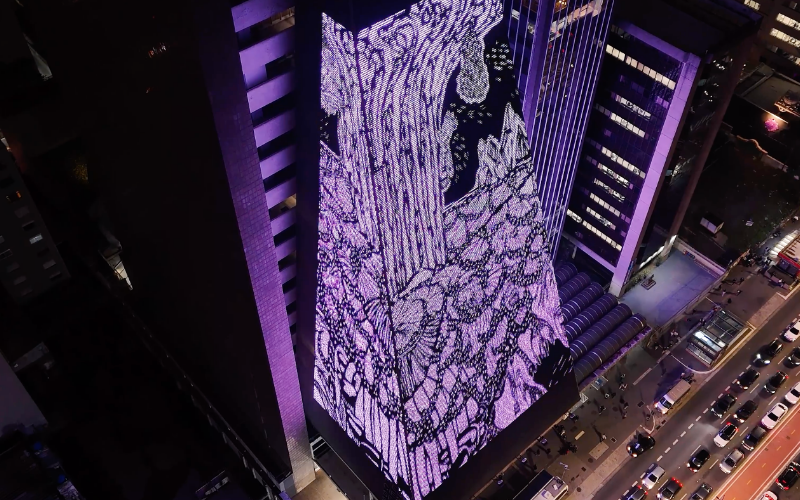
Your series Dear My Forest integrates science, poetry, and ecology. How did the project begin and evolve?
The Dear My Forest series began at the Children’s Museum of the MMCA in Korea, where I created sixteen “mushroom-tree” installations for Five Steps into the Forest. The work explored the boundary between visible and invisible layers of the forest, and a curator’s suggestion to add a narrative led the project to develop its own world and mythology.
This process eventually gave rise to the picture book Dear My Forest: Golden Mold. For me, picture books are one of many contemporary art mediums, alongside installation, video, printmaking, and drawing, and the format allowed the story to exist as a visual artwork.
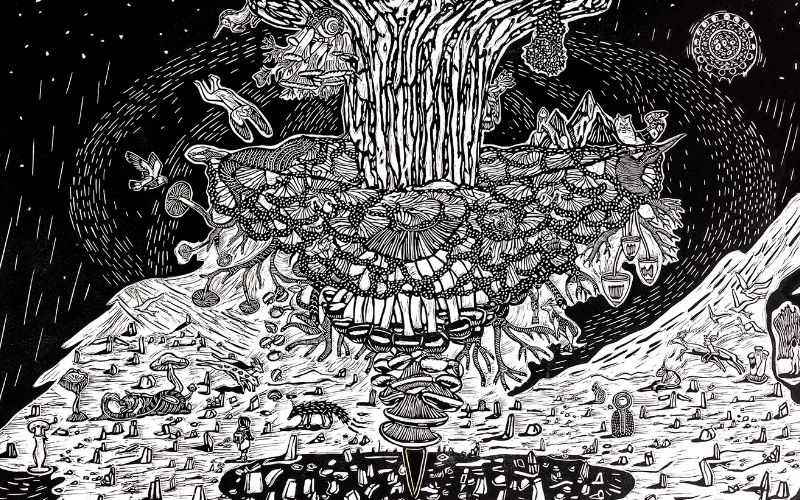
Your picture book was selected for the 2025 Bologna Ragazzi Award (Amazing Bookshelf—Sustainability). What inspired it, and how does it reflect your broader vision?
My picture book Dear My Forest, Golden Mold began with a question: “How do the smallest beings in the forest help the world grow again?” Inspired by forests in South America and Northern Europe, and by my fascination with fungi, the project reflects invisible cycles that sustain life and human connections.
It grew from a 16-piece mushroom-tree installation at the MMCA in Korea into a picture book, demonstrating how a single idea can expand across installation, prints, drawing, and animation. Selected for the 2025 Bologna Ragazzi Award – Amazing Bookshelf (Sustainability), the book shares that life grows beneath the surface, small organisms support entire ecosystems, and humans are part of nature’s rhythm.
The Portuguese edition of your picture book is being released alongside your exhibition. What does this mean to you?
Brazil is a country whose forests and ecology left a deep impression on me during my travels. Its enormous trees, exposed roots, river-like landscapes, and the diversity of life that inhabits them have all greatly influenced my artistic practice. For that reason, seeing Dear My Forest, Golden Mold translated and introduced to readers in Brazil feels almost like a “returning forest”—as if the inspiration I once received from the forest is now returning to the land of forests through another form.
What I hope Brazilian readers take from this book is not a grand message, but a quiet sense of how small beings help the world grow again. Invisible organisms sustain the forest, and tiny entities—like mycelium, spores, and mushrooms—create vast ecological cycles. If this book allows readers to pause and feel that humans, too, are connected to this larger flow of nature, then I would be truly grateful. I hope the story becomes a gentle bridge between the vitality of Brazilian ecosystems and the forests of Korea, offering each reader a space to discover a forest of their own.
Nature, mythology, and sustainability appear frequently in your work. How do they relate to your personal philosophy?
For me, nature, mythology, and sustainability are not just themes—they are the way I understand the world. Nature is always moving and renewing itself, even in places we cannot see, and I have long been drawn to the hidden layers of life, like roots and mycelium. I see mythology as a way for humans to translate these movements of nature into stories.
Through symbols like forest spirits or the soul of a mushroom, we are reminded that nature is not something separate from us, but a world we are deeply connected to. My interest in sustainability also comes from this belief. Just as small organisms support an entire forest, humans are also part of nature’s larger system—and when nature is weakened, our own lives are affected as well.
In my work, nature, mythic imagination, and ecological awareness are always linked. When I look at the world today, I try to follow the slower and deeper rhythm of nature rather than the speed of human life. I believe that rhythm can guide us in understanding how we should live
moving forward.
Before the pandemic, you traveled extensively. How did travel shape your creative process?
Travel opened my senses. The unfamiliar landscapes of South America, in particular, shifted my way of seeing and revealed new possibilities for images. I don’t recreate specific places; instead, I reinterpret the atmosphere and emotions I experienced. Each forest I visited changed the “forest inside me,” leading naturally to new artworks.
Your career combines drawing, sculpture, digital art, and storytelling. How did your studies in Korea and London shape this multidisciplinary approach?
I first studied design in Korea, which shaped my structured way of thinking and gave me a clear working process, along with confidence in digital tools. This foundation later helped me move naturally across different materials and media.
Studying Narrative Environments at Central Saint Martins in London expanded my practice further. I learned how spaces hold stories and how artworks can create experiences, blending installation, storytelling, and digital art. Because of this path, I work across many mediums—steel, tapestry, wood, drawing, printmaking, video, and picture books—choosing whichever form best carries the narrative.
In the end, Korea gave me structure and logic, and London taught me space, narrative, and audience experience. Together, they shaped me as a multidisciplinary artist working through multiple layers of material and meaning.
What message would you like to share with Brazilian audiences encountering your work for the first time?
It’s a true joy for me to share my work with Brazilian audiences for the first time. Through this exhibition, I hope to convey a simple feeling: that small, unseen forms of life are always growing, supporting the forest, and connecting the world in quiet ways. Brazil has inspired me deeply with its powerful landscapes, so presenting my work here feels especially meaningful.
If viewers can pause for a moment, feel the slower rhythm of nature, and recall a forest of their own while experiencing my work, that would be enough. I hope this first encounter becomes the beginning of new connections and new stories.
How about this article?
- Like7
- Support0
- Amazing6
- Sad0
- Curious0
- Insightful0