A person, of any nationality, who is interested in being a K-Pop idol must take into account the complex training that an artist candidate receives to find their place in a company through an audition, and then in a group. The interest of young people from all over the world to join K-Pop has grown in recent years, which has promoted the development of a specific market focused on this niche, the schools or camps in charge of providing an artistic education inspired by the one received by K-Pop idols in Korea.
One of the camps established in Australia is the “KPop Boot Camp”, a program that was founded by The Academy in 2016, and created by Angela Lee, who has more than 10 years of experience in the local entertainment industry and has connected with major Asian record labels such as Pledis Entertainment, FNC Entertainment, YueHua Entertainment, among others to promote the education and training of those who wish to pursue a career in the K-Pop industry.
These types of schools were born out of “the lack of opportunities that Korean entertainment agencies had to discover talent or for K-Pop fans to experience K-Pop training in Australia. Hence, a solution to this lack was sought,” Lee said in an interview, with logistical help from EVERLAST KOREA representative Jenna Tokioka.

Although the trainee system has been characterized by developing artists in several areas, and according to your own experience, what are the highlights of the system that is currently applied?
The evaluation system is one of the highlights of the system for me. Regular check-in’s on the progress of the trainees, whilst stressful for the trainee, is necessary to ensure that they are learning and that the right adjustments can be made to the development plan as per the result of the evaluation.
Though not unique to K-Pop, just like students learning performances through performing arts schools, K-Pop trainees also have to learn many “subjects,” but the difference between the performing arts and K-Pop training is that the latter focus on the commercial arts aspect makes learning of hip-hop dance a “subject” in the curriculum.
In your opinion, what are the 3 main differences between the K-Pop industry and the western music industry?
1. Group vs. Solo: Most of the K-Pop idols debut as part of a group, and not as solo artists.
2. Training System: There is a systematic way to become an idol from recruitment to debut.
3. Dance: This is almost a non-negotiable requirement for most idols – with only a small subset of the idol population being exempted from the dance requirement.
There are many Australian artists in important active K-Pop groups, such as Jake from Enhypen or Felix and Bangchan from Stray Kids, who became examples for many young people around the world. Coming from a country with different customs than Korea, and facing challenges such as learning a language, they managed to adapt very well to the K-Pop system. In your view, what can aspiring foreign trainees learn from these idols?
Perseverance. For example, Bangchan from Stray Kids had a very long traineeship, but he did not give up over the years. Definitely be prepared to work hard and understand that this might be a longer journey than expected. Mentally prepare yourself for the cultural differences, and be able to live away from home and leave all the comforts that home living can bring.
The Korean music industry has expanded throughout the world. For you, what is the reason for the success of K-Pop on a global level?
K-Pop is a highly coordinated exercise by multi-government agencies. It is not a simple formula, but the collaboration between private and public enterprises to globalize K-Pop as a genre, especially systematically over the decades, is definitely one of the reasons for K-Pop’s success.
There are many young people in Latin America interested in joining trainee academies or auditioning directly with a company. What advice do you have for those who want to be part of the K-Pop industry?
1. Don’t hesitate to audition and don’t wait for that perfect performance. Sometimes simple and clean movements are better for an audition. Time is against you, so if you are young and want to try, just do it.
2. Don’t just focus on dance training, also give some focus to vocals – at least basic vocal training.
3. Digital footprint or social media footprint – once you are of a legal age to have an account, do note that having a digital footprint cannot be erased. Be cautious of what you post, forward, or write.
4. Korean language proficiency will be handy when you do go to Korea, afterall there won’t be a dedicated interpreter for you. For international trainees, a command of the English language will also be beneficial.
What has caught your attention the most about the kids who participate in the K-Pop Boot Camp with the dream of learning about the world of K-Pop trainees?
The gap in expectation vs reality. Whilst they have read and seen videos of how hard the training can be, the reality can be quite different from their expectation when they are going through it themselves for the first time. Also, the boost in their self confidence after completing the boot camp and the friendships/comradeship that they formed within those 10 days.
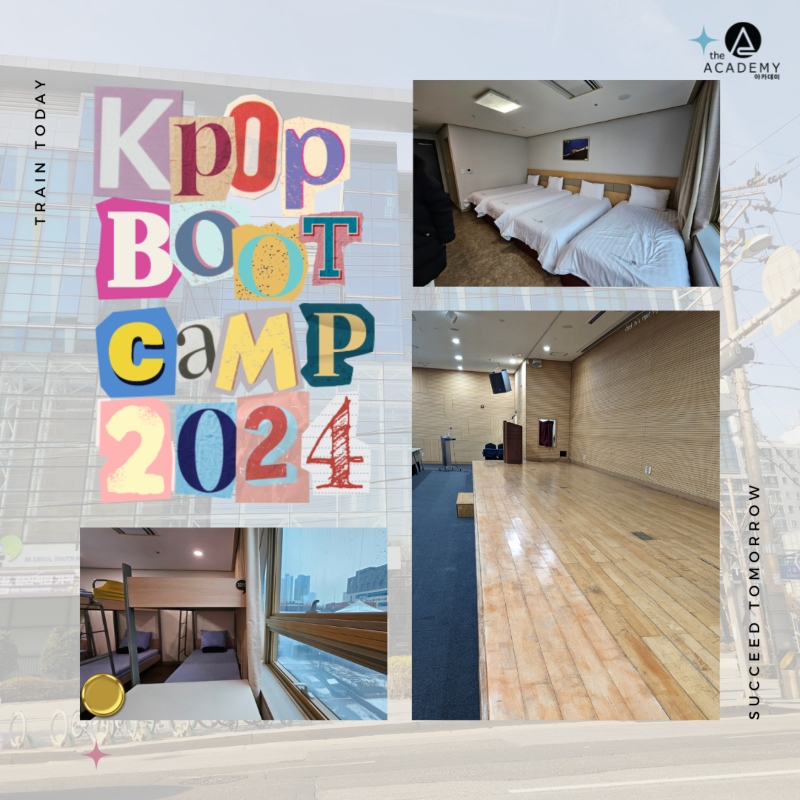
On The Academy's website, I read that the annual K-Pop Boot Camp has classes and workshops in different areas, so that participants live a fragment of the life of a K-Pop trainee. How would you define the life of a trainee and what differentiates it from the debut stage?
The main difference will be the debut stage performance will be your own song. You are no longer just training to someone else’s song or dance choreography. You have something to call your own. While there will be uncertainty as a trainee and as a debuted idol, the type of uncertainty will be different. As a trainee, you are training towards a goal to debut and you are constantly being evaluated internally and hoping that you are good enough to debut. Whereas a debuted idol is training for their next performance, but this time around their evaluation is the public audience, and the feedback, whether good or bad, will be from people that one has yet to see. The future is still uncertain because the evaluation from the public is always something that is hard to judge until that performance is public.
How do you envision the K-Pop industry globally in about 5 years?
To answer your question, going back a bit there have been five generations:
- 1990 - 1st -Generation of K-Pop (e.g HOT) / Access to the Worldwide Web
- 2000 - 2nd-Generation of K-Pop (e.g Big Bang) / Camera Phones
- 2010 - 3rd-Generation of K-Pop (e.g EXO, WannaOne) / Transition to Mobile Devices and the Rise of Data
- 2018 - 4th-Generation of K-Pop (e.g StrayKids, NewJeans) / Augmented Reality
- 2023 - 5th-Generation of K-Pop (ZB1, BabyMonster) / Artificial Intelligence
Based on the trend above, in 5 years time, we will probably see the end of the 5th-Generation and start moving into the 6th-Generation. As we can see, there are new technological innovations with each generation, and I think technology will play an even more increasing role in K-Pop in the future within various aspects of the industry.
1. AI idols, Virtual idols, or Robot idols - whether it is a group of virtual/robot idols only or a mix between human and virtual/robot idols. Concepts will mature with newer technology, and this may blur that line between the virtual world and reality, as augmented reality technology improves.
2. With artificial intelligence, I would say that the increased use of this technology can potentially improve interactions between idols and their fans. This technology might also play a role in the music production space to create more songs that can cater better to the ears of local audiences.
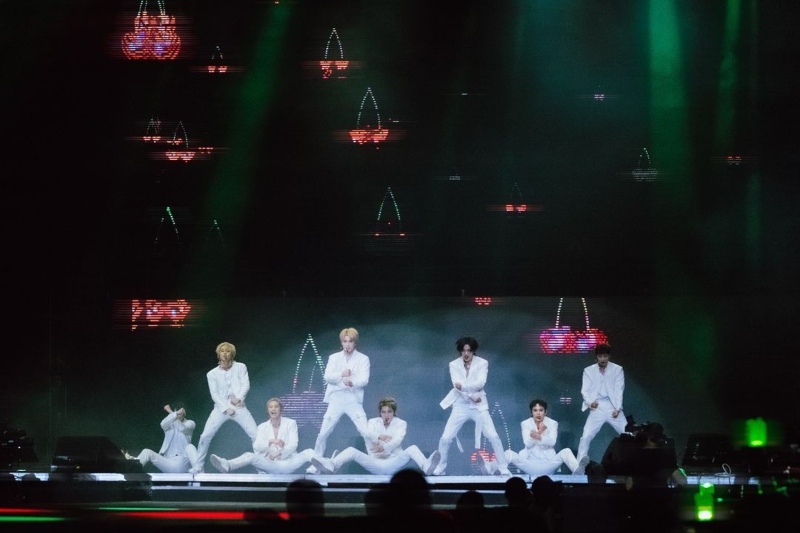
Personally, as a consumer of K-Pop, I could appreciate the importance of the artists' training and the difference it makes in all aspects of a show. When I attended an NCT 127 concert with the expectations of being able to experience almost all of the experiences they offer in Korea, they offered more than that.
For 3 hours the SM Entertainment group showed me that the strict training can be evidenced in the quality of their dancing, singing, and even the way they interact with the fans. Since then, I recognized the importance of this stage of their lives as an idol, and why it was necessary to have the proper training to achieve global success, to survive a competitive industry, where an artist depends on so many people. From the artistic school where he/she is trained to a fan in the farthest country.
How about this article?
- Like3
- Support0
- Amazing0
- Sad0
- Curious3
- Insightful0